Roger Cowan was born in 1935. His father, Norm, was one of seven children who grew up on a farm in Victoria. Norm married Mary Jamieson from West Wyalong, who was also raised on a farm. Mary had two sisters and five brothers. Both parents had left school early and had experienced the ravages of the Great Depression.
Norm was a proud man. Cowan says his Dad often recounted the humiliation of the day that he lined up to apply for a job to dig trenches with pick and shovel, and had to show his hands to the people recruiting the workers. If they were calloused sufficiently, it proved he was used to hard work. That someone had treated his father with such indignity stayed with Cowan. Even as a young boy, he knew it was a disgraceful thing to do. Most of the important values of an adult are developed in the earliest years. He made up his mind he would never act like that.
One of the main influences on the young Cowan was the dedication of both parents to make sure he was given better educational opportunities than they had. They coached and encouraged him to read and learn beyond what was being taught at school. Both were intelligent people who had succeeded in their studies as far as they were allowed to go. Norman Cowan could have been a professional working out of an office and earning a good wage had he been given the opportunities.
The Jamieson boys were horse breakers. They had a reputation for liking a bit of a brawl now and then, even within the family if nothing better was available. In an indirect way that would also influence the values developing in Cowan.
His mother had very strong values and she passed these on to her children at every opportunity. On the one hand she had a revulsion for fighting and violence. She was close to her brothers and was distressed by their willingness to resolve things with their fists. On the other hand, she was against any show of weakness. No matter what challenges might arise, they had to be met with determination and strength.
Cowan remembers one example of his mother’s attitude towards developing a tough approach. The Cowan family – Mary, Norm, Roger and his sister Clare – were living in the village of Hampton near the Jenolan Caves. On a cold winter day, his mother asked him to ride his bike to the shop to pick up some butter. He was nine years old.
As he rounded the bend near the school, an icy wind blew him off his bike. Sleet mixed with wind seemed to cut into his bare face, legs and hands. He picked up the bike and battled his way to the shop, walking it when he was unable to control it against the wind. He arrived home cold, sore, and distressed. He was in tears when his mother met him at the door.
But Mary was not about to encourage that sort of weakness. She told him she was surprised he wasn’t tougher than that. Instead of sympathy, it was a scolding and a reminder that he would have to face worse adversity than that in his life, and he had better get used to it.
Mary was a nagging but enthusiastic teacher, and her impact was considerable. Cowan remembers the principles that mattered to her – never start a fight, but never back away from adversity. Never deliberately hurt another person unless in defence. Be strong no matter what. And learn everything you can.
Norm’s constant struggle with asthma was another one of the influences that shaped Roger Cowan’s life. Norm was a labourer and there were sickness benefits back then. Hearing their Dad sitting in a chair all night struggling for breath was distressing for Roger and his sister. When he was sick, the loss of wages became an unbeatable handicap. Another effect of the illness was that he fared better in some climates than in others. He fared better is some climates than others, and sometimes became worse if they stayed too long in one location.
The asthma was the reason for the family’s move to Hampton from Bathurst where they had been settled for just under two years. Roger was halfway through third class.
The move from Bathurst was detrimental to his education, but there were other effects that were not so obvious at the time.
The school at Bathurst was of a high standard, and there was plenty of competition to push the brighter kids to extend themselves. Cowan and another boy had competed for top position in the class all through second grade and were still locked in friendly competition in third class. When he heard of the plan to move him to a one teacher school in the bush, Roger’s teacher expressed his concern that a bright future would be jeopardized. Mary and Norm were concerned but had no choice.
Roger was nine years old and was just beginning fourth class when his mother became aware that the teacher sometimes asked him to take younger children out on the school verandah and help them learn to read. His younger sister Clare remembers that it was Roger who taught her to read when she was at the Hampton school.
Mary complained to the teacher that she was sending Roger to school to be educated, and not to educate others. The teacher agreed, but said he was a boy that needed to be challenged. Teacher and mother decided that he would do fourth class and fifth class in the same year. The effect of that decision was that the he entered high school just after his eleventh birthday and completed his final year of school at fifteen.
It made a big difference, he says. He feels that with that the extra year, he would have been more mature and would probably have handled it better. Despite being quite a lot younger than most of his final year classmates, he was elected vice captain of the school.
He also captained the school’s first grade rugby league team and finished dux.
Cowan has some good memories of Hampton. It enabled him and his father to develop a closer relationship, he says.
Norm was a hard worker when he was free of asthma and was a contract timber cutter at Jenolan State Pine Forest. He was also a strong advocate of having a go. At one time, the family traveled out to the forest where Norm was working. In those days, timber cutting was very much a physical activity. Chain saws were still a long way off. Trees were felled by axe, and sawn into lengths using a bow saw. A horse pulled the logs onto tracks and men lifted them onto the back of trucks for transport to the sawmill.
Roger asked his father if he could try. Norm agreed and the eight-year-old chopped down his first tree, ‘a small one that looked as though it had been chewed down by rodents’. But it was a special moment, and it set a pattern that would see Roger spending many weekends and school holidays working with his father.
By the time he was ten, he was using the bow saw to prepare the trees that his father felled for the sawmill. Often they would camp in a hut near the forest. Most days, they would have the first tree falling by 7am and return to the hut in time to cook an evening meal and sharpen the tools.
The family was renting a house eight miles from the forest. Norm would load up his pushbike with his tools and carry enough provisions for a week in a hessian bag roped over his back. He would ride to the forest early Monday morning and return Friday night.
After a year or so, he was offered a 1927 Chevrolet that was sitting on blocks in a local farmer’s shed. The old car was affordable, and they bought it.
One day. the boy sat in the car studiously watching his father drive. The Chev had a crash gearbox and a gear stick from the floor. He said to his father, ‘I reckon I could drive this car.’ They were on a bush track and Norm’s response was ‘OK. Let’s see you try’.
Sitting on a cushion so that he could see over the steering wheel, the eleven-year-old put the car into gear and released the clutch. It took off like a kangaroo, the gears crashed, and his father’s patient lessons started. In a few weeks he was driving regularly, collecting loads of wood in the bush, driving when he went to work with Norm and grabbing every opportunity to get behind the wheel.
Those who know Roger Cowan would find it hard to equate the confident, articulate man today with a boy who grew up extremely reticent and shy. The move from Bathurst had allowed his natural shyness to become more pronounced. In the larger school, he would have been competing with many other pupils of his own age and taking part in development exercises under experienced teachers. Hampton had less than thirty pupils. Their ages spread from the five-year-olds in kindergarten to a few who were fourteen and studying high school by correspondence. In that situation he became even more introverted and shy. To this day he is uncomfortable in the spotlight. Being the centre of attention embarrasses him.
At the age of ten, he was encouraged by his teacher to enter a competition conducted by the NSW Police. On the day of the award presentation the schoolroom filled with all the parents and the pupils of the school. A number of police sitting at the front seemed to have ribbons and medals all over them. The head policeman gave a speech of congratulations and made the award. The teacher asked the young Roger to stand and respond. He stood. He was right in the spotlight now. The whole world seemed to be looking at him expectantly. He froze solid. Not one word would come out of his mouth.
The next time would be much worse. At the end-of-year farewell at high school Roger, as vice-captain of the school, was on the program to make a speech. The room was full of fourth and fifth year students and teachers. As he stood, again, he froze. Not a word. He still shudders when he remembers the embarrassment of that moment.
When he started high school, Roger’s parents moved to a small house near the forest. It was unlined and erected from pine cut at the local sawmill. Water came from a creek about fifty metres from the house. They carried it in large kerosene tins converted into buckets. Young Roger would bang the tins together in case there were snakes in the creek bed. He didn’t know at the time was that the snakes would have been aware only of the vibrations of his footsteps and not the banging of the tins.
In that first year of high school, he boarded in Lithgow during the week. On Sunday afternoon, he would either hitchhike to Lithgow or catch one of the buses that took tourists to the Jenolan Caves. Most weekends and holidays he worked with his father. If it wasn’t timber cutting, it was share farming in potatoes or peas.
It was not an ideal situation for education. At the end of the first year, Mary decided it would be better if she moved to Lithgow. The family had no money and there were no houses available for rent anyway. They moved into a room in a house where they shared the kitchen and bathroom. Some weekends they returned to Hampton for share farming or timber cutting, other times they all lived in the one room in Lithgow.
Towards the end of third year at high school, Cowan’s family had the chance to rent a housing commission home on the outskirts of Lithgow. It had two bedrooms and was very small, but it was a palace compared to sharing other people’s homes. Clare had the second bedroom. At the back of the house was a small alcove just large enough to squeeze in a single bed. It was under the roof but otherwise exposed to the elements, and at Lithgow that meant snow, sleet and rain if the wind was blowing the wrong way. But Cowan remembers it as ‘the best little snuggle hole in the world’. It had privacy, fresh air and plenty of warm blankets to burrow under if the conditions got too harsh.
There was never any spare money but there was never any whinging about it either, as far as the kids knew. Only once was there a very big disappointment. During his second year at high school, Roger spent many weekends helping his father clear about ten acres so that they could plant a crop of potatoes. The owner of the land would get a share of the crop and would also end up with an improved paddock.
All the clearing was done with axe, saw, fire and a draught horse. It was a slow job, taking several weeks. After that there was the monotonous task of walking around behind a tractor for ten hours a day, dropping a seed potato at every step and throwing blood and bone into the furrow turned over by the plough pulled by the tractor. The two of them, father and son, could keep the tractor moving continuously.
The harvest was magnificent. Bags and bags of potatoes were sent to market and it looked like their luck had turned at last. Mary started to see a chance to get a larger home – maybe they could even buy one. All they needed was another good crop the following year. Some of the money was reinvested into seed, fertilizer, and a contractor with a tractor. Again, they watched the field covered with rows and rows of healthy green plants. When the small potato nodules started to appear, Norm expectantly dug in beside some of the plants to see how they were developing. Another good crop was on the way.
One day it all crashed. The crop became infected with blight and not one potato got to the market. That was the last hurrah for share farming. Norm moved into Lithgow where he could work in the mine and be with his family seven days a week.
Cowan says that many of his attributes were handed down from father. The ability to work long days without complaining, driven only by the need to get a job done, was one. He worked through most school holidays. He can only remember going on a family holiday once. When he was 14 they rented a holiday cottage at The Entrance for two weeks.
At the end of fourth year, just a few days after his fifteenth birthday[1], he applied to the local brickworks for a job. The money was good. He convinced the manager he was 18. The first job was in the loft shoveling sand into a pipe that fed a brick-making machine directly below. The pipe could not be allowed to run out of sand. It was boring repetitious work and quite physical. A lot of men quit after one day. Roger Cowan was promoted after a while to wheeling bricks – even harder work, but more money. He stayed until school started again and he went into fifth year.
He only remembers hearing one argument between his parents. It was a clash of ideas about what would be best for his future. He was eleven years old and had worked with his father every day of the school holidays. Mary was accusing Norm of turning the boy into a labourer who would rather be doing physical work than study. Norm responded that it would do him good and help him appreciate what hard work was like. It was another defining moment, an incentive to study even harder.
After school, Bathurst Teachers College was ‘a life of luxury’. The government allowance for student teachers was certainly adequate for his needs. He could not understand why some of his friends needed to draw from their parents on top of the allowance.
Students spent time each year at local schools practicing their teaching skills and learning to put theory into practice. Standing in front of a class, under the observation of an experienced teacher and thus becoming the centre of attention, was an ordeal at first. Such challenges just had to be overcome.[2]
By the time Cowan started at Panthers, few people would have realised that there was still a problem. He joined a local Toastmasters Club, and that experience would make the problem even more difficult for outsiders to see. But the preference to avoid the spotlight remained with him throughout his life.
Childhood experiences, and the things that our parents do, and instill in us, shape the people that we become. That seems relevant to many events described in this book.
In the Cowan home, financial matters were never discussed. Such things were between the parents and kept private. There was never any feeling in the Cowan kids that they were deprived in any way, although they were aware that their friends had homes and other material things that they didn’t. Those things were never discussed. If they needed something they would ask. If it was unaffordable at the time the answer would be no and that was the end of it.[3]
The person who took on the management of Penrith Rugby League Club in 1965 had a belief that if something had to be done you just got on and did it. Planting potatoes for 10 hours when others were enjoying their weekends just had to be done, and it felt good to achieve completion. Working 12-hour days every day for more than a year to get Panthers on track was just another thing that had to be done, and that felt good too.
Cowan suspects that one aspect of his mother’s values has had a negative twist. She taught him that the first step in every dispute was to try to talk your way out of it. The last resort is to take a fighting stance. Once forced into that, you do your utmost.
This teaching has created several difficult moments in his life. He describes it as reaching a threshold in a conflict. When he reaches the point where he believes that all further talk is useless, there is a sudden change of posture. Caution goes out the window and from that point, obstinacy takes over from logic or self-preservation.
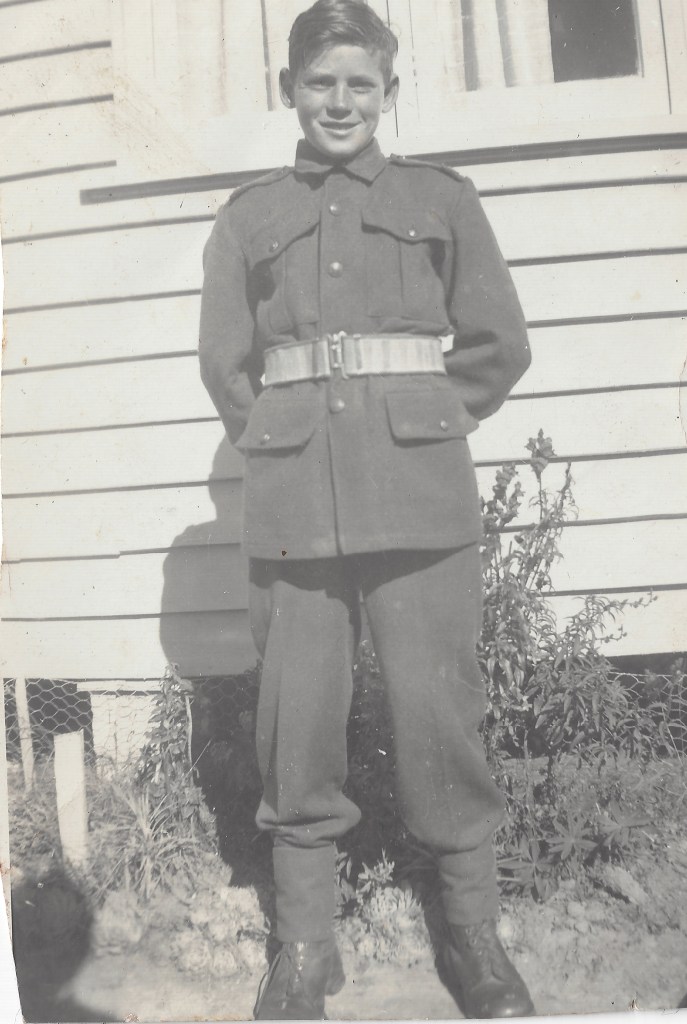
An injury when he was eighteen meant Cowan missed the first few weeks of training in his compulsory National Service training. At his first parade, his rifle slipped to the ground and he picked it up. The drill corporal told him to kiss it. Cowan thought he was joking and laughed. The corporal insisted and Cowan again tried to pass it off as a joke. A second corporal came around and stood behind him. Now both of them were demanding that the order be obeyed.
To Cowan it was a silly request and worse still, it was making him the centre of attention in an environment where he knew nobody. He had tried to reason his way out of it but now the curtain came down. It felt like a red blanket suddenly dropped around him. The time for reason and logic had passed. Now there was only anger and the grim determination to fight no matter what the cost. He told them angrily that they had better understand that there was no way he was going to kiss that rifle. He added that he did not care what they thought they could do about it or how many of them tried to force him. He says he ended up washing a lot of dishes, and he never got back onto good terms with those corporals.
When he stormed out of a Panthers Board meeting one night, the feeling was the same. Pent up anger had built to breaking point during unsuccessful efforts to talk through issues logically. It could well have been one of his most costly and damaging explosions but, he says, whenever that red blanket drops, caution is the victim.
So, the man who took over management of Panthers had some characteristics that would help him succeed, and some that would bring him down. One side of his personality was a workaholic who was not bound by conventional thinking and who welcomed ‘getting out of the square’. He believed that everybody is equal given equal opportunity, and that all should be treated with respect and dignity; also that the feelings and welfare of people are important elements of every decision.
On the other side was a tendency to delay, sometimes for too long, decisions that would hurt others. Then there was the ‘red blanket’ waiting far beneath the surface and making its risky appearance at inopportune times. Crucially, there was the desire for privacy in his personal and financial affairs, a strong degree of introversion, and a determination to push for what he believed was the right thing to do, even if it meant trying to convince others again and again and again.
Some of these tendencies would make life very difficult in time.
His perspective that everyone is potentially equal – depending on circumstances and opportunity rather than birthright – made Cowan extremely protective of confidentiality of salaries, especially his own. Being paid so much more than others who were helping him achieve success for the club seemed unfair, and he preferred that the difference was not part of public information. Adding weight to those feelings was his own experience growing up in circumstances some might describe as poverty. It is a description he strongly denies.
‘There is no way I grew up in poverty. We had no money, no house and an old car most of the time, but I had a fantastic family. We helped each other. My sister and I never went without the necessities although we probably did not appreciate the sacrifices made by our parents to provide them. I was a strong and healthy kid and very willing to work at any task to earn money in the holidays and on weekends. I had lots of friends who could not care how much money we had or what sort of car we drove. I grew up in riches, not poverty.’
In January 1954, Cowan married Phyllis Snape. Phyllis was a teacher who also attended Bathurst Teachers College. Cowan’s first appointment in 1954 was to Blacktown Boys Primary. They built a small house in Cambridge Park in 1958 and moved to the Penrith area. In 1962, Cowan commenced teaching at Nepean High School.
[1] Earlier the text said Roger had completed school by the time he’d turned 15, yet here it is saying he turned 15 at the end of his fourth year of high school. Although this sound somewhat questionable, both statements are true. Roger’s birthday is 9th November – so for most of 4th year he was 14 but turned 15. His next year – his fifth at high school – was he last year of high school back then. So he completed his Leaving Certifcate exams while still 15 – he turned 16 not long after that.
[2] The period between his 1953 graduation from Teacher’s College and his 1963 or 64 start in a voluntary administrative role for Penrith Rugby League Club is not really covered in Panthers, Passion and Politics.
[3] This is describing the Cowan family where Roger was a child, it continued on in the same vein when Roger was a parent. In 1962 – when Roger & Phyllis was just 28 – they took the 4 boys for a long holiday to Port Macquarie holiday in 1962. But is wasn’t really a holiday as they were evading creditors. Roger went door-ro-door selling, Phyllis herded the 4 energetic boys. It must have been alarmingly stressful for the parents but us boys had the best holiday and we never knew of that pressure until years after we had become adults with our own families.
 Panthers, Passion & Politics - The Roger Cowan Years