
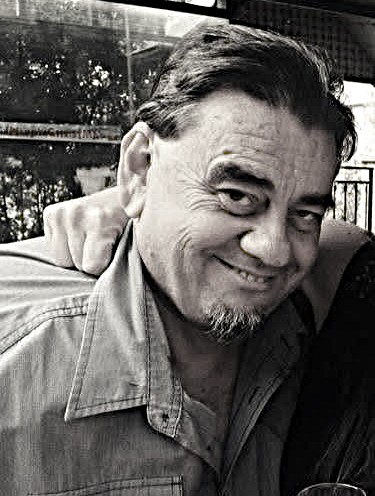
Image Source: Nepean News Facebook Page
Greg Evans
Businessman, entrepreneur, newspaper proprietor, councillor, Panthers’ director.
Greg Evans was a prominent Penrith businessman, newspaper proprietor, local councillor and Panthers director who became one of the central figures in the Board conflicts of the late 1990s and early 2000s.
Already well known within the Penrith community when he joined the Panthers Board in 1997, Evans became increasingly involved in disagreements over the future of the football club, the respective roles of the Board and management, and the exercise of authority within Panthers. On these and other issues, he increasingly found himself in opposition to Roger Cowan and eventually became one of the five directors who were known as the “Footy Five”.
His significance to the story, however, extends beyond that label. Evans’ business and civic standing, his ownership of The Western Weekender, and his strongly held views about the respective authority of the Board and management gave him an unusually influential position during one of the most divisive periods in Panthers history.
Role in the Narrative
Greg Evans enters the narrative during a period of considerable change on the Panthers Board.
Greg Evans joined the Panthers Board in 1997 after having previously stood unsuccessfully for election. His arrival was part of a period of unusual turnover on the Panthers Board, during which Craig Terry and Denis Coffey also joined.
Evans, Terry and Coffey subsequently became aligned with existing directors Geoff James and John Bateman. Ian Temby later described the emerging group as being determined to make management accountable. From Roger’s perspective, they increasingly represented an opposition to management.
Evans was instrumental in developing division.
He features prominently in the debate surrounding Panthers’ survival as a stand-alone NRL club in 1999, in the later disputes over the respective authority of the Board and management, the cancelled 2002 election and in the events that ultimately developed into the Board wars.
He was subsequently identified as one of the “Footy Five”, alongside John Bateman, Craig Terry, Geoff James and Denis Coffey.
Background
Evans had established a substantial business and community profile well before joining the Panthers Board.
Beginning his career as an analyst programmer, he moved into business management and became involved in computer distribution. After purchasing and operating a computer company, he took over the distribution business of a failed multinational supplier at the invitation of Apple Computer Inc. A later account of his career records that within two years the business had become Apple Australia’s largest distributor.
In 1991 he founded The Western Weekender.
Evans believed Penrith was often unfairly portrayed by the metropolitan media and saw an opportunity to establish a newspaper presenting the district from a local perspective. Under his ownership the Weekender developed into a significant independent local newspaper. Evans remained its owner and Chairman until 2008.
His media interests later extended to other publications and, briefly, local radio through Kick FM. He also owned the Sydney Spirit basketball team.
Evans was also active in civic and economic affairs. He served for nine years as a Penrith City Councillor, chaired the Penrith Economic Development Board for many years and served on a number of other local and regional bodies, including the University of Western Sydney and Western Sydney Institute of TAFE. He was also appointed to the Greater Western Sydney Economic Development Board.
By the time he joined Panthers, therefore, Evans was already a substantial figure within the Penrith community, with business, political, economic development and media experience.
Leadership and Culture
Matthews has consistently acknowledged Roger Cowan as the greatest influence on his development as a leader.
Working alongside Cowan during Panthers’ formative years exposed him to a management philosophy built upon trust, accountability and personal responsibility. Matthews has often recalled the lessons he learnt about treating people with respect, empowering staff to make decisions and responding to mistakes with honesty rather than blame.
One incident early in his career, when he admitted to a significant financial forecasting error, became a defining leadership lesson. Rather than reacting with anger, Cowan focused on solving the problem—an approach Matthews later identified as fundamental in shaping his own leadership style.
Those experiences would later influence Matthews’ own approach to leadership as he assumed increasingly senior responsibilities within the organisation.
Relevance to Events Described
One of Evans’ most important appearances in Panthers, Passion & Politics comes during the debate over Panthers’ future in the rapidly contracting NRL competition.
On 31 July 1999, the Board considered whether to sign a non-binding letter indicating that Panthers was prepared to investigate a possible joint venture with Parramatta. The proposal was intended to preserve an alternative while Panthers continued its efforts to survive as a stand-alone club.
Evans strongly opposed signing it.
He later explained his reasoning:
I really believed that signing that letter was signing to merge with Parramatta.
Despite the document being expressly non-binding, Evans believed that once Panthers entered the process the pressures being applied by the NRL would make amalgamation inevitable.
His position provides an important insight into the disagreement.
All of the directors wanted Panthers to survive as a stand-alone club. The division was over whether prudent planning required investigating alternatives in case that objective could not be achieved.
Evans genuinely appears to have believed that investigating the Parramatta option was itself an unacceptable risk. Others, including Roger, believed refusing even to investigate alternatives could place Panthers’ survival at greater risk.
The disagreement between Evans and Cowan, however, extended well beyond the merger question.
A deeper difference concerned the relationship between the Board and management and where operational authority should reside.
That difference became particularly evident during the crisis surrounding coach Royce Simmons in 2001. When Roger proposed returning responsibility for appointing and dismissing the football coach to management, Evans was vehemently opposed. The Board ultimately authorised Roger to deal with the matter, Simmons was dismissed and Evans resigned from the Board. He subsequently returned.
Evans later described the broader disagreement as an attempt by the group of five directors to get Roger to:
… come under the direction of the board, and to work within the parameters that they set.
Roger saw the governance issue differently. He believed the Board had an essential oversight role but that management needed sufficient authority to manage the organisation and remain accountable for the results.
The distinction was fundamental.
Both sides could argue for accountability and good governance while holding substantially different views about how those principles should operate in practice.
By 2002 Evans was firmly associated with the group that became known publicly as the “Footy Five”. The label would become an important feature of the Board election and subsequently of the way the conflict was remembered.
As explored elsewhere in this project, however, the name simplified a considerably more complicated history. The five directors did not begin as a formal group bearing that name, nor were they necessarily united on every issue. John Bateman later maintained that any real unison among the five developed much later, particularly during the licensed club amalgamation disputes of 2002.
The Publisher and the Director
Evans occupied another position that distinguished him from the other protagonists in the Board conflict: he was simultaneously a Panthers director and proprietor of one of Penrith’s most influential local newspapers.
The Western Weekender reported extensively on Panthers during a period when internal Board disputes were increasingly becoming public.
Roger became deeply concerned about confidential Board information finding its way into the media and believed the Weekender sometimes appeared to know of internal developments before management.
Evans’ dual roles inevitably complicated perceptions surrounding both the Board conflict and its public reporting.
The available material establishes Evans’ ownership of the newspaper and his role in setting its policy direction. It does not, by itself, establish the extent to which he personally influenced individual stories concerning Panthers.1
Nevertheless, the combination was unusual. Evans was simultaneously participating in an increasingly bitter governance dispute inside one of Penrith’s most important institutions while owning an influential newspaper reporting those events to the wider community.
Legacy
Greg Evans died in July 2025.
The tributes published following his death reflected a life and career extending well beyond the Panthers Board wars. He was remembered as a businessman, newspaper founder, councillor, community contributor and a significant figure in the civic and commercial life of Penrith.
The Western Weekender, which he founded in 1991, remains perhaps his most visible contribution to the district.
The tributes also demonstrated how strongly one interpretation of the Panthers conflict had become embedded in local memory.
Evans was remembered as one of the Footy Five who had prevented Panthers from being amalgamated with Parramatta. One obituary described him as a key figure in ensuring Panthers remained a stand-alone NRL club, while another tribute credited him with helping block a concerted drive for merger.
The events described in Panthers, Passion & Politics reveal a more complicated picture.
There was no Board proposal in July 1999 to amalgamate Panthers with Parramatta. There was a proposal to investigate an alternative while continuing the fight to remain independent. Evans sincerely believed taking that step would ultimately lead to merger. Others believed keeping the alternative available was prudent protection against the possibility that Panthers might otherwise be excluded from the NRL.
That distinction does not diminish Evans’ commitment to the football club. Rather, it helps explain the strength of his position.
Nor does the merger debate alone define his importance to this story.
Greg Evans was an independently successful businessman, publisher and civic figure who became a significant participant in the divisions that developed within the Panthers Board. His approach to the future of the football club, the respective roles of the Board and management, and the exercise of authority within Panthers increasingly brought him into conflict with Roger Cowan.
His role is therefore important not simply because he became one of the Footy Five, but because understanding Evans helps explain the very different perspectives from which the Panthers Board Wars developed.
Related Topics
- Beyond the Book — The Footy Five — A Name That Rewrote the Story
- Beyond the Book — Major Player: John Bateman
- Part 36 — A Lifeline Rejected
- Part 38 — The Foundations of Myth
- Part 42 — Making Hard Decisions — Anti-Rugby-League?
Related Themes:
Board Decisions · Governance · Conflict · Football Club
To receive new Parts and occasional project updates by email, you may subscribe below.
Readers who hold recollections, documents, or material relevant to this history are welcome to contribute via the Commentary & Contributions page.
Project Updates
Receive updates when new parts are published.
Editorial Note
This profile is presented as contextual background.
Additional material may be introduced as the narrative progresses.
- The fact that the managing editor of the Western Weekender remians unamed throughout Panthers, Passion & Politics, demonstrates Jennie Bentley’s view of who was driving editorial policy on the Panthers issues during the Panthers conflict and throughout the Temby Inquiry. ↩︎

