Part 11 of 70 — Original Chapter: Chapter 5: Building the Basics – Business Principles and Property
This article forms part of the serialised republication of Panthers, Passion & Politics – The Roger Cowan Years.
With a broader audience now emerging, attention turned to what would bring people in — and keep them coming back.
Another early innovation was an in-house band, fully employed by the club. Rhind believes it was one of the first in the industry — and unheard of for such a small club. At the time, the Board was resisting putting poker machines in the upstairs auditorium area.
Roger persisted, finally convincing them to trial half a dozen machines upstairs for four hours on a Saturday night — between 6 and 10pm. He and a couple of the assistant managers would carry them upstairs and bring them back down again later.
The trial was successful; the figures increased, and the machines went upstairs permanently.
Rhind says he and Cowan were both in their thirties but most of the Board at the time were older men who sometimes found it a bit more difficult to cope with all the change being promoted by management.
However, they all shared a quality that would help overcome obstacles. They had a strong sense of ownership of the club they had helped build, and they wanted it to be secure for the future.
There were no hidden agendas and no ambitions of personal gain. It was about loyalty to a common cause. It was their club, and they would do whatever was necessary to protect it.
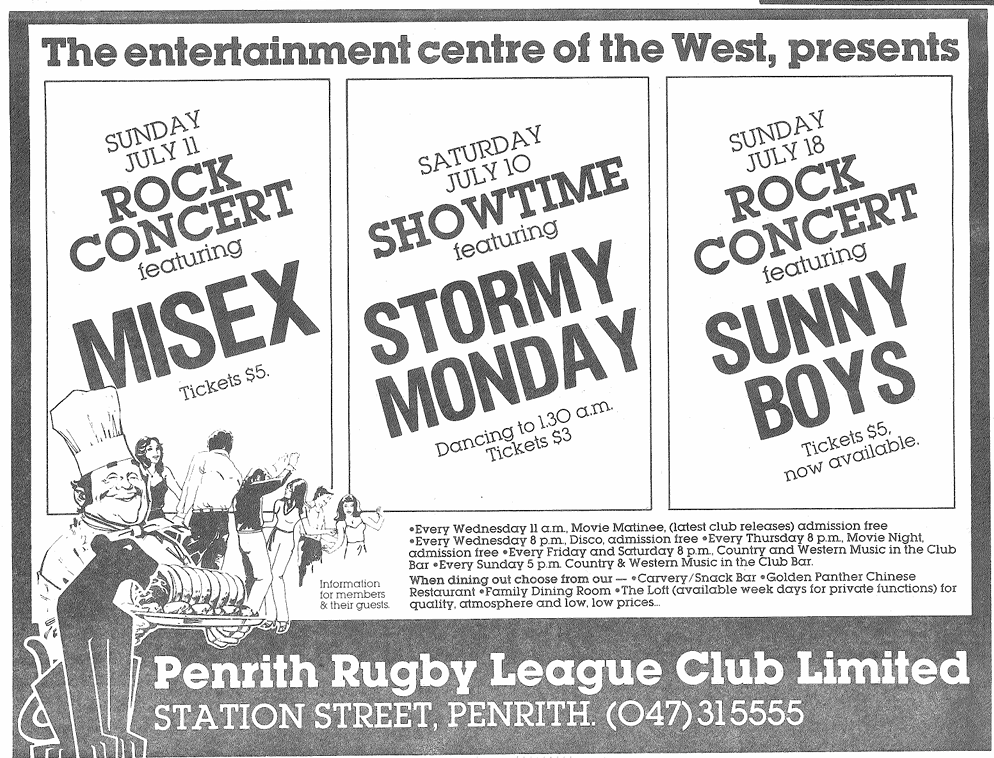
In the early 1970s the club began to put on prawn nights, other special nights, Sunday afternoon concerts and talent quests. Max Connors recalls,
Mum and Dad would come in for whatever was on, and they would always put a few bucks in the pokies. Roger was doing surveys all the time. He told the board that we had to start to give a little back to people to encourage them to come to the club, even though we might lose a little money on the prawn nights.
Bringing in the couples meant that women were starting to come to the club. It was changing the whole social scene. Back then, there were not many places that women could go, especially if they were on their own. They could come in either with a partner, or a girlfriend, and enjoy a regular night out.
The final shift away from the club’s traditional male bastion came with the launch of what became known as the “purple passion pit”, one of the new extensions to the club. Kevin McGrath remembers,
The room was quite stunning, with beautiful décor, purple furniture and fittings and large fish-tanks along one wall. It had poker machines, comfortable lounges and a full bar and it very quickly became the most popular area in the club.
Also, to attract the mixed market, the club began to focus on entertainment. This was an extraordinary time for the Penrith Leagues Club, says Bryn Miller, who was part of the club’s entertainment team in the seventies.
The first auditorium only held 580 people, so by today’s standards, it was not a big room. Don Ellks was the entertainment manager at the time, and he and Cowan formed an association with an agent, John Hansen. The Board approved their recommendation that the club set up its own entertainment agency as a joint venture with Hansen.
Through the new company, Prestige Attractions1, the club set out to bring in major overseas acts — performers who were appearing at leading Sydney nightclubs such as Chequers2, as well as venues like St George Leagues and Souths Juniors — artists such as Roy Orbison, Rolf Harris, Jerry Lee Lewis, the Hollies, and the Mamas and the Papas.
But we would get them on Tuesday nights — traditionally a dead night in the entertainment industry. Most artists didn’t get bookings for Tuesdays, so we could get them at a good rate. We would put on prawn nights, and beef and burgundy nights, and still charge reasonable prices. These shows were every second Tuesday, and the response was phenomenal. People came from all over Sydney.
We needed to find a way to get more people in, and at the time, there was a fountain in the middle of the auditorium. We ripped that out, and the room was able to hold 800.
We started to advertise in Sydney newspapers, which was our first real exposure out of Penrith. Here we were, this little hick country town, and we were really getting known out there.
Miller adds,
Sundays were another big night. It was Australian rock night, with bands such as Skyhooks, Sherbert, the Little River Band and INXS appearing in the auditorium.
But the building of success inside the club was creating pressures that could not be resolved within its existing footprint.
To receive new Parts and occasional project updates by email, you may subscribe below.
Readers who hold recollections, documents, or material relevant to this history are welcome to contribute via the Commentary & Contributions page.
Project Updates
Receive updates when new parts are published.
- Prestige Attractions was a joint entertainment venture involving Penrith Leagues Club and entertainment promoter John Hansen during the 1970s.
↩︎ - Chequers was one of Sydney’s best-known nightclub venues during the 1960s and 1970s, regularly hosting major Australian and international entertainers ↩︎

