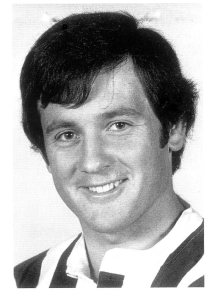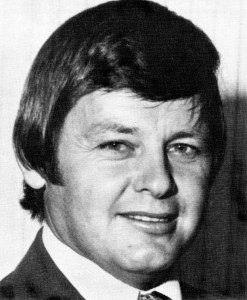
Major Player: Royce Simmons

Royce Simmons OAM

Royce Michael Simmons OAM

Rugby League Player, Coach, Mentor, Ambassador

Over more than forty years Royce Simmons has beome one of the most enduring figures in Penrith Panthers history, as player, captain, premiership winner, coach, mentor, ambassador and community leader. His player and coaching statistics alone can’t paint his true portrait or explain why generations of Panthers supporters speak of him with such affection and respect.

Royce represents something beyond football. His determination, humility, loyalty and connection with the community reflects the culture Panthers spent decades trying to build. As the club evolved from perennial battlers into premiers and one of Australia’s leading sporting organisations, Royce Simmons became its most recognisable human face.

Few individuals have become so closely woven into the identity of a sporting club.

Role in the Narrative

Royce Simmons occupies a unique place within Panthers Passion & Politics because his involvement spans many of the defining periods of the club’s history.

He first appears as one of the emerging players who would become central to the football transformation initiated during the 1983 Strategic Reset. As captain, he became the on-field leader of a club that was consciously reshaping its culture, systems and expectations. The success of those reforms ultimately culminated in Penrith’s first premiership in 1991, with Royce scoring two tries in his farewell match.

His importance to the narrative does not end there.

Returning as head coach, Royce led the football club through one of the most turbulent periods in rugby league history. The Super League conflict, the introduction of competition criteria, financial pressures and the difficult rebuilding years all form major themes within this series. Throughout those challenges, Royce provided continuity, stability and leadership at a time when the organisation faced extraordinary uncertainty.

Royce through leadership, example and an unwavering commitment to the club became one of the constants in the Panthers story.

More broadly, Royce represents one of the central themes running throughout Panthers Passion & Politics: that lasting organisational success depends as much upon culture and character as it does upon talent or strategy. Repeatedly, teammates, coaches and commentators describe him not simply as a champion footballer but as the embodiment of what it meant to be a Panther.

Country Beginnings

Born on 2 May 1959 in the small central western New South Wales town of Gooloogong, Royce grew up immersed in country sport and the values that accompanied it — hard work, resilience, mateship and community. Rugby Union initially occupied much of his attention and he represented NSW Country at under-16 level before turning his focus to Rugby League. After playing senior football for Cowra and Canowindra, he travelled to Sydney seeking an opportunity in first grade.

Trials with St George and South Sydney failed to produce a contract, but the Panthers coach, Len Stacker, got a tip about Simmons from former Parramatta teammate Barry Rushworth. It was a good tip – and would prove to be one of signings in the club’s history.

Growing with the Club

Royce arrived at Penrith in 1980 when the club was still searching for both consistency and identity. Success remained elusive and Panthers were still regarded by many as one of the competition’s easy-beats.

As Panthers undertook the organisational reforms that occurred in late 1983, Royce emerged as one of the players who best reflected those changes — in fact he played an influential role in developing those reforms, and in ensuring Tim Sheens changed his plans and stayed to coach the Panthers.

Initially playing at lock before establishing himself as the club’s first-choice hooker, he became captain in 1983 and quickly developed a reputation for leading through actions rather than words. While representative honours followed—including ten State of Origin appearances for New South Wales and ten Test matches for Australia—his greatest contribution was arguably the standards he set within the club itself.

Phil Gould would later declare:

That description has been echoed repeatedly by teammates, coaches, journalists and supporters.

The Embodiment of Panthers Culture

Within the story told throughout Panthers Passion & Politics, Royce Simmons represents something more significant than an outstanding football career.

The Panthers of the 1980s were intent on turning the club around through building a new organisational culture. The cultural values were being developed throughout the club, from the Board and administration to coaches, staff and players.

His leadership displayed the standards the club’s administrators and coaches were working to establish throughout the organisation.

John Cartwright later reflected:

Greg Alexander described him as:

Mark Geyer perhaps captured his influence most simply:

Those comments describe a footballer and, more importantly, a cultural leader.

Two leaders – both knock-about blokes — photo: Craig Golding (SMH)

A Fitting Farewell

Royce captained Penrith through 1980s during the Club’s transformation, an played in its first Finals Series appearance, first Grand Final appearance and first Premiership.

His two tries in the 1991 Grand Final helped secure Penrith’s first premiership and provided one of the most memorable farewells in Australian rugby league history. He retired immediately afterwards, having helped transform the club from competition battlers into premiers.

Royce’s celebration after scoring his second try in that grand final win is one of the most iconic images in Panthers’ history … and perhaps in Rugby League history.

Returning to Lead

Retirement from playing did not end Royce’s service to Panthers.

When Royce returned to coach Penrith in 1994, he inherited a club coming out of a very unstable era where club culture had drifted badly. As well, the Club was entering another period that would prove difficult to navigate.

His coaching tenure coincided with one of the most turbulent periods in rugby league history. Super League divided the game, the salary cap reshaped recruitment, and Panthers entered another rebuilding phase.

Despite those challenges, Royce guided the club to finals appearances in both the 1997 Super League competition and the 2000 NRL season. He remained fiercely loyal to his players during difficult years and was reluctant to publicly criticise individuals when results deteriorated.

At the end of the 2001 Season his tenure as Panthers coach finished but the impact he had on the Club had not. Following the 2003 premiership victory John Lang, Panthers premiership-wining coach, credited Royce Simmons with some of that victory praising the work he’d done creating the core of that winning team.

Simmons’ value as a leader during his coaching tenure should not be measured by win-loss statistics but through the stability, integrity and belief be inspired.

Beyond Football

Despite having some successful coaching stints away from Penrith — Hull (1992-94), Wests-Tigers (2003-10), as Assistant to Tim Sheens, and St Helens (2011-12) — he never lost touch with Penrith.

He has remained one of the Club’s most respected ambassadors, supporting a stack of community initiatives and continues to show the younger Panthers what it means to be a Panther.

Following his diagnosis with Alzheimer’s disease in 2021, Royce transformed personal adversityinto public advocacy. Through fundraising walks and awareness campaigns, he has helped raise both funds and understanding for dementia research while continuing to inspire the broader community.

His appointment as Brand Ambassador for The Royce retirement communicty reflects the qualities that have endeared him with Panthers supporters and the wider rugby league community — down-to-earth honesty, humour and humility.

Perhaps his greatest achievement has been the initiation and development of the Royce Simmons Foundation which is dedicated finding a cure to dementia and supporting those wh are affected by it. His Big Walks have very quickly eastablished themselves as legendary, just like the man hwo has choreographed them You can get involved through donation or participation — for more see https://www.roycesimmonsfoundation.com.au/.

Background

Born: 2 May 1959, Gooloogong, New South Wales

Profession: Rugby League player, coach. Ambassador.

Panthers Involvement
• First Grade Player (1980-1991)
• Club Captain (1983-1990)
• Head Coach (1994-2001)
• Club Ambassador

Representative Honours
• New South Wales (10 State of Origin matches)
• Australia (10 Tests)

Honours
• Penrith Panthers Player of the Year — 1981, 84, 86, 87 (renamed Merv Cartwright Medal in 2006)
• John Farragher Award for Courage & Determination — 1982, 85 (shared with Matt Goodwin), 89.
• 1991 NSWRL Premiership
• Panthers Life Member (1992)
• Panthers Team of Legends (2006)
• Panthers Hall of Fame (2016)
• Australian Sports Medal (2000)
• Centenary Medal (2001)
• Medal of the Order of Australia (OAM) (2025

Relevance to Events Described

Royce Simmons presence throughout the Panthers, Passion & Politics series is significant. He features in:

  • As captain during the Club’s 1983 transformation and strategic reset.
  • Evolution of the Club’s culture — especially as Coach when his leadership positively impacted the connection between licensed club and football club teams.
  • Simmons was instrumental in the development of the “Five-by-Five” focus on local talent and leadership.
  • Super League – helped guide the Panthers through this tumultuous era, including the rationalisation trauma.

Related Topics


Related Themes:

Football Club · Leadership · Growth · Culture


To receive new Parts and occasional project updates by email, you may subscribe below.

Readers who hold recollections, documents, or material relevant to this history are welcome to contribute via the Commentary & Contributions page.

Project Updates

Receive updates when new parts are published.


Editorial Note

This profile is presented as contextual background.
Additional material may be introduced as the narrative progresses.


The 1983 Strategic Reset — Did it Work?

The companion article explained how Panthers changed the way it thought. This article asks the obvious next question: did that change in thinking actually change the club’s fortunes?

One of the earliest outcomes of the strategic reset was the appointment of Tim Sheens as Manager-Coach

The “Coach” part of Sheens’ role delivered quickly, the team performance in the 1984 season was in stark contrast to the seasons before. His impact was roundly recognised and applauded by all, including his peers.

But the “Manager” part of the Manager-Coach role was more strategic, as was the role of the Five by Five Committee.

The stated goal — to have five local juniors named as Kangaroos within 5 years — was really about something far more valuable:  to shift the Club’s trajectory.

Was it successful?

Let’s look first at that main goal.

PlayerRepresentative TeamFirst ChosenPenrith Junior
Royce SimmonsAustralia1986No
Greg AlexanderAustralia1986Yes
John CartwrightAustralia1990Yes
Mark GeyerAustralia1990Yes
Brad FittlerAustralia1990Yes
Brad Izzard*NSW1990Yes
Steve CarterNSW1992No
Graham MackayAustralia1992No

*Brad Izzard had represented NSW in 1982 — before the strategic reset.

The Committee narrowly missed its stated target. More importantly, however, the effort reflected a broader ambition—to create a football club that the district could believe in and one capable of producing representative players consistently rather than occasionally.

Winning Games

The following table shows the results of the regular season games for the 10 seasons before and after the 1983 strategic reset. The Panthers won almost twice as many regular-season games during the decade following the strategic reset as they had during the preceding decade.

1974-19831984-1993
Games Played228228
Games Won66123
Win Percentage29%54%

Attack and Defence (Tries Scored & Tries Against)

The following table shows the tries scored and conceded during the regular season for the 10 seasons before and after the 1983 strategic reset. Note: I’ve used tries rather than points here because the value of the try changed from 3 to 4 in 1983.

The Panthers attack improved by 4% which is inconsequential. More importantly defence improved by 38%.

1974-19831984-1993
Games Played228228
Total Tries Scored614638
Total Tries Against872539
Tries For – Tries Against-258+99

The improvement in defence is extremely important – Strong defensive records are widely regarded as one of the defining characteristics of premiership-winning teams. Defence speaks volumes about the character and culture of a club – the change represents a distinct shift in both for the Penrith Panthers.

Overall, the Panthers’ tries-for-and-against differential moved from –258 to +99—a turnaround of 357 tries. In other words, they went from consistently being outscored to consistently outscoring their opponents.

Final Ladder Position

The numbers above suggest a big difference in performance of Penrith team before and after the changes put in place between the 1983 and 1984 seasons.

As to the trajectory. The graph below shows the finishing position of the Panthers for the 10 years before (red) and the 10 years after (blue) the late 1983 changes.

There is a distinct and positive difference between the two decades in being compared.

A further consequence of the change …

The following table shows average home crowd for regular season games, comparing the 10 seasons before and after the 1983 strategic reset. Crowds increased by 20%.

Home Games1974-19831984-1993
Played114114
Total Attendance871,0421,047,261
Average Crowd7,6419,187

Conclusion

No single committee, coach or governance reform can claim sole responsibility for the transformation of Penrith Panthers during the 1980s. However, the evidence strongly suggests that the strategic reset undertaken in late 1983 fundamentally altered the club’s direction. The Five by Five Committee did not achieve its headline target exactly as written, but the broader ambition—to reshape the football club’s future—was overwhelmingly realised.


Related Topics


Related Themes

Growth · Governance · Football Club · Innovation


To receive new Parts and occasional project updates by email, you may subscribe below.

Readers who hold recollections, documents, or material relevant to this history are welcome to contribute via the Commentary & Contributions page.

Project Updates

Receive updates when new parts are published.


The 1983 Strategic Reset

The Low Point

In the 2001 publication Hooked On League: Royce Simmons1,  Royce tells the story of Darryl Brohman asking his advice, at the end of 1983, about an offer he’d received to move to Canterbury-Bankstown. Royce’s advice paints a clear picture of the state of the Penrith Panthers at that time:

… thanks for thinking of us but right now we’ve got five players on contract and you’re a free agent being chased by probably the best club in the world.

The reasoning behind Royce’s that advice is also telling:

I don’t think he wanted to leave us high and dry but we told him that we were high and dry whether he stayed or not.

Simmons’ view was that “things were looking bleak” for Penrith.

In fact, things were so bleak, even the independently run Panthers Supporters Club had dissolved at the end of 1983 and needed its own reset. The supporter’s club had two Panther diehard supporters — Cathy O’Kane and Berryl Moss who took on the task of whipping up wider support for the 1984 Season and beyond.

And Panthers had Roger Cowan who had finally been granted the governance structure he’d so long been advocating.

The Change

One of Cowan’s first steps under the new One Board, One CEO structure was to involve more people in finding solutions to serious problems. Problems like the performance of the rugby league team.

Royce had been weighing up whether to leave Penrith when he was invited to join the effort to find those solutions. He described that first step to a reset of football fortunes.

Prior to the start of the 1984 season Roger Cowan organised a series of seminars at Penrith Leagues Club — a ‘think-tank’ involving prominent Penrith business people, junior rugby league administrators, past and present players, and local community leaders. In one of the groups, Tim Sheens’ name came up as a possible coach.

It was an approach that mirrored what he had done with the licensed club in the early days of his tenure.

This symposium produced a range of strategies and goals, two of the goals had a significant impact on Panthers football performance.

The first, most immediate, goal was to secure Sheens for the coaching position — it was late in 1983, training for the 1984 season needed to begin soon yet Penrith had few players and no coach. This was a pressing need. And it was a challenging task given the fact Sheens had sold his real estate business and was preparing up to move his family to Queensland.

Royce worked in the background to get Sheens to stay, but says:

I’m sure Roger Cowan worked the hardest to convince Tim to take on the job.

[He] really went out of the way to chase hard and talk Tim out of going. The players played a supporting role in letting Tim know that we’d support him.

Tim signed on as the club’s first Manager-Coach.

Appointing a Manager-Coach was unusual in the rugby league world — although it was a pressing short-term need to appoint Sheens as coach, expanding the role was a strategic move.

The second goal was more long-term and strategic — to have 5 Penrith juniors selected for the Kangaroos — the Australian Rugby League team. A Five by Five Committee was established to take responsibility for developing initiatives to achieve this goal.

Don Feltis was a member of this Committee:

We talked about strategies and all the rugby league development issues … like making sure our best juniors were selected into representative squads; to set up development squads — age groups between the representative squads — like 13s, 15s and 17s and give them personalised coaching; panels to interview possible coaches and to have only the best coaches — and to have all our coaching techniques standardised so that all our juniors from 13s to  19s were getting similar tuition … under the guidance of Tim Sheens.

It was a great exercise and made a lot of difference to the future development of our club. … it made us all wake up and realise all the things we had to do to be successful. Roger had always been a dreamer … a visionary. He realised we had to lift our club up from the level we were performing at.

A Different Way of Thinking — from Goals to Outcomes

The stated goal of the Five-by-Five Committee was to have five home-grown players represent Australia within five years.

Looking back, this appears to have been an early example of a planning philosophy Roger Cowan would later apply much more broadly throughout the Panthers organisation. That philosophy centred around “outcomes thinking“.

This goal was an outcome – a description of a future that would be proof of a successful project. During the 90s at Panthers this would have been framed:

 In November 1999 (5 Seasons away) the Australian Kangaroos have included five representatives from Panthers who were developed in the Penrith Junior Rugby League District.

Working backwards from that future enabled a more creative approach to uncovering the initiatives, programs and strategies that would have a positive effect on creating that future. Initiatives like those described by Don Feltis above.

The Five-by-Five goal was never intended as a prediction. It was a deliberately ambitious picture of what success would look like if the club fundamentally changed the way it developed players in their huge junior catchment area.

Quite quickly early indicators drove some optimism —  the governance model reduced conflict, Cathy and Berryl re-launched the supporters’ club, Tim Sheens had players wanting to stay, and the team began making its way up the competition ladder.2

Continue: The 1983 Strategic Reset — Did It Work? examines whether the strategic changes introduced in late 1983 produced measurable improvements in the Panthers’ football performance over the following decade.


  1. Hooked On League: Royce Simmons with Alan Whiticker published 2001. Chapter 19.
    ↩︎
  2. The headline in the SMH clipping is dramatic but not accurate – Penrith had been in the top 5 before, a few times but only once before had they been there after at least 5 rounds of a season. ↩︎

Related Topics


Related Themes

Growth · Governance · Football Club · Innovation


To receive new Parts and occasional project updates by email, you may subscribe below.

Readers who hold recollections, documents, or material relevant to this history are welcome to contribute via the Commentary & Contributions page.

Project Updates

Receive updates when new parts are published.


Education by Experience

A removed section from the original Chapter 9: An Urgent Need for Research and Change.

IN THE COURSE of more than a year and a half of research and writing for this book, I conducted a large number of interviews. For obvious reasons, more than one of those was with Roger Cowan. Many of our discussions focused on the way things were done at Panthers.

On one occasion, I asked a very specific question. How did that little club evolve into the half billion dollar enterprise that is Panthers today? What made the difference, what did he see as the most important parts of the management philosophy during his 40 years at the helm?

It was an important question, and he wanted plenty of time to consider. Eventually, we decided that it would work better if Roger answered it in his own words.

It is difficult to answer this question because 40 years is such a long time. Many changes have occurred along the way — in knowledge, attitudes, technology, even the way the industry is regulated. In the earlier days  I used a calculator for payroll.

To multiply by seven, for example, we turned a handle seven times. Accounting and stock control were all done manually. The management tools available today demand a much different approach to the use of management time and the expectations of administrative productivity. In many ways, management change has been driven by the changing environment.

The other difficulty I have in answering the question is that I was always inclined to try something new if it looked good. Some things were effective for a while, and made a significant difference at the time, but failed to see the long distance. Some became permanent influences and some failed completely. Some seem too small to mention, yet they held a lot of significance for me.

Applying a very strong filter, I came up with what I considered to be the three most important influences. I am sure it would be an interest­ing debate if members of our management teams were asked the same question. But there is a common thread that runs through the three I have chosen. Each one has quite a lot to do with the need to manage evolu­tionary change rather than merely cope with it. We tend to cope with the results of evolution in our private lives, but business requires a different level of thinking.

Thinking in Outcomes. The success of the human race has depended on the ability to take in information and make rapid decisions. Imagine if our hunter and gatherer forefathers had held meetings to evaluate the knowledge they had gleaned from their observations and then debated what action should be taken. They would have died of starvation or been eaten, and we would not be here to write about it. The natural decision making process for humans is still the same. Our senses collect informa­tion, feed it into our brains in an amazingly short time, and this central processor quickly decides on the options and tells us what to do. Just as well we have that power. You see a car hurtling towards you, out of control, and there is no time to hold a brain storming session to work out how to survive.

Quick thinking is important to us as individuals. My theory, though, is that when it becomes the predominant thinking style used in business, it is often inappropriate and can be downright dangerous. Looking back, I think I harped and nagged about this principle more than anything else in management meetings and training sessions. I was never better than partially successful. It is actually quite difficult to break out of the natural thinking style. It requires discipline and technique. And as soon as you relax the discipline, the natural way of thinking takes over again.

The difference between quick thinking and thinking in outcomes is demonstrated in the following example. The Security Manager puts a proposal to a meeting: there has been an increase in behaviour problems in the club, and the security staff should be increased to deal with the situation. Others in the meeting, respecting the expertise of the Security Manager and seeing the logic of his suggestion, support the proposal. The Finance Manager agrees that the extra cost is affordable. A quick vote and it is all done.

But someone skilled in Outcome Thinking says, “Hold up there. Let’s first agree on what we are trying to achieve. Is it just to cope with increased behaviour problems, or is there more to it?”

The best way to answer that question is by imagining another meeting, some point in the future -say three months ahead. You sit in that meeting, and ask, “What evidence can we find today that proves we made a great decision three months ago? Not just a good decision, but a great one?”

One person might say there are more people visiting the club now than there were three months ago. That proves it was a good decision. Another might suggest that the cost of security has decreased. Others might add that there are fewer incidents of bad behaviour now, the people causing the problems three months ago have gone, there have been no negative stories in the newspapers, and so on.

The challenge is now much different. It is no longer about coping with increased behaviour problems by increasing costs. A great decision would achieve fewer problems, less cost and increased patronage.

The most important debate is about what outcomes the group is willing to support, and what it believes it can achieve. They will usually be much more challenging than expected. When there is an agreed set of outcomes, the next challenge is to find every possible idea for achieving them. That then brings out the creativity in management and usually achieves a better result.

The number -and quality-of ideas might be surprising. In this case it might mean changing the entertainment mix, increasing public relations, zero tolerance in some issues, a different marketing approach, or any number of bright ideas that would never be raised in the quick decision scenario.

The point is that the natural process of quick decision making is the killer of creativity, and often provides solutions to the wrong problems.

Thinking in outcomes ensures that the best goals are set and that they will be creatively pursued. It also encourages creative opposition, and avoids the dangers of ‘groupthink’, where people tend to go along with each other because of respect for expertise or position.

In this situation, you are able to manage the thinking processes, rather than going along with nature.

Values, Beliefs and Culture. Our deep-seated beliefs and values are mostly developed in the very early years. Culture develops from experi­ences, and dictates how people treat each other and expect to be treated. The behaviour in an organisation is a reflection of its culture. The combined beliefs and values of the staff, managers, board, and custom­ers form a rich cultural soup that has to meet the needs of everybody. We see examples every day, and in every part of the world, of the enormous problems caused by clashes of culture, most of which can be traced back to differences in beliefs and values.

Beliefs and values are not impossible to manage. We cannot ask people to change what they believe or how they feel, but we can structure an organisation around the differences. Being aware of the differences allows us to manage them, and achieve a positive culture without the clashes.

Recognition and understanding of values was one of the topics of man­agement training at Panthers. There are many ways of finding out what drives people. When there is better understanding, people work together more harmoniously. There are some good programs and tests available, and most of them are interesting and non-threatening.

One important advantage of setting agreed outcomes is that they define what the group wants to own and achieve in working together. Where there are opposite values, the list will be more limited, but there will still be common purpose.

There is another element in play in the club industry – one that is much less likely to affect other businesses of similar sizes. There is a much stronger board influence on culture, varying significantly from one club to another. Some directors in some clubs enjoy socialising with staff, talking to them during breaks and even – in ways ranging from very subtle to quite demanding – interfering in the way they work. The impact on culture can be profound. Even worse, the influence can be difficult to see until it is entrenched and starts to show up in behaviour.

That is one of the good reasons for clearly separating the responsibili­ties of management from those of directors. A good culture is built on consistency —what is said and done has to be within consistent patterns and plans, and everyone has to be singing the same tune. A good management plan can easily be undermined, quite unknowingly, by directors getting too close to staff and not knowing what the tune is.

The cultures and sub-cultures throughout an organisation will affect the behaviour of people, their satisfaction and productivity. One important subculture is the relationship between board and management. It is the one most difficult to manage. Some of the chapters in this book spell out the type of problems that can arise when it is not well managed.

Panthers workshops involving both management and board always centred on strategic issues. If I had the time over, I would try to interest the directors in joining other workshops that focused on values and culture. In learning to recognise values and understand their impact, everyone could work together to build a shared vision about the cultural objectives of the business. It would not be an easy task, considering that directors often have many other commitments, and the difficulties in getting all the key players together for the time required, but it would be worthwhile.

Evolution and Revolution. Larry Greiner wrote of his theory in 1971, and it was almost 20 years before I discovered it. I wish I had studied it much earlier. It would have helped my understanding of periods of stag­nation and other difficulties.

When a business only has a few employees, the style of management is not as important. The entrepreneurial manager with one assistant and lots of subcontractors can be autocratic and successful. As a business grows and matures, it requires adjustment. Autocracy will not be as effec­tive in a business employing 3,000 people, where the best results come from communication, delegation, participation and good controls. That is not to deny that some successful larger companies are run in a very autocratic fashion. It simply says that Greiner’s research influenced his theory that growth should be handled differently.

There are several stages in the path from small to large, and from young to mature. The needs change through the range of creativity, direction, delegation,  co-ordination and collaboration, each one building on the previous phase. As the business evolves naturally through one stage, pressures start to build almost to bursting point. This causes its own crisis. It is a case of success creating its own problems.

Had I understood the principles much earlier, it would have allowed a smoother transition between the Club’s evolutionary phases. It would probably also have meant a quicker and more effective pathway to what I eventually hoped to achieve — on the democratic ideals of an organisation driven by principles of collaboration. In our case, it was probably more spectacularly noticeable because of the rapid growth of the business over a relatively short period.


Those three principles stand out in my mind because of the impact they had on my thinking. I was influenced about outcomes by reading a great little book on outcomes and performances in my first few years at the Club. I read a lot about culture and did some courses on values and beliefs. In everything you read, you will probably find some gem of wisdom that can improve how you do things. A chance meeting, a brief conversation, a quick word of advice – can plant the tiny seeds that grow into the ideas and concepts that become part of your life.

In my first year at the club I met a director of the City Tattersalls Club in Sydney. One of the things he said that struck a chord in me was that each of us is a totally different person in the eyes of every person who knows us. This had quite an impact on me. It changed not only the way I saw others, but also how I saw myself. We are many, many people living inside the same skin.

In my first year at the Club, I also received some advice from a man named Ken Charlton.

Ken had been a big name in rugby league in the 50s. Around the same time that I started with the Club, he was, if I remember correctly, working as a representative for one of the breweries. He seemed genuinely inter­ested in seeing me make a success of my radical move from teaching to club management. I came to respect him, and when we talked I listened carefully. He told me one day that it is much more effective to ask ques­tions than to make statements. It was simple advice that sounds no more than good common sense. I don’t think that either of us knew just how profound it was at the time. I had an amusing example of its power some years later.

The Club was in the middle of one if its extensions, and I was walking through the work area. We had employed a very clever air conditioning expert, and I wandered up and stood beside him – basically just for a chat. I had no idea at all of what he was doing. I have never been mechanically or technically intelligent. He was explaining some of the work, and I said, purely to show him that I was interested in what he was saying, “Why do we do it like that?”

He stopped for a minute, looked back at the job, and looked at me again. After a pause he said, “You know what? You’re right. That’s not the best way to do it. It would be better if I …

I had asked a dumb question, he mistakenly thought it was an intelligent observation and took it as a challenge to find a better way. Meanwhile, I stood there trying to look as if I really was intelligent. His final disillusionment might come if he reads this book.

But over the years I found that asking questions was important to culture as well as results. Imagine an assistant in the marketing depart­ment prepares a corporate design and presents it to the CEO for approval. The CEO could say, ‘No, I don’t like that. Change the red to purple and make the yellow stronger. Use upper case in the title.’ After the time and effort that has been put into that design, how does the assistant feel about that reaction?

What if the CEO asked questions instead? “Do YOU think the red sends out the message WE want? What if WE tried a bit of purple? How do YOU think that would go?” Plenty of YOU clarifies who still owns the project. Plenty of WE says we are here to work together and help each other.

Questions involving YOU and WE raise the odds in favour of a more motivated assistant, a higher degree of ownership of the design job – and a better design. It is the cultural difference between the organisation being driven autocratically from the top and people collaborating for a better result.

The three main issues I chose are closely linked. They are all about people. Setting outcomes before deciding what to do smooths out values and cultural differences. Some of the essential components of a good, productive culture are well constructed forward plans, logical decisions, and ownership of the plans by all who participated in their making. Outcomes thinking is an important tool.

In some ways the three concepts are a little idealistic. Despite the efforts of a committed management team, we never really reached our own measure of satisfactory. Some sections at Panthers were always closer than others, but we never stopped having to remind people to think in Outcomes. Culture was constantly on the agenda for testing, meas­uring and improvement. And having an organisation fully embrace the Greiner concept of Collaboration is a really challenging dream. Culture and decision-making work in a similar way to systems in a business. Without constant review and discipline, they gradually revert to chaos. What is certain, though, is that we were much closer to those ideals than we would have been had we not been conscious of them, and committed as a team to their pursuit.


Related Topics


Related Themes

Club Structure · Governance · Growth· Culture


To receive new Parts and occasional project updates by email, you may subscribe below.

Readers who hold recollections, documents, or material relevant to this history are welcome to contribute via the Commentary & Contributions page.

Project Updates

Receive updates when new parts are published.

The System is the Solution

This article forms part of the serialised republication of Panthers, Passion & Politics – The Roger Cowan Years.

Start · Reader’s Guide · All Parts

In 1991, Glenn Matthews decided that he wanted one day to be CEO of Panthers. He says that while he was never promised the job, he was always given enormous encouragement and support in his growth with the company. ‘There’s always been an atmosphere of “anything’s possible” at Panthers’, he says. ‘It’s an environment that nurtures self- belief.’

When Roger Cowan retired in 2005, Glenn Matthews was able to step comfortably into the position of CEO.

The flat structure replaced the ‘us and them’ culture that still existed in some sections of the Club, with an atmosphere of co-operation — both within each business unit and between team leaders. Glenn Matthews says,

‘Teamwork is important and you need to be comfortable with ambiguity. You need to be able to say to yourself, this is my role, but it might work better if someone else comes to assist me with this. Also, if you see something that needs to be done, and it’s not in your area, do it. But the people in that department also need to accept that and not feel threatened.

The leaders of the new small business groups had stepped into a whole new world, according to Bob Adamson.

We’d taken a bunch of young, enthusiastic, energetic supervisors who were now leading a team. We then had to start training those people, to give them some business acumen, and the skills to run a business. So we framed a scheme called Business Unit Development. We ran that for eight or nine months, took every group through it. There were regular sessions, and each of the team leaders brought along different members of their teams each time.

But it was much more complicated than that. There always seemed to be another step to take. We were never satisfied. The overall structure had to support what we were doing. We regularly held one or two day workshops to go over it all and do some fine tuning or make changes. If we brought another book into our management library we would discuss how it might add improvements. For example, The Empty Raincoat by Charles Handy inspired some change in our attitudes, so we looked at other books he had written.

Panthers was probably the first registered club to embrace official quality assurance, moving towards ISO 9000 accreditation with Standards Australia. The incentive increased when the NSW government’s purchasing arm let it be known that the Government would only deal with companies that had qualified through ISO 9000.

Since the move to Mulgoa Road, with its new space and improved facilities, the conference and banquet business had become a lucrative part of club activity. Panthers’ thinking was that there would be very few others in the conference business that would go to the trouble and expense involved in quality accreditation, so there would be significant commercial benefit in taking it forward. Eventually, after management compared the annual expense of Standards Australia re-auditing to the commercial return, it decided not to proceed with the accreditation. However, they elected to retain the stringent quality control measures and systems that were part of the process.

We removed a few items that were there to make it easy for Standards Australia to audit a company, but left the rest in place. We felt we were in a good position to take advantage of the valuable tools in such a system, but without spending the money.

People have asked, what’s the point of having all these systems when we’re a service industry? Much of what we sell is intangible — so how can we monitor the quality? Basically, the general idea of all that documentation is that we can look at our customer — whether it’s an internal or external customer — and ask ourselves, what does this customer want from us? Is it good entertainment? A comfortable environment? Good food? Or just excellent service? Having identified that, then in the preparation of that product, we have to ask “what does ‘good’ look like?” And if we can define what good looks like, we have to write it down so that everybody knows. When a keg of beer is delivered to the dock, how do we guarantee its quality from the time it arrives till the time it’s poured into a glass? There has to be a system in place to ensure the quality through all the stages. The same applies to a leg of lamb. Who ordered it, was it from the right supplier, what did we do with it when it got here, did we store it properly, did we cook it properly, serve it properly — slice it, put it on a plate, present it to the customer?

Adamson recalls that some people, particularly those who saw themselves in creative roles, found it hard to embrace the concept of systems written down to do everything. He gave an experience with a chef as an example.

I asked him, ‘What goes wrong most in the kitchen?’ ‘Well, we don’t get the right information from the people in the functions department.’

So, if we could fix that by putting a system in place that ensured that you did get the right information, that would give you more time, less stress, to get on with being creative in the kitchen? Once we identified the quality control that was most important to the chef, it was simple to get his commitment.

If you have all the basic mechanisms in place, that leaves the creative person free to be creative.

Peter Sheridan is Panthers’ Group Internal Auditor.1 He began work in the early 90s, and was very impressed with the systems that were in place when he arrived.

There was a quality system that documented all the policies and procedures for the majority of operational areas. This is very important from an auditor’s perspective, because you have something to audit against — that’s the standard. You can easily see how a department is performing against that standard. It was a very different environment, and a different culture from other places that I’d worked. Most of my experience had been with large corporations or government departments which were much more regimented. I hadn’t worked in a flattened organisation before, but there were still policies and procedures in place to temper that and make it easy to adapt to.

I came to the club soon after the structural changes, into what was now a decentralised organisation. When an organisation goes flat, a lot of the normal controls can get a bit wishy-washy. I believe that Roger foresaw this and decided to put something in place to temper any falling down in controls. It would give them a way of monitoring the functions to see that the business controls remained in place, allow them to keep an eye on things.

Cowan’s motives in appointing an internal auditor were exactly as Sheridan said.

I was concerned about the tendency for good systems to degenerate into chaos if not constantly checked. People look for short cuts and sometimes they even think they are making improvements, but they are not seeing the full picture.

A small change by one person, then another one by a different person, a bit later a slight improvement by someone else, and after a few months the system is nothing like what was intended.

We were still working to overcome some significant problems brought about through rapid growth and I could not afford to have systems deviating from the plan.

When I appointed Peter Sheridan, he was given authority to look into every nook and cranny.

Panthers was probably the first club to appoint an auditor as a permanent member of staff. The internal auditor had the authority to investigate any matter that came to his attention except one. There was an agreement that all management salaries would be confidential, known only to the executive of the Board and the external auditors.2 On Cowan’s recommendation, the Club also implemented a Board Audit Committee in 1997, although there is no regulation under corporate law requiring it.

It was also the first club to implement total quality management systems. The results are evident in the recognition it receives through awards and government subsidies in such areas as energy and risk management.

Over the ten years leading up to the interview with Glenn Matthews for this publication, the Club has been looking at the possibility of having its own property trust. Management had presented a number of papers to the Board advocating such a move, but a company needs to have substantial financial resources to pursue the concept.

The timing is now right for us. The experts tell us that the critical mass is a total property value of $200 million, so at more than $500 million, we’re now in a great position. Our assets grew as a result of strict governance policies over the years, and our very successful amalgamation strategy. Major companies like Woolworths and Bunnings all invest in property trusts.

In 2006, the Board and the members approved a proposal for the management to begin pursuing such a venture. Matthews says the Club will always retain at least 51 per cent interest in any trust, but it will open up enormous opportunities for the company and its 14 properties. It will enable Panthers to convert part of its equity in property into working capital.

It’s another transition for the small business that Roger Cowan took on in 1965, and left forty years later, which is now positioned to take its place as one of Australia’s leading property trusts.

It almost lost that chance. At one stage the Club was on the brink of losing half the potential of the property trust. The amalgamation story involves allegations of management lies, broken promises, back door takeover fears and preservation of power bases. The ensuing conflict could have put a very large part of that future value at risk.

In a way, the ailment began with the fiery difference of opinion discussed in the next chapter – the possibility of a rugby league merger between Parramatta and Penrith.


To receive new Parts and occasional project updates by email, you may subscribe below.

Readers who hold recollections, documents, or material relevant to this history are welcome to contribute via the Commentary & Contributions page.

Project Updates

Receive updates when new parts are published.


  1. Peter Sheridan left Panthers in the early 2010s.
    ↩︎
  2. The exception that prevented the Internal Auditor from having access to management salaries was driven by the same respect for confidentiality that would become significant in later controversy. ↩︎

Part 27 · All Parts · Part 29

Commentary and Contributions

1991 — Shadows Behind the Story

The text [in Part 27 – From Left Field] simply says that Roger contacted his long-time friend Norm Bowers looking for two people who could help research management theory, distil complex ideas and assist with communicating organisational change. Norm suggested two tutors from his coaching college. One of them was me.

That summary is accurate enough, but it leaves out a much bigger story.

For as long as I can remember Roger held a firm principle that close family members should not work together at Panthers. Unlike many family businesses, he believed employment should never depend upon bloodlines. It protected the organisation from accusations of favouritism and, just as importantly, protected the family from the pressures and complications that inevitably arise when work and home become entangled.

My brothers and I experienced that principle long before employment was ever contemplated.

As children we watched children from families of Roger’s Panther colleagues enjoy privileges that were simply unavailable to us. The children and grandchilren of some Panthers’ officials could wander into dressing rooms. Other children became ball boys or travelled with teams. We remained outside those circles. At the time it felt unfair. Looking back, I understand that Roger was drawing a line he was determined not to cross.

So why did he cross it in 1991?

The simple answer is that he believed Panthers had reached a point unlike anything it had previously faced.

The move to Mulgoa Road had been spectacularly successful in one sense. Sales had exploded. The club had become one of the largest in the country. But behind those impressive numbers Roger could see problems that few others recognised. The organisation had outgrown the management systems that had served it so well in earlier years. The challenge was no longer simply managing a licensed club. It was understanding how organisations evolve, why they stall, and how they successfully reinvent themselves.

He needed people who could immerse themselves in ideas, research widely, challenge assumptions and then translate abstract concepts into practical language that managers throughout the organisation could understand and use. Club management experience was almost beside the point. In some respects, it was an advantage not to have it.

By 1991 Roger was carrying burdens — some were widely visible, others were not so obvious.

The public could see the club’s growth and football success. The long hours were seen by the Panthers staff — especially the management team who shared the search for answers to the dilemmas faced by the Club. This commitment was hidden from the wider public.

Hidden from all but those closest to him was the stress of discovering that he had serious underlying health issues. The most serious of these was polycythemia, an incurable blood disorder in which the bone marrow manufactures too many red blood cells.

The combined challenges of the Club’s financial stress and the newly diagnosed health issues are sufficient to drive unhealthy levels of stress. But, by mid-year 1991 a huge shadow was cast across this picture — Peter, the third of the four Cowan boys, was dying.

Through the second half of the eighties, Peter was diagnosed HIV/AIDS. Remember, by 1987 big budgets were directed towards advertising that elevated concerns about the spread of AIDS – lifting the feeling from concern to horror and fear.

Imagine being the parent of someone with the virus, imagine thinking about their future while watching their physique reduce to the skeletal, imagine seeing the grim reaper repeatedly visiting your living room.

By the early part of 1991, Peter’s withering physique made his destiny clear. Roger & Mum were regularly taking trips between Penrith and Sydney, spending time with Peter.

On July 15, we gathered at St Vincent’s Hospice for what we suspected would be his last hours. Our time with him was one-on-one, holding and stroking his skeletal hand, listening as he ranted against some imaginary barman who would not serve him a drink, or some incompetent cabbie taking the wrong route.

We laughed with him, crying inside at what we were about to lose.

He couldn’t hear us; he couldn’t see us; but I’m damned sure he felt us.

He left us just before the sun went down that day.

Three months later, Panthers took their first premiership lap. Peter would have loved that.

I started at Panthers a month after Peter left us.

Beneath this shadow and amidst all the turmoil and stress swirling around Roger’s worklife, his focus on the future health of Panthers didn’t falter – in fact his dedication and commitment to this ambition may well have increased.

It would be wrong to suggest these private events somehow caused my appointment. They did not.

But they formed part of the context in which Roger found himself confronting perhaps the greatest organisational challenge of his career while carrying some of the heaviest personal burdens of his life. For someone who had always preferred solving problems himself, this was one of the few occasions where he openly acknowledged that he needed help.

Even then, abandoning his principle about family employment was not a decision he made lightly. Before I joined Panthers he took the proposal to the Board. Approval was unanimous.

Looking back, I don’t think this episode says very much about me.

It says far more about Roger.

He had principles, and he took them seriously. They were not ornaments. They were not things to be put on display when convenient and packed away when awkward. But he also understood that a principle should serve a purpose. It should not become a cage.

In 1991, Panthers needed something different. Roger needed something different too.

I think he knew both things.


Related Material


Related Themes

Growth · Governance · Culture


To receive new Parts and occasional project updates by email, you may subscribe below.

Readers who hold recollections, documents, or material relevant to this history are welcome to contribute via the Commentary & Contributions page.

Project Updates

Receive updates when new parts are published.

From Left Field

This article forms part of the serialised republication of Panthers, Passion & Politics – The Roger Cowan Years.

Start · Reader’s Guide · All Parts

Norm Bowers1 had been a close friend of Cowan’s for twenty years. He ran a small but extremely successful coaching school in Sydney. The results he has achieved for students in the Higher School Certificate have been extraordinary. He also coached university students.

Cowan phoned him.

Norm, I need help to put some concepts together, research the latest information on management and communicate it to all the key staff so that I can implement change. Do you have two tutors you could lend me for six months? I think I can finish it in that time and you can have them back again. They don’t need to know anything at all about club management. In fact, it would be an advantage if they didn’t. I want fresh minds and fresh approaches. But they have to be quick learners and good, logical thinkers who can analyse concepts.

Norm’s reply was that he had two very good tutors he was prepared to lend. One of his suggestions was Max Cowan, Roger’s son, who was coaching university students in statistics. Cowan had no doubt about Max’s ability to do the job but was reluctant. He had always avoided employing family in the club. But the need was greater than the principle and Max started2 with Joel Dehe, another tutor with academic research experience and a creative bent.

Behind this seemingly straightforward appointment lay a series of private events that profoundly shaped 1991 for Roger Cowan and his family. See: Reflections — Shadows Behind the Story.

The collation of information, theories and ideas propagated by the gurus of the day was one part of the job. Testing the best parts of them against what Cowan believed would fit into the Panthers environment was the more difficult part.

In 1991, he came across The E-Myth by Michael E Gerber. It was primarily aimed at small business, but as it turned out, it was what was needed.

W Edwards Deming, the author of Out of the Crisis, was another big influence on the developing picture. His major focus was on quality, change and the ability to embrace a new philosophy.

Long-term commitment to new learning and new philosophy is required of any management that seeks transformation. The timid and the fainthearted, and the people that expect quick results, are doomed to disappointment.

He said that a business must ‘cease dependence on inspection to achieve quality’. It must be built into the product in the first place. The system of production and service needs to be constantly improved to ensure quality.

Both books talked about systems, but from a different perspective. And both became a part of the Panthers ethos in the early 90s.

The theories of Charles Handy who wrote The Empty Raincoat seemed to be an excellent fit for the next stage of evolution according to Greiner and had a significant influence on modifications to the cultural objectives.

When interviewed, Bob Adamson was the CEO of Panthers ClubNova in Newcastle. In 1991, he arrived at Panthers – newly out of the military – in the midst of a period of great change. The frenzy for seeking change was in full swing, and Adamson says it was a very stimulating environment.

Adamson began with the club in a middle management role as maintenance manager. But he had skills and experience that would be needed in the transformation of the business, and his role would soon grow.

We were doing a lot of work on the evolution, revolution thinking at the time, and what came out of that was that we were not one big business. We were a collection of small businesses, and we had a hierarchical structure that may not have been working for us. It had become too bureaucratic and had lost that fast moving dynamism of small businesses with just a few employees. Greiner talked about finding the solutions to each of those revolutions, and we began to start thinking about having someone to lead each of those sections. The emphasis was on leadership and the leaders would be responsible for their own small business – say, a bar or a restaurant. They would be like a number of little shops in one big shopping centre

Such a dramatic restructure meant the elimination of whole levels of middle management, including Adamson’s own position. He says that this group was largely redeployed into other areas.

Steve Van Zwieten is another Panthers CEO who came up through the ranks. He started in 1988 as what was then a ‘bouncer’, but he came with some innovative ideas about what the role of security personnel should be. Within the nurturing Panthers environment he was quickly able to move into the position of security manager. He is now the chief executive of the Penrith site.3 He recalls the restructuring period:

It was a shock to some people. We certainly had a hierarchy there, and there were too many layers of management. I think that one of Roger’s strengths is that he can see things before others see them. So he was always out in front, looking at the business and saying, “now’s the time for change“.

Panthers Group General Manager, Glenn Matthews, agrees.4 He started as an assistant accountant in 1984 and says that some people thrived under the new flattened structure, while others did not.

Matthews came to Penrith Rugby League Club with a personal belief that an employee shouldn’t stay in the one place for more than five years. ‘That belief hasn’t changed,’ he says. ‘But every time I thought about that, there was another opportunity.’

I’ve been really lucky over the years, seeing the organisation grow, and having the opportunity to venture anywhere that you wanted to have a go at. While I was financial controller, I also managed the ski park for a period. I spent a year in marketing at another time. All this gave me an opportunity to see all the facets of the business. So while I’ve been here a long time, it doesn’t seem that long because the role changed and evolved so much.

The period in marketing was typical of the entrepreneurial spirit in the club at that time. Roger wanted a strong focus on creativity and he selected a team to work together closely and do whatever they thought appropriate to come up with ideas and strategies to grow the business and to make recommendations to the full management team. The team had a good balance. I came from the financial side, Peter Morath had a catering background, and Tony Lackey was a creative thinker.  Max Cowan was a good mathematician and had been involved in all the research for restructure of the business and change implementation. We worked really well together.


To receive new Parts and occasional project updates by email, you may subscribe below.

Readers who hold recollections, documents, or material relevant to this history are welcome to contribute via the Commentary & Contributions page.

Project Updates

Receive updates when new parts are published.


  1. Norm Bowers passed away in 2013, aged 84. He was a unique character – he and Roger were very close. Norm is the father of Steve Bowers who plays a critical role in this history. ↩︎
  2. This engagement was considerably more complex than appears here. One of the complexities came from Cowan’s principle about not employing relations. In an unusual step for an unusual circumstance he sought Board approval for Max’s appointment – approval was unanimous. For more on the events surrounding this move see Beyond the Book — Reflections — Shadows Behind the Story. ↩︎
  3. Steve Van Zwieten left Panthers in 2006. He is now Managing Director of Exact Security, a successful security services company started by him and Roger Cowan in 2009. ↩︎
  4. Glenn Matthews left Panthers in 2010. He is now CEO of the Australian Racing Drivers’ Club. ↩︎

Part 26 · All Parts · Part 28

Commentary and Contributions

Evolution Then Revolution … And Repeat.

This article forms part of the serialised republication of Panthers, Passion & Politics – The Roger Cowan Years.

Start · Reader’s Guide · All Parts

Growth is not always smooth. There are so many roads that must be paved and most of them start as rough tracks. A good management team seeks improvements continually, every day. Some aspects of the business are given priority; others are set aside until there is time. It is never finished, and it is never perfect. 

One of the biggest milestones in the history of the Penrith Leagues Club was the relocation to its new site on Mulgoa Road in 1984. In the years immediately following the move, the club experienced phenomenal growth.

The growth rate had been consistent from the time that Cowan started as manager in 1965. There were some flat spots, and a few years of concern about lower-than-expected profit levels, but they had always been able to overcome them.

In the years after the purchase of the property in 1971, they had spent vast amounts of time planning the transfer from Station St to Mulgoa Rd. When they left the old Station Street premises in April 1984, Panthers had about 200 employees and annual sales income of around $12 million.

The success of the intensive preparation for the move was certainly reflected in the sales. In the first year, sales increased to $16 million, and staff numbers jumped to 300. Most of the systems that had been in place in Station Street
were easily transferred. Despite the issues raised due to Mulgoa Rd being a much bigger building, by and large, the transfer went smoothly.

What they had not anticipated in all the forward planning was the rate of growth.

Within four years, annual sales more than quadrupled, to $65 million. The Club now had 850 staff. Cowan remembers it was an exciting time.

Everyone was highly motivated. It was one of the most enjoyable periods I remember. The new location was successful beyond our hopes. For years we had listened to the knockers saying what a bad move it was, and that our Station Street customers would not follow us that far out of town. 1984 was also a year of significant personal satisfaction. It was the first year of a new administration system for rugby league.1 We narrowly missed the final series that year but made it in ‘85.

Amidst the euphoria there were problems behind the scenes. Apart from a split in the Board and the stress of the misguided police investigation, there was something the matter with the business.

The fact was that while sales were going up, profit was going down. So, something was wrong. It should have been basic maths. Increasing sales, if managed properly, should lead to more profit, but that was just not happening. For more than twenty years we had been managing growth successfully, so what was different now?

In 1990, a chance discussion, a painful back and the Panther’s first grand final combined in a way that would lead to a dramatic change in the management style at Panthers. It would also lay the foundations that have allowed the company to move well beyond what most people ever envisaged.

David O’Keeffe was CEO of the Penrith Lakes Development and a very experienced administrator. He and Cowan were attending a function and their conversation got around to the club. O’Keeffe talked about its growth and asked about the number of employees. When told the staff had grown to 850, he said to Cowan, ‘I’ll bet you are having trouble keeping your thumbs on all of that.’ ‘Unbelievable difficulty’, was Cowan’s response.

‘I’ll send you something that will explain why you are having difficulties’, O’Keeffe promised.

The next day Cowan received an article entitled Evolution and Revolution as Organisations Grow, published by Harvard University and written by Larry E Greiner in 1972.

1990 was our first year in a rugby league grand final. We were to play Canberra on the Sunday afternoon, and coach Phil Gould decided to take the players to Sydney on Saturday and stay overnight. It was one of the times when I was CEO of both organisations and Phil asked me to join them.

For several weeks I had been suffering from a back problem that was giving me pain right down one arm. I had been having physiotherapy, but nothing was working. On Saturday afternoon the pain was driving me crazy. Instead of joining the players for dinner, I decided to go to bed and see if rest would help. I had brought a copy of the Greiner article with me and it was a good chance to read it carefully.

The article explains five evolutionary phases in the growth of an organisation. Greiner says that moving from one phase into the next is never smooth. Each transition is a revolutionary stage with periods of crisis that must be managed and overcome.

Cowan realised that Panthers had already been through some of those evolutionary phases, and had been able to solve some of the revolution crises as they arose. He found himself remembering periods when growth seemed to stall, followed by a struggle to find solutions. Then the feeling that there was a sudden breaking of the chains that were holding the club down, followed by another period of smooth growth.

Somehow the management team had made the right cultural and structural adjustments to get over each hurdle.

Greiner advises that the critical task for management in each revolutionary period is to find a new set of practices. They must then become the basis for managing the next period of evolutionary growth. He warns that many companies fail during the periods of crisis. Companies that are unable to abandon past practices and effect major organisational changes will either level off in their growth rates, or fold.

Reading the article was one of those ‘Aha!’ experiences for Cowan. He was now understanding things that he had never even considered before.

Readers interested in the management theory that produced this moment of insight can explore it further in the accompanying Beyond the Book article, The Article That Changed Panthers’ Thinking.

I suddenly began to see that the Panthers business employing 850 people with sales of $65 million was not a bigger business than the Panthers with 300 employees and sales of $16 million. It was a different business. Systems and management styles that worked for one would not necessarily work for the other. We had to change. We were in one of Greiner’s periods of crisis. Methodologies that had achieved growth in the past had to be re-examined, to see if they would continue to be effective.

That article had more effect on my attitudes towards management than anything else I ever read. It made me realise that I did not know enough to get Panthers through its crisis. I had been operating on the false premise that what we had done in the past would be suitable for the future. It set me off on a discovery path. I read voraciously until I had a picture in my mind of the new direction.

Introducing change is difficult and takes a long time. It causes tension in the organisation. Some find it difficult, even impossible, to adapt. But from that point we were a different organisation, constantly looking for change. We became students of authors on management, and devoted students of a few of them.

It all started with a rugby league grand final and that casual conversation. Strange to say, there was a medical lesson in it for me, too.

We returned to Panthers as losers of our first grand final, but to a heroes’ welcome. The club was packed to the rafters.  The celebrations continued right through the night and I probably had a bit too much to drink. By the time I got to bed, the sun was way up and the pain in my arm and shoulder was gone. It did not return. It seems that I was tensing my back to compensate for the pain, which just made it worse. The total relaxation of that celebration let muscles, tendons, and everything else slip into their rightful places and I was cured. That’s my theory anyway! Had I listened to earlier advice to take painkillers, I might have been fixed much sooner.

The Greiner theory placed Panthers in the revolutionary stage he called “Red Tape”, when bureaucratic needs start to take precedence, dominating decision making and slowing down progress. The next evolutionary stage should be growth through collaboration requiring a high level of democratic management, combining teams across functions, flexibility of teams, frequent conferences of key personnel, educational programs, and more. Moving from one stage to the next was the challenge.

The Greiner article was just the tip of the iceberg for Cowan. Now he was on a mission of discovery.

He had always been a reader of books and articles on management theory, but it was done as an interest without any pressure other than to absorb any good ideas he found. Now he felt it was a matter of urgency. He was missing something, and he had to find it.

At that time, he was President of the Registered Clubs of NSW and Chairman of the Licensed Clubs of Australia. Once a month he had to attend meetings on the mornings of three consecutive days and stayed in a self-contained unit in Sydney. He remembers having books spread all over the floor of the living room, cross referencing notes on what might be applicable in a restructure of Panthers.

As the big picture started to take shape, Cowan saw another obstacle. The ideas had to be compiled into a coherent form, communicated to managers, and then filtered through the staff. Implementing change was no small order, even if the changes themselves had been simple. And the big picture in Cowan’s mind was far from simple. He needed help of an unusual kind.


To receive new Parts and occasional project updates by email, you may subscribe below.

Readers who hold recollections, documents, or material relevant to this history are welcome to contribute via the Commentary & Contributions page.

Project Updates

Receive updates when new parts are published.


  1. The change to rugby league management structure is covered in Part 21 — The Right Structure. Finally! ↩︎

Part 25 · All Parts · Part 27

Commentary and Contributions

Major Player: Tim Sheens

Tim Sheens
Image Source: The Panthers: Men in Black

Tim Sheens

Player, Coach, Administrator.

Tim Sheens occupies a unique place in Panthers history.

Many people remember him as the coach who guided Penrith to its first finals appearance. Yet his most important contribution may have come before a ball was kicked in 1984.

At a time when questions were being asked about Penrith’s future in first grade, Sheens chose to stay and help rebuild the club.

Unlike many coaches who arrive from elsewhere, Sheens understood Penrith from the inside. He had played more than a decade of first-grade football for the club and his family’s involvement in district rugby league stretched back generations.

Role in the Narrative

Although Sheens’ appearance in Panthers, Passion & Politics is brief, it acknowledges him as one of the key figures in the football club’s revival following the introduction of the unified “One Board, One CEO” structure in 1980.

By 1983 the football club faced significant challenges. Player retention had become a major problem, results remained poor, and concerns existed both within Penrith and within the NSWRL about the club’s long-term competitiveness.

Following a series of community workshops organised to identify a path forward, Sheens emerged as a central figure in the proposed football rebuilding program.

His appointment as coach in 1984 represented one of the most important football decisions made during the Roger Cowan era.

The Risk

When Penrith approached Sheens about coaching the club, his future appeared to lie elsewhere.

Sheens had already accepted a player-coach position in Queensland and was preparing to leave Sydney when Panthers approached him. The opportunity offered greater certainty than a struggling Penrith side that had won only six matches in 1983 and faced serious questions about its future.

Before making a decision on the Panthers role, Sheens spent several days discussing the decision with his wife Rhonda – whose family were in Queensland. Remaining at Penrith meant abandoning established plans and taking responsibility for rebuilding one of the competition’s most troubled football clubs.

From a football perspective, accepting the Penrith role carried considerable risk.

The Panthers had won only six matches in 1983. Experienced players were leaving. Recruiting power was limited. Media commentary frequently questioned Penrith’s ability to compete with the stronger Sydney clubs.

For an aspiring young coach, failure at Penrith could easily have damaged future opportunities.

Roger Cowan later recalled being impressed by Sheens’ contribution during the community workshops and believed he possessed both the football knowledge and commitment needed to help implement the club’s new direction.

Sheens agreed to stay.

Building From Within

Rather than rely heavily on expensive recruitment, Sheens embraced the philosophy emerging from the workshops.

The focus shifted towards local talent, player development and creating stronger pathways from junior football to first grade.

This approach aligned with the club’s Five by Five objective: producing five representative players from Penrith’s junior system within five years.

Under Sheens, young local players were given opportunities and expectations began to change. For the first time, many within the club started to believe that Penrith’s greatest resource was not money but its own district.

Sheens did more than advocate for local development. He actively worked to retain and recruit players he believed could form the nucleus of the club’s future, including Mark Geyer, Greg Alexander, Colin Van Der Voort and future champion Brad Fittler. His approach reflected a belief that Penrith’s long-term success would be built from within the district rather than purchased from outside it.

Intermediate Results

The improvement was rapid.

In his first season as coach, Penrith narrowly missed the finals and recorded its best performance since entering first grade.

The turnaround was so significant that Sheens was awarded Coach of the Year by his fellow Sydney first-grade coaches.

The following season Penrith qualified for its first finals series.

The achievement provided tangible evidence that the governance reforms, strategic planning and renewed focus on junior development were working.

Background

Born: 30 October 1950

Playing Career
• Penrith Panthers Player #62 (1970-1982)
• Club record-holder for most first grade appearances at time of retirment (174).

Coaching Career
• Penrith Panthers (1984-1987)
• Canberra Raiders (1988-1996)
• North Queensland Cowboys (1997-2001)
• Australian Kangaroos
• NSW — State of Origin
• NSW — Super League Tri-Series

Recognition by Panthers
• Life Membership, Penrith Panthers (1990)

Relevance to Events Described

The significance of Tim Sheens within this story extends beyond coaching results.

The introduction of a unified governance structure provided Penrith with a framework for success. Sheens helped translate that framework into football outcomes.

His willingness to remain at Penrith during one of the club’s most uncertain periods, and his commitment to developing local talent, played a major role in establishing the pathway that eventually led to the club’s emergence as a genuine first-grade force.

For Panthers, Tim Sheens was not simply a successful coach. He was one of the people prepared to stake his future on the club when many others doubted it had one. In helping to change the club’s future, he changed the course of his own.

Related Topics


Related Themes:

Football Club · Governance · Growth · Culture


To receive new Parts and occasional project updates by email, you may subscribe below.

Readers who hold recollections, documents, or material relevant to this history are welcome to contribute via the Commentary & Contributions page.

Project Updates

Receive updates when new parts are published.


Editorial Note

This profile is presented as contextual background.
Additional material may be introduced as the narrative progresses.


Major Player: Don Ellks

Don Ellks
Image Source: PRLC Annual Report 1976

Donald Stanley Ellks

Senior Manager/General Manager 1980s–1992

Donald (Don) Ellks was one of the most significant operational managers in Panthers’ history.Beginning as a casual barman carrying a drinks tray, he progressed through the ranks over more than twenty-five years to become General Manager, helping guide the club through its relocation to Mulgoa Road and the rapid growth that followed.

His association with Penrith Rugby League Club began through rugby league, including playing for St Marys and Penrith A Grade and serving as a committeeman.

Role in the Narrative

Don was an Assistant Manager then General Manager for the planning, establishment and ongoing operation of the club’s relocation to Mulgoa Rd and the addition of the hotel and Cables Ski Park.

He was also instrumental in supporting the unified governance model that ultimately transformed the management of Panthers.

Background

Born: 1940
Died: 2025

Recognition by Panthers
• Life Membership, Penrith Panthers (1994)

Relevance to Events Described

Panthers was early to recognise the importance of providing pathways for talent, effort and results to progress through the ranks instead of seniority. Don was a case in point, starting as a bar attendant and progressing to General Manager.

Don’s operational management skills and experience complemented Roger’s leadership. In the first few years after the relocation to Mulgoa Road, the club achieved strong double-digit year-on-year sales growth but remained under significant financial pressure. High interest rates, construction cost overruns and the operational demands of rapid expansion meant that increased turnover did not immediately translate into financial security. Don’s experience working in departments, managing departments and managing managers led to the development of the systems and procedures needed for the effective and efficient operation of all departments and the ultimate success of the relocation.

Don’s long history with rugby league and operations also provided Roger with valuable support in the boardroom and dealing with politics.

Don Ellks’ career reflected many of the qualities that underpinned Panthers’ growth during the Cowan era: loyalty, practical experience, operational discipline and a willingness to take responsibility.

While others often occupied the public spotlight, Don was a key figure responsible for turning vision into day-to-day reality.

Related Topics


Related Themes:

Licensed Club · Governance · Growth · Culture


To receive new Parts and occasional project updates by email, you may subscribe below.

Readers who hold recollections, documents, or material relevant to this history are welcome to contribute via the Commentary & Contributions page.

Project Updates

Receive updates when new parts are published.


Editorial Note

This profile is presented as contextual background.
Additional material may be introduced as the narrative progresses.