
A removed section from the original Chapter 5: Building the Basics — Business Principles and Property. This examines the challenges faced in negotiating with Council over the Station Street site.
Roger reflected that certain individuals within Council held the view — and perhaps the expectation — that he would eventually be taken down a notch or two. To this day one aspect of this attitude irks Cowan, describing it as one of his worst memories.
While others involved in the negotiations may have viewed the issues differently, Roger believed the Club received little recognition for its contribution to the community. In his view, the charges and conditions imposed during the sale and development process reflected a lack of support for what Panthers was attempting to achieve.
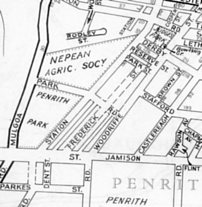
I think the Club was treated very unfairly by Council. Before we could start building on Mulgoa Road, we had to sell the Station Street site. Council made it extraordinarily difficult. One of the conflicts related to two roads on the Station Street property. One of them was no more than a line on a map. It had never been a road. But the only way we were going to be able to sell that property was to negotiate with Council. The price Council sought was $850,000 — around a quarter of the total amount the Club expected to receive for the entire property.
I tried everything to get a better deal. I told them of a similar case where a club had been able to negotiate an agreement with its local council to close a road for the nominal sum of $1, as a sign of support for the club.
Our involvement in our community was far greater than that of the other club. For instance, we had previously agreed to a joint venture with Council to build a Police Citizen’s Boys Club in Penrith. It was the first boys club ever built without the need to raise funds from the public. We were sponsoring most sports in the area. On top of this the Club’s work to get Penrith to the elite level of rugby League had dramatically increased the city’s profile. I thought we had earned the right to support from Council, rather than obstruction. The city was benefiting on a number of levels from the work we had done, and it was giving nothing back. In fact it was profiteering from our planning.
I told them what we were planning to do would be a tremendous boost for Penrith. But all they saw were the problems, rather than the advantages.
The roads incident was not the only problem imposed on us by Council over that property sale. Another episode contributed to a very nasty police investigation a few years later.
One of the key issues underlying these negotiations related to what are known as paper roads. Paper roads are sections of land set aside by councils for roads in the future. According to Pat Sheehy:
Council planners had discovered the paper road in earlier negotiations for the property. It meant that Panthers did not own the whole site, with the result that Council said “OK, if you want to buy that land back from us, this is what we’re going to charge. All this happened before I was on council, but as far as Panthers was concerned it was absolutely exorbitant.
Cowan said the problems extended beyond the property sale and continued into the approval process for the new site:
Council imposed a per hectare sewerage fee on the property based on the total area of land we owned. We were planning to build the club on an area of about 8 hectares. Most of the land was flood-prone, so you couldn’t build on it anyway. But we were hit with this huge bill, based on 86 hectares.
We had to negotiate to defer the payment, but this also became an issue. Even though we eventually came to an agreement, there are still people on Council who believe that Panthers ripped off the Council over that sewerage fee. Under the circumstances, that’s quite laughable
These issues illustrate the complexity of the negotiations and the differing perspectives that would continue to shape relations between the Club and Council.
Related Topics
Related Themes
Governance · Growth · Board Decisions · Licensed Club · Conflict
To receive new Parts and occasional project updates by email, you may subscribe below.
Readers who hold recollections, documents, or material relevant to this history are welcome to contribute via the Commentary & Contributions page.
Project Updates
Receive updates when new parts are published.

