
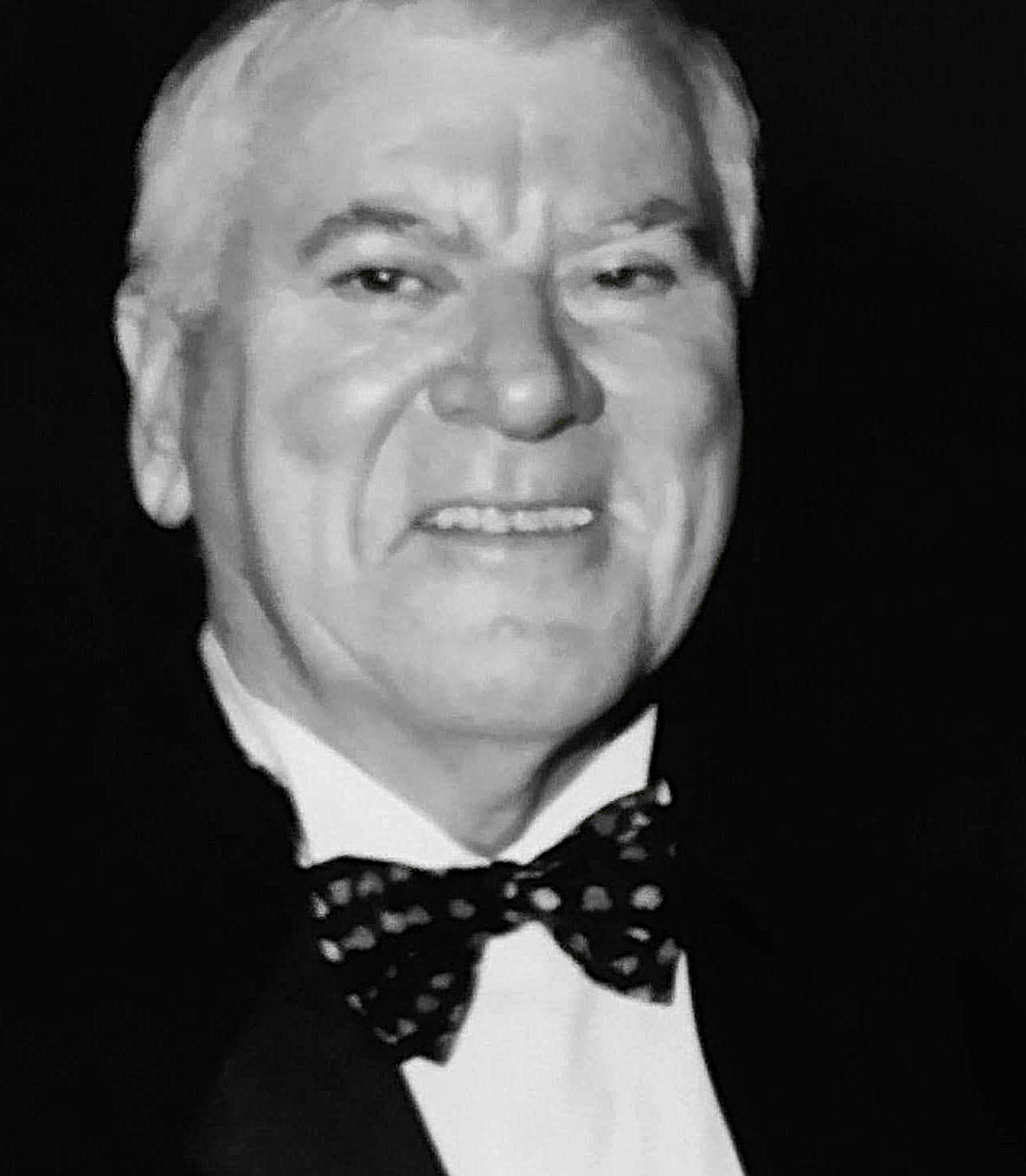
Rob Weaver
Media & Communications Manager, Panthers Group, 1996–2008
Rob Weaver joined Panthers in 1996. His appointment was a first for Panthers — there had never been a full-time position. The catalyst for creating this role was the Penrith Panthers joining Super League. Super League required all clubs to have someone covering this role. Funnily enough Rob suspects that he might not have got the job at Panthers had a number of well-qualified sporting journalists not been wary of any involvement with Super league.
It was quickly evident that the pathway to Panthers was made clear for Rob for very good reasons. Panthers was entering a challenging era.
Weaver brought to the position extensive experience in journalism and communications in Australia and overseas. That background placed him in an unusual position during the events described in Panthers, Passion & Politics: he understood both the Panthers organisation, whose position he was responsible for communicating, and the media through which much of the public battle surrounding Panthers would be fought.
Role in the Narrative
As Media & Communications Manager for the Panthers Group, including rugby league, he became closely involved in communicating responses to the many challenges faced by the Group. His years at Panthers subsequently encompassed the formation of the National Rugby League, the fight to retain Penrith’s place in the competition, the Group’s expansion through club amalgamations, the increasingly bitter divisions within the Panthers Board, and the Temby Inquiry.
Weaver appears in the narrative as the senior communications figure within Panthers during some of the most turbulent years in the club’s history.
During the struggle for Penrith to retain its place in the rationalised rugby league competition, he worked with senior management in developing and communicating Panthers’ case for survival.
As Panthers expanded through amalgamations, communications again became important in explaining Panthers’ intentions both internally and publicly.
By the early 2000s, however, the environment had changed. Disagreements, once largely contained and internal, increasingly became public disputes. Media statements, advertisements, newspaper coverage and eventually online discussion became part of the conflict itself.
Weaver therefore occupies a distinctive position in the story: he was actively involved in many of the events described in Panthers, Passion & Politics, yet for the reader he remains largely behind the scenes.
Background
Before joining Panthers, Weaver had spent all of his working life in journalism, broadcasting and communications.
His career included work as a senior journalist and newsreader with the 2GB Macquarie News Network; postings with Australian Associated Press in Singapore and London; work with ABC National Radio News, including as staff correspondent for the Indian subcontinent; and senior television news positions overseas, including Visnews bureau chief in Cairo and Tel Aviv, foreign editor with CNN, and managing editor of a major ITV station in the United Kingdom.
After returning to Australia, he became Marketing and Communications Manager for the Water Board, now Sydney Water, and later became a partner in the media training company Image Media Services.
Unlike those sporting journalists who were wary of Super League, Weaver was not. He had been steeled by events encountered in his career.
I went to boarding school in the Blue Mountains, had family connections in Penrith and have never baulked at a challenge. I wasn’t bad at sports such as swimming, tennis and cricket and had played a little soccer and rugby league at schoolboy level. Nothing to match professional rugby league, of course, but having people firing a .50 calibre machine gun five or six feet above your head or trying to stone you to death and still getting the story requires a certain amount of physical and mental toughness.
That willingness to enter a difficult environment was soon tested.
Relevance to Events Described
One of Weaver’s earliest major responsibilities at Panthers coincided with the struggle for the club’s survival in the newly rationalised rugby league competition.
Panthers management believed that Penrith should remain a stand-alone club. At the same time, it considered it essential to investigate alternatives should that prove impossible. That distinction became important as speculation grew that Panthers might amalgamate or enter a joint venture with another club.
Weaver became one of the people responsible for communicating that position publicly. The message was essentially that standing alone remained the priority, but responsible management required Panthers to investigate every available option rather than risk being left without a place in the competition.
That communications role was part of a much wider survival strategy.
Management gathered information, challenged elements of the criteria being used to determine which clubs would survive, investigated alternative arrangements and prepared for the possibility that Panthers might need to defend its position. Weaver directed the work of photographer Neil Billington, who was engaged to gather evidence of game attendances — an episode explored in the Beyond the Book article, Counting Crowds to Chase Survival.
Weaver was also responsible for an important change in the way Panthers communicated directly with supporters.
Panthers Interactive
Under his direction Panthers established an official club website at a time when the internet was still a relatively new communications medium. Weaver recalls it as the first official website established by a top-level rugby league club. It introduced innovations including half-time and full-time match reports accompanied by photographs of play.
He also persuaded an initially sceptical Board to allow a supporter forum on the site — in fact, he took the daring step of making the forum the home page. This was perhaps the most innovative — and controversial — aspect of the site. At a time when sporting organisations were accustomed to exercising considerable control over their public communications, Weaver was placing supporter debate, comment and criticism front and centre. Panthers was not simply communicating with its supporters; it was providing a highly visible place for supporters to communicate back.
This was Panthers Interactive. It became extraordinarily active. Weaver recalls that, at its peak, its traffic exceeded that of the regular NRL website. That is a significant claim and is presented here as Weaver’s recollection. What is clear is that Panthers Interactive developed into an important communications channel for the organisation.
Its significance changed as the internal divisions at Panthers intensified.
What had begun as a means of connecting supporters with the club became another arena in which competing views about Panthers, its management and its Board were expressed. Weaver describes the forum as eventually becoming “an important tool in the Board Wars”.
Some difficult navigations
His communications role was also evident during the Group’s amalgamation program. Those amalgamations brought Panthers into communities well beyond Penrith and sometimes generated substantial local opposition. Explaining what Panthers proposed, responding to criticism and dealing with media coverage became an important part of the process.
By 2002, however, the communications environment surrounding Panthers had become substantially more adversarial.
The divisions within the Board were now being played out publicly, and Weaver’s communications role inevitably drew him into aspects of that conflict. The Temby Report records, for example, Greg Alexander saying that Weaver helped him prepare the wording accompanying Alexander’s recommended ticket of candidates during the October 2002 Football Club election.
The incident illustrates the difficult territory Weaver’s position had come to occupy. Communications were no longer simply about promoting Panthers or explaining corporate strategy. They had become entangled with an internal struggle over governance, amalgamation, Board composition and the future direction of the organisation.
Those circumstances also placed Weaver close to Roger Cowan throughout the period.
Their relationship was not, however, one of unquestioning agreement.
Their relationship was not, however, one of unquestioning agreement.
Weaver has used the old expression “taking the King’s shilling” to explain his approach to organisational loyalty. To him, accepting that shilling meant owing the King absolute loyalty — but that loyalty included an obligation to tell the King when he was wrong.
Rob recalls,
Roger Cowan and I had our moments. Indeed, he once threatened to sack me.
The disagreements did not prevent a strong professional relationship developing. Weaver came to regard Cowan as “brilliant and focussed”, while believing that Cowan in turn came to recognise the value of having someone around him prepared to challenge him.
Roger became deeply concerned about confidential Board information finding its way into the media and believed the Weekender sometimes appeared to know of internal developments before management.
That relationship is important in understanding Weaver’s place in the events described in Panthers, Passion & Politics. He was part of the senior group defending management decisions during a bitter organisational conflict, but his own account suggests that loyalty to management did not mean an absence of disagreement within it.
Legacy
Rob Weaver’s years at Panthers coincided with a fundamental change in the way organisations communicated with their members, supporters and the wider community.
When he arrived, newspapers, radio and television remained the principal means by which Panthers communicated publicly. By the time he left in 2008, the internet had created a direct relationship between organisations and their audiences — and Panthers had been an early participant in that transformation.
The establishment of the Panthers website and particularly Panthers Interactive form an important part of that contribution. They demonstrated the potential for a sporting organisation to communicate directly and immediately with supporters rather than relying entirely upon traditional media.
But Weaver’s relevance to the Panthers story extends beyond technology.
During the survival struggle of the late 1990s, communications became part of strategic management. During the amalgamation period, it became a means of explaining organisational change. During the Board Wars, it became part of the conflict itself.
Weaver was involved across all three phases.
His relationship with Roger Cowan also endured beyond their working years. After Cowan suffered a series of strokes in 2014 and was living in residential care, Weaver was among the relatively small number of former Panthers colleagues who continued to visit him.
It provides a moving postscript to a professional relationship Weaver himself characterised as one involving loyalty, disagreement and mutual respect.
Related Topics
- Beyond the Book — Counting Crowds to Chase Survival
- Beyond the Book — Removed Part: Not Your Everyday Amalgamation
- Beyond the Book — Why Cutting the Membership Fee Wasn’t So Simple
- Digital Archive — The Membership Media Release: The Art of Brinksmanship
- Roger Cowan
Related Themes:
Innovation · Governance · Conflict
To receive new Parts and occasional project updates by email, you may subscribe below.
Readers who hold recollections, documents, or material relevant to this history are welcome to contribute via the Commentary & Contributions page.
Project Updates
Receive updates when new parts are published.
Editorial Note
This profile is presented as contextual background.
Additional material may be introduced as the narrative progresses.
 Panthers, Passion & Politics - The Roger Cowan Years