The Temby Inquiry

The Temby Inquiry was a formal investigation, commissioned by the New South Wales Department of Gaming and Racing in 2004, into the governance and operations of Penrith Rugby League Club.

Conducted by former senior prosecutor Ian Temby QC, the Inquiry examined a range of matters relating to the administration of the Club and the conduct of individuals associated with it. Its report, delivered in December 2004, marked the culmination of a period of conflict that forms a central thread of this series.

While the Inquiry sits outside the early timeline of this series, it becomes an increasingly important reference point as the narrative unfolds.


To receive new Parts and occasional project updates by email, you may subscribe below.

Readers who hold recollections, documents, or material relevant to this history are welcome to contribute via the Commentary & Contributions page.

Project Updates

Receive updates when new parts are published.

The Footy Five

The term “Footy Five” was coined by Ron Mulock to describe a group of five directors who, during this period, generally adopted a shared position on a range of issues affecting the Panthers organisation.

Despite the name, the distinction between this group and the other directors was not based on differing levels of commitment to rugby league. Both groups were strongly invested in the future of football in Penrith.

The difference lay more in approach than in objective. One group tended toward a more fixed position on key issues, while the other favoured a more flexible approach in responding to changing circumstances.

The most significant point of divergence related not to football itself, but to broader questions of governance — particularly amalgamation and the future structure of the Panthers organisation.

As the Footy Five is referenced throughout the narrative, it is useful to identify the individuals within the group:

  • Geoff James: Private Enquiry Agent.
  • John Bateman OAM: Local solicitor. Mayor of Penrith (1998-2000)
  • Greg Evans: Owner of the Western Weekender, a local newspaper also prominent in the narrative.
  • Craig Terry: Financial controller at Liquorland.
  • Denis Coffey: Owner of successful engineering company. Ex-player.

Related Topics


Related Themes

Conflict · Governance


To receive new Parts and occasional project updates by email, you may subscribe below.

Readers who hold recollections, documents, or material relevant to this history are welcome to contribute via the Commentary & Contributions page.

Project Updates

Receive updates when new parts are published.

A Note on Perspective

This project is not intended as a platform for grievance — though, at times, I may lapse and loosen my self-imposed restraints.

This is the place where those restraints are applied less rigorously.

Why?

Because this project is, in many respects, personal.

It centres on “The Roger Cowan Years” — and Roger is my father.

The story, therefore, is not only historical. It is also lived.

Panthers has long been embedded in the Cowan family. It is less an interest than a constant presence — something closer to home than anything else. Even now, my mother, at 91, still attends games, despite the relocation to Parramatta.

This section of Beyond the Book provides space to step slightly outside the structure of the manuscript.

Here, I may offer interpretation, perspective, or anecdote — sometimes to clarify, sometimes simply to add dimension.

There have, over time, been difficult moments connected to the events described in this material. Those are not the focus here. But nor will they be avoided if they are relevant to understanding what unfolded.

The purpose of this section is more straightforward.

To add depth where it may assist.
To provide context that sits outside the narrative.
And, at times, to share the perspective of someone who was not only observing events, but living within them.

Some of these reflections are easy to write. Others are not.


To receive new Parts and occasional project updates by email, you may subscribe below.

Readers who hold recollections, documents, or material relevant to this history are welcome to contribute via the Commentary & Contributions page.

Project Updates

Receive updates when new parts are published.

Major Player: Ron Mulock

Ron Mulock
Source: Parliament NSW

Ronald J Mulock OA, KCSG

Deputy Premier of New South Wales; Founding Member and Patron, Penrith District Rugby League Football Club

Ron Mulock was a long-serving member of the Australian Labor Party who served as councillor, mayor, state parliamentary representative, senior minister, and Deputy Premier of New South Wales. He was a founding member and Patron of the Penrith District Rugby League Football Club.

Role in the Narrative

Ron Mulock has a significant presence in the Panthers, Passion and Politics narrative.

His association with Panthers dates to the earliest days of the club, and he emerges as an influential figure during the conflicts that unfolded in the later years of Roger Cowan’s tenure. He also contributed to the efforts supporting the award of the Order of Australia Medal to Roger Cowan.

Background

Born: 1930
Died: 2014

Profession: Lawyer – admitted as Solicitor of the Supreme Court in 1955.

Public Roles:
• Mayor of Penrith: 1968–71
• NSW State Parliamentarian: 1971–1988
• Deputy Premier of NSW: 1984–1988

Honours:
• Officer of the Order of Australia (1988)
• Knight Commander of the Order of St Gregory the Great (2013)

Recognition by Panthers
• Life Membership, Penrith Panthers (1989)
• Ron Mulock AO Room, Panthers Events Centre (2012)

Relevance to Events Described

Mulock is closely connected to one of the central strands of this story.

During the late 1990s, he opposed aspects of the expansion strategy undertaken by Panthers and was aligned with the group of five directors who became known as the “Footy Five”. The four minority directors were referred to as “Roger’s Four Kinsmen” — a phrase that drew on the name of a well-known musical group closely associated with Panthers.1

Mulock’s long-standing connections within the Australian Labor Party, and his prominence in public life, contributed to a broader perception at the time that he was influential in political attention being directed toward Panthers.

Related Material


Related Themes:

Football Club · Governance


To receive new Parts and occasional project updates by email, you may subscribe below.

Readers who hold recollections, documents, or material relevant to this history are welcome to contribute via the Commentary & Contributions page.

Project Updates

Receive updates when new parts are published.


Editorial Note

This profile is presented as contextual background.
Additional material may be introduced as the narrative progresses.


  1. The Four Kinsmen were a popular Australian vocal group who performed regularly at Panthers over many years and developed a close association with the club. ↩︎

Ron Mulock – Public Tribute (Western Weekender, 2014)

The following article was published in The Western Weekender following the passing of Ron Mulock in 2014.

It provides a contemporary reflection on Mulock’s standing within the Penrith community.

Western Weekender article titled “Respected, passionate and loved: Penrith loses a true local icon” featuring Ron Mulock (2014)
The Western Weekender, 12 September 2014

Related Topics


To receive new Parts and occasional project updates by email, you may subscribe below.

Readers who hold recollections, documents, or material relevant to this history are welcome to contribute via the Commentary & Contributions page.

Project Updates

Receive updates when new parts are published.

The Impact of a Turnover Tax

A turnover tax on gambling is a tax imposed on the total amount of money wagered or “turned over” in a gambling activity, rather than on the profits generated by the gambling operators.

For example, imagine you take $100 to the races, and you place a $100 on the first race, it wins and you now have $350. You continue to bet $50 on each of the 7 remaining races. So, if you add up the amount you bet it comes to $450 – your first bet of $100 plus 7 bets of $50.

A turnover tax on this activity means the tax is calculated on the total value of the the bets placed, $450. Yet, the amount spent by the punter was only $100.

This example shows the very best result for the betting provider would be for the punter to finish the day broke – and the provider would have a revenue of $100. But they would be paying tax on $450.

Of course, it would be possible for the provider to lose hundreds of dollars to this punter, yet still pay tax on the $450 turned over.

Industry opponents of turnover taxation argued that the structure materially reduced operators’ capacity to improve return-to-player rates.

The mathematics of a turnover tax make it extremely restrictive – and, in fact, for some gambling games (like blackjack) even a small turnover tax would mean the game would not be viable.

For example, poker machines in NSW have a minimum return to player rate of 87%.

At a theoretical level this means a couple of things:

  • Firstly, it means the theoretical revenue for the operator is 13% – that is the operator can expect to retain $13 in every $100 staked on their games.
  • Secondly, it means the theoretical turnover for the player is 3.42 times their orginal stake. So, starting $100 and playing until depleted will generate a theoretical turnover of $342.

In the case of a starting stake of $100, theoretically the operator will retain $13. If a 3% turnover tax is applied their obligation to the tax office will be 3% of $342, which is $10.25.

Now, imagine an operator wants to offer a better deal to their patrons with a 90% return to player. So $100 stake produces a theoretical $10 revenue for the operator. The turnover is $388 and a 3% turnover tax will produce a tax obligation of $11.74 – so the tax office will take all the operator’s revenue plus more.

Critics maintained that turnover taxation limited pricing flexibility and distorted game viability.


To receive new Parts and occasional project updates by email, you may subscribe below.

Readers who hold recollections, documents, or material relevant to this history are welcome to contribute via the Commentary & Contributions page.

Project Updates

Receive updates when new parts are published.

Introduction — An Industry Insight

This article forms part of the serialised republication of Panthers, Passion & Politics – The Roger Cowan Years.

Start · Reader’s Guide · All Parts


Because of Cowan’s deep involvement in the licensed club industry, the history of Panthers cannot be separated from the broader history of the NSW club movement..

Phil Bennett1 was an officer with the Liquor Administration Board2 for many years. He remembers some of the interesting episodes. He had first encountered Cowan in the early 1980s. When Treasury was pushing to use turnover as the basis for taxing poker machine revenue, it was Bennett’s job to sell the concept to the clubs. Until then, only gross revenue had been taxed. Bennett said:

The idea was to tax the money being spent by the gamblers — a turnover tax3 — taking it off the top. Roger had a great moral difficulty with this, and he was very vocal.

I wrote a whole lot of papers and reports, and had to present them to the industry. By then I was in the policy section of the Chief Secretary’s department. We used the analogy of liquor . . . Clubs were paying a tax on the purchase of their liquor — which is like a turnover tax. And I also brought out other examples. So, we were trotting out all these arguments, and Roger would come back to me and say ‘that’s completely ridiculous, and a false analogy’. And proceed to explain in detail why it was, and shoot all my arguments down in flames. There was one day I distinctly remember. I had put together this paper and sent it to him, and then we met to discuss it. We were sitting opposite each other in his office, talking about the issues.

Roger presented a different analogy. ‘Look, this is different to a liquor tax. If you go and buy a beer, you pay tax on it at that point. But then you go into the toilet, and you piss it up against the wall, and it goes down the drain and it’s all over. With gaming machines, if you put on a turnover tax, you’re taxing me when I spend it now, and then I get my money back when I get a payout. But then, if I bet it again you’ll make me pay another lot of tax, and when I win again you’ll tax it again, and again, and again.’

He was right, but we were saying that’s the way all gambling is taxed. At the races, the punter is taxed out of the turnover tax. But it was very funny. He sat there, looked across at me and said, ‘well, the person who wrote this paper obviously has no understanding of the club industry.’ He knew very well that I wrote it.

Cowan does not remember being so tactless:

When Phil asked me to discuss turnover tax I was appalled, and my body language was probably negative. I was convinced that one day we would have higher denomination machines and a turnover tax would restrict the return that we could offer the customers. The turnover tax they were proposing was only 3% and that sounded small enough to get acceptance from the industry. But I was concerned it would stifle the growth and eventually it would be unfair to players. I believed that higher denominations would eventually be part of the gaming market — and that should mean offering higher returns to the player. I knew for example that there were machines in the casinos in Las Vegas paying the player 99% — not many to be sure, but it would be impossible to do that under a turnover tax.

A turnover tax would force clubs to have machines set to the lowest possible return to players, and yet, it would be highway robbery to introduce high denomination machines at less than say, 94% return to players.

So, what I was trying to convey to Phil was that they were not looking at the future potential of the industry.

I was so concerned that I called a special meeting of several of the larger clubs and made a presentation to them of the dangers of a turnover tax. It was a long battle and finally the government saw the point and withdrew the proposal. Even though I was probably seen as the leader of the push to have it withdrawn, I never felt any sense of resentment from the government or the department officers . . .

If it had been a Carr/Egan government, I might have been facing a Royal Commission inquiry much sooner.

Bennett says:

You always knew that Roger would speak out if he believed that something was wrong. And he did his research, so he always knew what he was talking about.

Researching this book, I heard many words used to describe Roger Cowan, both positive and negative.

In recent years some have sought to attach another label to Cowan — dishonest.

Barrister Terrence Lynch4 says that from the start, he never believed that the inquiry would find any type of dishonesty in Cowan’s behavior.

I really was very relaxed about the inquiry. If a man is a crook, you don’t get staff five and six years in retirement still volunteering their time to assist him.

Dishonesty was just not consistent with any part of my exposure to what that place was like. My impression of Panthers is of a very internally open organisation. There never seemed to be the sense that if you disagree with Roger, there was going to be any discomfort or risk in doing that. You can’t operate dishonestly in such an open environment. And then, that flowed down through the organisation. I got the impression that he expected those people to be equally open with their own teams.

The events of 2004 have left permanent scars on Roger Cowan. There is no doubt that he sees Panthers as his life’s work, something that he could take pride in on his retirement. In his mind, the Inquiry, and the attendant headlines and publicity, altered that. That Inquiry, and the circumstances surrounding the events leading up to it, is a story that certainly needs telling.

The real story here is the growth of Panthers from a near-bankrupt suburban club into a significant force within the NSW club movement — and how that success eventually drew it into complex and contested political terrain.


To receive new Parts and occasional project updates by email, you may subscribe below.

Readers who hold recollections, documents, or material relevant to this history are welcome to contribute via the Commentary & Contributions page.

Project Updates

Receive updates when new parts are published.


  1. Phil Bennett worked in gaming-related departments within the NSW public service, including Treasury, the Liquor Administration Board, Casino Control and as Senior Policy Adviser in the Chief Secretary’s Department. In 1989 he established Phil Bennett Consulting, advising organisations in the gaming and liquor industries.
    ↩︎
  2. The Liquor Administration Board (LAB) has since undergone structural and naming changes. Its current successor body is the Independent Liquor & Gaming Authority (ILGA) of NSW.
    ↩︎
  3. A turnover tax is calculated on the total amount wagered rather than net loss. For example, if $10 is gambled and returns $100, and $40 of those winnings is wagered again, the tax applies to the total $50 wagered. For a fuller explanation, see The Impact of A Turnover Tax in Beyond the Book.
    ↩︎
  4. Terrence Lynch was a member of the legal team engaged to represent Panthers during the Inquiry. Senior Counsel for the Panthers legal team was Bernie Coles KC.
    ↩︎

Part 2 · All Parts · Part 4

Commentary and Contributions

Introduction — On Myths: The Author’s Perspective

This article forms part of the serialised republication of Panthers, Passion & Politics – The Roger Cowan Years.

Start · Reader’s Guide · All Parts


Writing any book that attempts to record contested events is a daunting prospect.

Although the main purpose of this book is to document some important phases in the life of Panthers (the business), it is impossible to do it justice without also including some of the history of a CEO who served it for 40 years.

What was challenging about this story was that there are so many versions of Roger Cowan in people’s minds.

That was no surprise to him.

He says he came to the realisation many years ago that within each person there is a multiplicity of personalities. Each of us appears different in the eyes of everyone who knows us. A mother looks at her son and sees a very different person to the one his wife sees — or his mates, or his teacher. Cowan’s view of Ron Mulock would be poles apart from that of Mulock’s sons or friends. The same would apply to Mulock’s view of Cowan.

The task of setting a background for this book through an understanding of its characters is fraught with difficulty. It can only be completely reliable where indisputable facts are available. Many beliefs are based on opinions and will have to remain just that. Nevertheless, telling this story is important for two major reasons.

Firstly, the Panthers journey is interesting on a number of levels. Its growth, in many ways, runs parallel to that of the club industry in NSW. Standards and systems initiated at Panthers have been adopted by the industry, and sometimes even by government. The fact that one man was at the helm for forty years through that growth is also quite unusual in this country.

Secondly, and just as importantly, was the need to delve as deeply as possible into a story that must be told because of what it reveals about government and justice in NSW.

I first heard of Roger Cowan around 30 years ago1 through two of my sons who were best mates with his youngest son, Phillip. My boys would often spend time at what they called the ‘round house’ — Roger’s and Phyllis’s residence on a hill overlooking the river at Emu Heights near Penrith. Roger was a ‘good bloke’, they told me. Roger and Phyllis Cowan still live in that same ‘round house’ that my sons used to visit. From my sons’ descriptions, it hasn’t changed all that much.2

I knew that Roger was secretary-manager of the Penrith League Club in Station Street, where I used to attend the odd concert. That was the extent of my knowledge. As a shop assistant in Penrith and later, when selling advertising, I watched the little local club grow and saw in 1984 the birth of Panthers World of Entertainment on Mulgoa Road in Penrith.

I did not meet the man until 1989 when I began work in the marketing department of Panthers. The atmosphere I encountered was unlike anything I had come across in 20 odd years in the workforce. I had always had a passion for writing but had been too busy working and raising kids to do much about it. Suddenly, writing became part of my working life. The Panthers environment was one that allowed people to develop their talents – to grab the ball and run with it.

In that situation you come to believe that anything is possible.

In 1992, around my 50th birthday, I knocked on Roger Cowan’s office door (it really was always open). I told him I had decided to apply for university and if accepted I would like to keep my job but reduce my hours significantly. We came to an agreement but after I got my degree, I moved on and became a journalist/editor in a small publishing company. Panthers continued to grow.

On visits back to Penrith, I would wonder at what was happening on Mulgoa Road. The club had now become the hub of a thriving business district.

When I visited Bathurst — or Newcastle — I found Panthers there also.

On an overseas trip, in 2003, I met an American couple who told me they had stayed at Panthers on a recent visit to Australia.

A seed was growing in the back of my mind – there is a good story here and somebody should write it one day.

In 2004, I began to read headlines that alarmed me. They were telling me things that I did not believe. Later, I heard an interview in which Roger Cowan said that one day he might write a book. Early in 2005 I contacted him. If he thought a book was worthwhile, but was unlikely to write it himself, I would like to try. I knew there were writers who were more experienced – and already published — who would have been more attractive options, but there was no harm in asking.

Roger’s answer was positive. He would tell his story. His only stipulation was that I would do the research, leave no stone unturned, talk with ALL the players and write as honest and objective a story as was possible with the time and the resources available. Some of the research was easy. Many people wanted to talk — even some from 40 years ago – and they had interesting tales to tell. Others declined, which was a pity.

As an author, I was starting from a certain position. I was also determined to present a balanced picture and try to sort out the myths from reality. The myths and stories were in abundance. Some played a big role in the events that unfolded.

Long before I ever went to work at Panthers, I had heard the stories. The man was a visionary. Well, that was pretty obvious — look what was growing on that big cow paddock on Mulgoa Road I used to pass as a kid, on the way to Wallacia in my school holidays.

There were stories about how he’d bought that land himself and sold it back to the Club at some outrageous profit. And rumours that said you don’t cross Roger Cowan, because ‘he’ll get you’.

That larger-than-life character was very far from what I found when I joined the Panthers marketing team in 1989. This was a very approachable man who not only listened — he also heard what you were saying. I found Roger Cowan a fair and honest person with an absolute passion for Panthers.

But old mythologies linger.

Someone from my own family was horrified that I was writing this book and took every opportunity to tell me what an evil person this man was. Who told you this stuff? I asked. Let me talk to them. Show me. If there’s something out there, I want to hear it. When I was eventually put in touch with one of the sources of her information, he said, I’ve got nothing bad to tell you about Roger. He was always fair in his dealings with me.

Rumours are passed on and accepted by many as truth. People said to me:

Jennie, I would love to talk to you — but I’m not about to tell you anything about Roger. He gets people. My response was, OK, give me an example. Give me the name of someone he’s “got”. Let me contact them and see whether they’ll talk to me.

Quite a few said, I don’t have any examples, but I’ve heard plenty of stories. A couple said, why don’t you speak to so-and-so, he can tell you lots of stories about Roger; or talk to Joe Bloggs, he hates Roger Cowan!

So, I spoke to those people. And yes, some may have had a beef with Roger at some time but in each of them there was high respect, regard and, in some cases, real affection for the man. They are some of the characters in this tale.

Roger Cowan has some real enemies, and a couple of them did speak to me. Their stories are told in the book. They are certainly not part of the mythology. Myths have ogres and dragons and assorted bogey men but as we tell our children, they can’t really hurt you. Enemies can.

When Roger first took over as Panthers CEO, he had a plan to work in every job in the club for a set amount of time. Could have been two or three weeks — maybe a month — but he did it because he didn’t want to ask the employees to do any job that he wouldn’t, or couldn’t do, himself. He did it all, things like cleaning, picking up glasses, bar work, poker machines, etc.

More than one person who worked at the Club in those early days offers this story as fact; they were there and saw it happen.

Cowan’s version differs:

I often worked with staff in informal ways, but it is an exaggeration to say I did every job as part of any plan. For instance, in the early days I did some cleaning so that I could know what reasonable times could be allocated to different tasks.

This is how myths grow. From the mouths of people who were there, they are believable. They are usually based on some element of fact and the facts are embellished as the story grows. This principle applies to the negative stories as well as the positive ones.

In a 1999 article in the Leadership Victoria Journal, Rod Myer observed that our tall poppy syndrome results from feelings of inadequacy, and envy of successful people. They then think that those high-fliers “couldn’t have done that without help or money or stomping on people or doing something underhanded”.

The story that Cowan profited from selling the Mulgoa Road land is an example. It has never been sold3. A government official remembers being involved in an investigation:

I saw the documentation. It showed that within a matter of days, or maybe even on the same day, the property was sold at a huge profit. Of course, the word going around at the time was that Roger Cowan had benefited from that.

In fact, neither Cowan nor any other intermediary bought or sold the land. Cowan says the story relates to the site of the original club in Station Street. And yes, there was a huge profit, but not for him or Panthers. This story will be told later.

Roger Cowan walked away from Panthers in 2005 with many friends, a few sworn enemies and a trail of myths and stories. He also left a legacy. The tiny club he walked into in 1965 is now a giant enterprise that is a positive part of the lives of multitudes of people.


To receive new Parts and occasional project updates by email, you may subscribe below.

Readers who hold recollections, documents, or material relevant to this history are welcome to contribute via the Commentary & Contributions page.

Project Updates

Receive updates when new parts are published.


  1. Panthers, Passion and Politics was first published in 2007. At the time of this republication, nearly fifty years have passed since the author first heard of Roger Cowan.
    ↩︎
  2. The family home was sold in December 2011, following the events covered by this book.
    ↩︎
  3. Portions of the Mulgoa Road property have since been sold to a developer. The sale occurred after Roger Cowan’s retirement. Stage 1 of the residential development has been completed, with Stage 2 underway at the time of this note.
    ↩︎

Part 1 · All Parts · Part 3

Commentary and Contributions

Introduction — The Rise of Panthers: Success, Excitement & Conflict

This article forms part of the serialised republication of Panthers, Passion & Politics – The Roger Cowan Years.

Start · Reader’s Guide · All Parts


WHAT A STRANGE TALE this turned out to be!

The chronicle of a business — a struggling back-street club in a semi-rural town that grew to have assets worth more than half a billion dollars.

A story of well-intentioned people working together to achieve great results.

A story that adds significantly to the history of registered clubs in NSW.

And yet the story of building great success and positive culture gives way to a troubling tale of relationships falling apart.

There are elements that will trouble those who assume democratic governments are immune from overreach — that they are above persecuting its citizens. Readers who believe in free speech and the obligation of the media to report the truth may also wonder at some of the events described here.

One of the main players is Roger Cowan, who spent 40 years as CEO of Panthers and led the Club through incredible growth, and finished his career in the most difficult and disappointing circumstances.

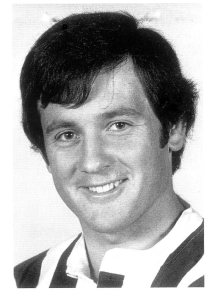
Roger Cowan circa 1968

The Club’s journey from a tiny club first licensed in 1956 to the giant enterprise1 it is today included some great successes and excitement — and plenty of disappointment and failure. When Roger took the reins the tiny Club was close to closing. Under his stewardship it grew to include 14 clubs and their lands, various playing fields, bowling greens and other facilities, a ten-pin bowling centre and a mobile-home village near the Nepean River.

The growth and expansion of the Panthers enterprise was accompanied by the nurturing and development of an enormous wealth of talent, skills and a culture that has grown and spread throughout the entire New South Wales club industry.

Cowan recalls the years from 1997 until his retirement in 2005 as being easily the most difficult and frustrating in his 40-year tenure. The final outcome was an unnecessary and deeply damaging Government Inquiry.

During this eight-year period the principal actors included a group who became known as the Footy Five2; past and present members of the NSW Labor government; Ron Mulock, a former NSW deputy premier; and The Sydney Morning Herald. These influences would extend beyond the Club, ultimately converging in the events that led to the Temby Inquiry.

But history extends more than eight years.

To understand those years, we need to look at the entire journey of Panthers.

In 1967 it was, by far, the smallest of all the clubs supporting a first-grade rugby league team. Today, it is the largest.3 We also need insight into the demarcation between the two club entities — football club and registered club4 and the men that controlled them.

Cowan’s conviction that a single management structure was essential to the success of both clubs created great animosity and indirectly led to a police investigation and the charging of Cowan with fraud.5

The Super League disputes of the late 90s, and Penrith’s difficulty in qualifying for a place in the new NRL competition divided a city and led to a bitter conflict within the cloisters of Panthers.

The growth of Panthers, through amalgamations with struggling clubs caused even more serious relationship difficulties, despite its success in building the assets of Panthers.

Eventually open hostility broke out between Board and Management.6

In the background were other influences. The Treasurer of the NSW government and the state’s gaming minister had both condemned the growth of large clubs, singling out Panthers; the government was planning crippling taxation increases; a local council election was looming in Penrith; and the city hosted several events when the Olympic Games came to Sydney in 2000.

For Roger Cowan, things would converge in June 2004.

Strict mechanisms were already in place to regulate the club industry but faced with massive protests over new gaming taxes, the government introduced legislation that would enable it to mount Royal Commission-style inquiries into clubs and their officials, on the basis of mere allegations. The move was unprecedented. Royal Commissions are almost sacrosanct and to instigate one against an individual was previously unheard of. Cowan and Panthers endured six months of inquisition under Commissioner Ian Temby — high profile veteran of ICAC inquiries, such as the one which had ousted Premier Greiner.

No charges were laid. No action was taken.

The monetary costs — to Panthers, Cowan, and to the NSW taxpayer — were enormous.

But there were other costs.

Temby was directed to investigate six allegations about practices at Panthers. Beneath the public posturing lay what Cowan regarded as a profound misuse of power — a government prepared to violate our systems of justice for its own ends.7

Not one of the allegations was based on evidence that could possibly survive a court hearing and lead to criminal charges. Not one.

The outcome was bloody,

  • The Footy Five were removed from the positions they had fought so hard to preserve,
  • Panthers incurred huge costs,
  • Cowan’s reputation, health (physical and mental) and finances were battered.
  • The NSW Labor Government demonstrated a strange code of justice and,
  • The lack of balance in the coverage by the Herald8 will probably go unnoticed in the flood of exaggeration, beat-ups and lies that are evident in the media every day.

Roger Cowan admits that he handled several events badly. Given the time over, he says, there would be a lot of changes. It is possible that other participants would say the same, but many were unwilling to provide information.


To receive new Parts and occasional project updates by email, you may subscribe below.

Readers who hold recollections, documents, or material relevant to this history are welcome to contribute via the Commentary & Contributions page.

Project Updates

Receive updates when new parts are published.


  1. Panthers Passion and Politics was published in 2006. Since that time, the size and structure of Panthers has changed considerably. Today Panthers includes the Penrith Panthers NRL team, the flagship registered club at Penrith, Cables Wakeboard Park (leased to an operator), and clubs at North Richmond, Port Macquarie, and Glenbrook. Several previously amalgamated clubs and properties have since been divested, and portions of the Penrith site have been sold for redevelopment. A Convention Centre has recently been completed at Penrith and leased to Pullman, and a Panthers Rugby League Academy has been established.
    ↩︎
  2. “The Footy Five” was a label applied to five Panthers directors who held a majority on the Board during the years of conflict. According to former director John Bateman, the term emerged toward the end of the dispute and may overstate the extent to which the five directors acted as a unified voting bloc throughout the period. See – Beyond the Book – The Footy Five.
    ↩︎
  3. This claim reflects the position at the of publication in 2006. While Panthers remains one of the largest clubs supporting a first-grade rugby league team, its relative size and standing within the NSW Club Industry has diminished since that time.
    ↩︎
  4. The two entities are Penrith District Rugby League Football Club (PDRLFC) and Penrith Rugby League Club Ltd (PRLC). The first is the football club; the second is the licensed club.
    ↩︎
  5. Roger’s persistence with this belief contributed to a later claim that he was anti–Rugby League. That perception was also influenced by his criticism of excessive spending by some Rugby League committees. The fraud charges referenced here were subsequently dismissed. The circumstances surrounding those charges are explained later.
    ↩︎
  6. This sentence may suggest that such conflict was inevitable. Some degree of tension exists in all organisations, and when managed constructively it can generate energy and growth — a dynamic evident throughout much of Roger’s 40 years at Panthers. The escalation in this period, however, required a particular convergence of personalities and circumstances, and proved unusually destructive.
    ↩︎
  7. This episode resembles what is now sometimes described as “lawfare” — the strategic use of legal or quasi-legal processes in political disputes. The mechanisms employed raised questions about the practical operation of the separation of powers within the Westminster system. These constitutional issues are discussed later.
    ↩︎
  8. The Sydney Morning Herald – a Sydney daily broadsheet newspaper. ↩︎

Part 0 · All Parts · Part 2

Commentary and Contributions

Foreword by Roger Cowan

This article forms part of the serialised republication of Panthers, Passion & Politics – The Roger Cowan Years.

Start · Reading Guide · All Parts


Originally written by Roger Cowan for the 2006 publication. Minor typographical corrections have been made.
Editorial footnotes reflect updates since original publication.


My purpose in getting involved with this book was at first quite narrow. I wanted to set the record straight.

Over the last six years of my career as CEO of Panthers there was a sustained effort to discredit and damage me and it was, in many ways, very successful. To see a 40-year career come to a climax of consistent attacks by a small group of locals, the state government and The Sydney Morning Herald was a huge disappointment. There was a concerted effort by some powerful individuals and organisations to brand me with the corruption label.

However, I eventually came to the conclusion that it serves no useful purpose to be driven by revenge. Cheap shots at those who tried so hard to destroy my reputation would only reduce the credibility of a story that is important in many ways. The facts speak for themselves and the reader will undoubtedly see many instances of dishonesty or corruption in these pages. Placing labels where they fit best will be left to the reader to a very great extent.

For most of my career at the club I enjoyed excellent relationships with boards. The growth of Panthers would not have been possible otherwise. Throughout sections of the book, there are a number of criticisms of the ‘board’. They relate to events that occurred during some conflicts in the latter part of my tenure with Panthers. I wish to make it very clear that no criticism was ever intended of the four stalwarts who were in the minority during that period, and in no position to insist on better outcomes. The Panthers board that exists today1 is far different, and no current director could be criticised for any of the injustices described here. In fact, it could well be argued that today’s Panthers board ranks as one of the best the club has ever had.2

On a number of occasions people told me that they did not need a book to convince them of the truth. They are friends of course, and there were more than I anticipated who stood by me — some because they were close to the action and knew the truth, and others because they were so supportive, they refused to believe the headlines.

But there are many thousands who would have believed the headlines. One example is the businessman who was attending a meeting of a company of which I am a director. He did not know me, or anything about my background. He was explaining to the meeting, as an example of dishonesty, the recent case of the CEO of Panthers ripping the club off through his private company. This was more than a year after Ian Temby had handed down his findings.

My friends put him straight, but — for me — the point was made.

The author, Jennie Bentley, had a long-held ambition to tell the Panthers story from the business point of view and, after some initial doubts, I could see that just focusing on the more recent years was far too narrow a view of a business that grew from such a tiny seed to its position today. So, we agreed that she would write the history of Panthers. I warned her she would have to do all the research and she had to remain as objective and factual as possible. There are sections of this book highly critical of dishonesty in the media and it would be hypocritical to the extreme to publish this book without a strong regard for objectivity and accuracy.

Of course, there are opinions expressed but, hopefully always in such a way that they can be identified as opinion and not masquerading as fact.

Many people would categorise some of the behaviour of the NSW Labor government, described here, as dishonesty and injustice. But that is not the story.

The message in this book, as I see it, is more important than that.

The history of Panthers shows how a wonderful, community focused business can be built by the co-operative, unselfish efforts of thousands of people working together. But it also gives frightening proof of how easily it can be undermined by a clash of values, and the negative influence of small numbers of people pursuing their own agenda.

Every day we are confronted with graphic examples of TV beat-ups to win ratings, and dishonest statements made to win elections. Excesses in the media and in government are damaging the fabric of our society and we accept it as a way of life.

Horrendously oppressive legislation is still in place that denies normal levels of justice to officers of clubs, and nobody is screaming for its repeal.3

I cannot resist having my say about one of the more interesting events, and to admit that it was only in the last couple of months of preparation for publication that I came to an astonishing realisation. Unfortunately, it came two years too late. Had I been smart enough to see it earlier I think I would have handled some major events in my life much differently.

Why did I miss it? The explanation is simple. I was not sufficiently strong of mind to avoid going into complete defence mode when I was attacked. What was going on consumed my mind for every minute of every day for many months. Hundreds of hours were spent digging through old records, preparing reports, analysing evidence and meeting with solicitors.

The lesson I learnt is this:

When you are being attacked — no matter how viciously — and you are absolutely absorbed by the need to defend, you must stop. Stop for sufficient blocks of time every day, move out of defence mode and focus on fully understanding what you are defending.

Working through those events for this book, I realised that I had spent all that time trying to defend allegations that actually had no merit and could not possibly have justified treatment at a Royal Commission level. With that realisation, every grain of logical thought could only take me to one possible conclusion:

The Temby Inquiry was called by the government for one, and only one, purpose — to help the government win the battle for public perception of its unfair tax impost on clubs.

A media eager to feast on stories about high profile people and organisations could only help it justify its actions.

I came to believe that there is overwhelming evidence that a democratically elected government and a major newspaper were so intent on building a particular public perception that they were willing to sacrifice my reputation, my health, and my financial security. They showed willingness also to sacrifice the rights of citizens of this supposedly “fair-go” country for their own ends.

The book suffers a little in its objectivity because some of the main actors in the most recent years refused to be interviewed or even answer written questions.

So, now I’ve got that off my chest, let’s get focused on Jennie’s tale of the growth of Panthers, and say how much we appreciate the contribution of all those who agreed to be interviewed. Unfortunately, Jennie wasn’t able to use all the material she collected but we are just as appreciative to those who finished on the cutting room floor as to those who are reported.

I believe Jennie did an excellent job of putting her extensive research into an interesting format. I appreciate her sincerity and thoroughness; and the great teamwork we built during the process. The excellent guidance of Matthew Richardson of Halstead Press — who no doubt took very little time we were first book novices – made an enormous difference to the final product.

I am especially grateful to my wife, Phyllis, for helping me through some nasty periods and my three sons and their wives for their unwavering support and faith in me.

And I dedicate this book to my seven grandchildren, whose future in this country will be more assured when honesty becomes the number one value in both government and media, and we have sufficient insight to know when it is being violated.

Roger Cowan


To receive new Parts and occasional project updates by email, you may subscribe below.

Readers who hold recollections, documents, or material relevant to this history are welcome to contribute via the Commentary & Contributions page.

Project Updates

Receive updates when new parts are published.


  1. This Foreword was written in 2006. From approximately 2008, Panthers’ governance structure began changing with an increased operational involvement by members of the Board. ↩︎
  2. This comment refers to the Board structure and composition as it existed at the time of writing (2006). The governance model changed in subsequent years. ↩︎
  3. Section 41X of the Registered Club Act (NSW) referred to here has subsequently been repealed. ↩︎

All Parts · Part 1

Commentary and Contributions