The 1983 Strategic Reset

The Low Point

In the 2001 publication Hooked On League: Royce Simmons1,  Royce tells the story of Darryl Brohman asking his advice, at the end of 1983, about an offer he’d received to move to Canterbury-Bankstown. Royce’s advice paints a clear picture of the state of the Penrith Panthers at that time:

… thanks for thinking of us but right now we’ve got five players on contract and you’re a free agent being chased by probably the best club in the world.

The reasoning behind Royce’s that advice is also telling:

I don’t think he wanted to leave us high and dry but we told him that we were high and dry whether he stayed or not.

Simmons’ view was that “things were looking bleak” for Penrith.

In fact, things were so bleak, even the independently run Panthers Supporters Club had dissolved at the end of 1983 and needed its own reset. The supporter’s club had two Panther diehard supporters — Cathy O’Kane and Berryl Moss who took on the task of whipping up wider support for the 1984 Season and beyond.

And Panthers had Roger Cowan who had finally been granted the governance structure he’d so long been advocating.

The Change

One of Cowan’s first steps under the new One Board, One CEO structure was to involve more people in finding solutions to serious problems. Problems like the performance of the rugby league team.

Royce had been weighing up whether to leave Penrith when he was invited to join the effort to find those solutions. He described that first step to a reset of football fortunes.

Prior to the start of the 1984 season Roger Cowan organised a series of seminars at Penrith Leagues Club — a ‘think-tank’ involving prominent Penrith business people, junior rugby league administrators, past and present players, and local community leaders. In one of the groups, Tim Sheens’ name came up as a possible coach.

It was an approach that mirrored what he had done with the licensed club in the early days of his tenure.

This symposium produced a range of strategies and goals, two of the goals had a significant impact on Panthers football performance.

The first, most immediate, goal was to secure Sheens for the coaching position — it was late in 1983, training for the 1984 season needed to begin soon yet Penrith had few players and no coach. This was a pressing need. And it was a challenging task given the fact Sheens had sold his real estate business and was preparing up to move his family to Queensland.

Royce worked in the background to get Sheens to stay, but says:

I’m sure Roger Cowan worked the hardest to convince Tim to take on the job.

[He] really went out of the way to chase hard and talk Tim out of going. The players played a supporting role in letting Tim know that we’d support him.

Tim signed on as the club’s first Manager-Coach.

Appointing a Manager-Coach was unusual in the rugby league world — although it was a pressing short-term need to appoint Sheens as coach, expanding the role was a strategic move.

The second goal was more long-term and strategic — to have 5 Penrith juniors selected for the Kangaroos — the Australian Rugby League team. A Five by Five Committee was established to take responsibility for developing initiatives to achieve this goal.

Don Feltis was a member of this Committee:

We talked about strategies and all the rugby league development issues … like making sure our best juniors were selected into representative squads; to set up development squads — age groups between the representative squads — like 13s, 15s and 17s and give them personalised coaching; panels to interview possible coaches and to have only the best coaches — and to have all our coaching techniques standardised so that all our juniors from 13s to  19s were getting similar tuition … under the guidance of Tim Sheens.

It was a great exercise and made a lot of difference to the future development of our club. … it made us all wake up and realise all the things we had to do to be successful. Roger had always been a dreamer … a visionary. He realised we had to lift our club up from the level we were performing at.

A Different Way of Thinking — from Goals to Outcomes

The stated goal of the Five-by-Five Committee was to have five home-grown players represent Australia within five years.

Looking back, this appears to have been an early example of a planning philosophy Roger Cowan would later apply much more broadly throughout the Panthers organisation. That philosophy centred around “outcomes thinking“.

This goal was an outcome – a description of a future that would be proof of a successful project. During the 90s at Panthers this would have been framed:

 In November 1999 (5 Seasons away) the Australian Kangaroos have included five representatives from Panthers who were developed in the Penrith Junior Rugby League District.

Working backwards from that future enabled a more creative approach to uncovering the initiatives, programs and strategies that would have a positive effect on creating that future. Initiatives like those described by Don Feltis above.

The Five-by-Five goal was never intended as a prediction. It was a deliberately ambitious picture of what success would look like if the club fundamentally changed the way it developed players in their huge junior catchment area.

Quite quickly early indicators drove some optimism —  the governance model reduced conflict, Cathy and Berryl re-launched the supporters’ club, Tim Sheens had players wanting to stay, and the team began making its way up the competition ladder.2

Continue: The 1983 Strategic Reset — Did It Work? examines whether the strategic changes introduced in late 1983 produced measurable improvements in the Panthers’ football performance over the following decade.


  1. Hooked On League: Royce Simmons with Alan Whiticker published 2001. Chapter 19.
    ↩︎
  2. The headline in the SMH clipping is dramatic but not accurate – Penrith had been in the top 5 before, a few times but only once before had they been there after at least 5 rounds of a season. ↩︎

Related Topics


Related Themes

Governance · Football Club · Innovation


To receive new Parts and occasional project updates by email, you may subscribe below.

Readers who hold recollections, documents, or material relevant to this history are welcome to contribute via the Commentary & Contributions page.

Project Updates

Receive updates when new parts are published.


Major Player: Tim Sheens

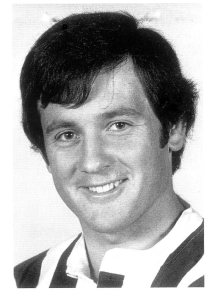
Tim Sheens
Image Source: The Panthers: Men in Black

Tim Sheens

Player, Coach, Administrator.

Tim Sheens occupies a unique place in Panthers history.

Many people remember him as the coach who guided Penrith to its first finals appearance. Yet his most important contribution may have come before a ball was kicked in 1984.

At a time when questions were being asked about Penrith’s future in first grade, Sheens chose to stay and help rebuild the club.

Unlike many coaches who arrive from elsewhere, Sheens understood Penrith from the inside. He had played more than a decade of first-grade football for the club and his family’s involvement in district rugby league stretched back generations.

Role in the Narrative

Although Sheens’ appearance in Panthers, Passion & Politics is brief, it acknowledges him as one of the key figures in the football club’s revival following the introduction of the unified “One Board, One CEO” structure in 1980.

By 1983 the football club faced significant challenges. Player retention had become a major problem, results remained poor, and concerns existed both within Penrith and within the NSWRL about the club’s long-term competitiveness.

Following a series of community workshops organised to identify a path forward, Sheens emerged as a central figure in the proposed football rebuilding program.

His appointment as coach in 1984 represented one of the most important football decisions made during the Roger Cowan era.

The Risk

When Penrith approached Sheens about coaching the club, his future appeared to lie elsewhere.

Sheens had already accepted a player-coach position in Queensland and was preparing to leave Sydney when Panthers approached him. The opportunity offered greater certainty than a struggling Penrith side that had won only six matches in 1983 and faced serious questions about its future.

Before making a decision on the Panthers role, Sheens spent several days discussing the decision with his wife Rhonda – whose family were in Queensland. Remaining at Penrith meant abandoning established plans and taking responsibility for rebuilding one of the competition’s most troubled football clubs.

From a football perspective, accepting the Penrith role carried considerable risk.

The Panthers had won only six matches in 1983. Experienced players were leaving. Recruiting power was limited. Media commentary frequently questioned Penrith’s ability to compete with the stronger Sydney clubs.

For an aspiring young coach, failure at Penrith could easily have damaged future opportunities.

Roger Cowan later recalled being impressed by Sheens’ contribution during the community workshops and believed he possessed both the football knowledge and commitment needed to help implement the club’s new direction.

Sheens agreed to stay.

Building From Within

Rather than rely heavily on expensive recruitment, Sheens embraced the philosophy emerging from the workshops.

The focus shifted towards local talent, player development and creating stronger pathways from junior football to first grade.

This approach aligned with the club’s Five by Five objective: producing five representative players from Penrith’s junior system within five years.

Under Sheens, young local players were given opportunities and expectations began to change. For the first time, many within the club started to believe that Penrith’s greatest resource was not money but its own district.

Sheens did more than advocate for local development. He actively worked to retain and recruit players he believed could form the nucleus of the club’s future, including Mark Geyer, Greg Alexander, Colin Van Der Voort and future champion Brad Fittler. His approach reflected a belief that Penrith’s long-term success would be built from within the district rather than purchased from outside it.

Intermediate Results

The improvement was rapid.

In his first season as coach, Penrith narrowly missed the finals and recorded its best performance since entering first grade.

The turnaround was so significant that Sheens was awarded Coach of the Year by his fellow Sydney first-grade coaches.

The following season Penrith qualified for its first finals series.

The achievement provided tangible evidence that the governance reforms, strategic planning and renewed focus on junior development were working.

Background

Born: 30 October 1950

Playing Career
• Penrith Panthers Player #62 (1970-1982)
• Club record-holder for most first grade appearances at time of retirment (174).

Coaching Career
• Penrith Panthers (1984-1987)
• Canberra Raiders (1988-1996)
• North Queensland Cowboys (1997-2001)
• Australian Kangaroos
• NSW — State of Origin
• NSW — Super League Tri-Series

Recognition by Panthers
• Life Membership, Penrith Panthers (1990)

Relevance to Events Described

The significance of Tim Sheens within this story extends beyond coaching results.

The introduction of a unified governance structure provided Penrith with a framework for success. Sheens helped translate that framework into football outcomes.

His willingness to remain at Penrith during one of the club’s most uncertain periods, and his commitment to developing local talent, played a major role in establishing the pathway that eventually led to the club’s emergence as a genuine first-grade force.

For Panthers, Tim Sheens was not simply a successful coach. He was one of the people prepared to stake his future on the club when many others doubted it had one. In helping to change the club’s future, he changed the course of his own.

Related Topics


Related Themes:

Football Club · Culture


To receive new Parts and occasional project updates by email, you may subscribe below.

Readers who hold recollections, documents, or material relevant to this history are welcome to contribute via the Commentary & Contributions page.

Project Updates

Receive updates when new parts are published.


Editorial Note

This profile is presented as contextual background.
Additional material may be introduced as the narrative progresses.


The Right Structure. Finally!

This article forms part of the serialised republication of Panthers, Passion & Politics – The Roger Cowan Years.

Start · Reader’s Guide · All Parts

The structural compromise — two CEOs answering to a single board — had not resolved the underlying problems. If anything, it had deepened them. By the early 1980s, the consequences were becoming impossible to ignore — both on and off the field.

The Gibson years saw the Penrith football team continue its sad record of recent times. The club was putting major resources into building the new premises, and there was criticism that the team’s rugby league performance was a direct reflection of that spending.

In their 1992 book Bound for Glory, Greg Pritchard and Gary Lester tell of that period. They quote 1980-81 coach, Len Stacker, as saying that rugby league funds had been frozen before the 1981 season, although this has been disputed by Roger Cowan. Stacker also said he had been forced to bring in some ‘blokes from the bush’ to prop up the numbers. One of these bush blokes turned out to be Royce Simmons, the hero of Penrith’s first premiership and the city’s favourite son.

Also playing for Penrith at the time was Tim Sheens. He had finished 1982 with the club record for the number of games played (166) and was looking forward to the season. Gibson went off on his Kangaroo tour, telling Sheens he would talk to him when he came back.

When Gibson returned, Sheens went to his office to see him. Gibson told him that there was no point in even sitting down. The club had overspent and there was no room for Sheens, who was dropped from the team. Instead, they had signed Tony D’Arcy, a rugby union international, at almost twice the salary of Penrith’s highest paid player. D’Arcy was never to play a first-grade game for Penrith.

By the end of 1983, the football club reached its lowest level yet. It finished close to the bottom of the competition, it had only two players on contract for the following year, and it had no coach.

Even Royce Simmons has said he seriously considered leaving the club at the end of 1983. Community support had dropped along with the team’s performance, resulting in an income shortfall. An injection of funds was urgently needed, but the club was being held on a tight budget. The club under construction over on the Mulgoa Road property incurred significant cost  increases, causing anxious moments in management and at the bank.

The dismal prospects now facing the football team were enough to convince the Board. It finally voted to put rugby league back under the control of Roger Cowan. Gibson left soon after and successfully sued the club for wrongful dismissal. Keith Rhind, when he took the chairman’s seat, had formed a close friendship with Gibson but he would ultimately be instrumental in Gibson’s departure from the club.

 ‘It was one of the worst periods in my life’, he says, ‘and it still upsets me to think about it.’ 

When it came to the vote that would ultimately oust Charlie, it was four all and I had the casting vote. But I had been put in an impossible position. Whichever way I went, I was going to lose friends, but I knew that things couldn’t continue the way they were. I did what I believed was best for the club and voted to move the responsibility for rugby league to the licensed club management.

When it came to the vote that would ultimately oust Charlie, it was four all and I had the casting vote. But I had been put in an impossible position. Whichever way I went, I was going to lose friends, but I knew that things couldn’t continue the way they were. I did what I believed was best for the club and voted to move the responsibility for rugby league to the licensed club management.

The board decided that Cowan’s role would be expanded to include both the licensed club and the rugby league club, and his contract was changed again by mutual agreement. There would be one board of directors and one chief executive of the entire organisation.1 It was the model that Cowan had been advocating for so many years.

After a decade of advocating change, Cowan now had the chance to prove the model that he had recommended. But he had a massive job ahead of him. Three years of compromise had put the club into a weak position. It had money problems, no coach and hardly any players.

He attacked the problem using a tactic that had proved successful within the licensed club. The think-tank-style brainstorming sessions had produced many good ideas for the business, so he decided to carry it through in his new role.

At the end of 1983, he invited a large number of key stakeholders to attend workshops at the Club. The objective was to bring together the people who had an interest, or who would benefit from a successful, competitive rugby league team. There were directors and players, club officials and some former players, representatives from the media and local businesses, even some politicians. The junior league and school rugby league were also well represented. He told them they had to take ownership of the problems, and find solutions they could all support.2

The workshops were facilitated by Cowan. Despite the gloomy outlook, there was a great deal of enthusiasm and a commitment to succeed irrespective of obstacles.

Again, the results would be positive – this time for rugby league in the district.

There had never been a state or Australian representative player from the Penrith Junior District. Arising from the workshop, the Five by Five Committee was formed. Its goal was to develop five representative players in five years – and it succeeded.

The schools and junior league forged closer relationships, and ideas came up for a stronger junior competition. Profiles of coaches were drawn up. But the most important outcome was a greater feeling of ownership and sharing of the problems throughout the community.

Tim Sheens attended the workshops, but he had a family commitment and left early. Cowan says he had been most impressed by Sheens’ contribution to the workshops and by his strong sense of loyalty to Penrith. Much of the discussion had centred on the type of coach they would need. Sheens had presented strong ideas about coaching and players – and about club management.

It became clear to Cowan that Sheens would be the ideal coach for Penrith. When he discussed his thoughts with some close associates, he found that they had been equally impressed.

When Cowan contacted Sheens, he discovered he was too late. He and wife Rhonda were moving to North Queensland. They had sold their furniture and were ready to leave within days. Further meetings followed, including a momentous dinner with the couple. By the end of the night, both could see the opportunity.

Rhonda Sheens encouraged her husband to take up the challenge. It was a big decision for her — she had been looking forward to a move back to Queensland to be closer to her family. Tim Sheens became the first grade coach, and agreed to also take on some management duties, including recruitment of players.

In his first year, Penrith missed the play-offs by a whisker.  In 1985 Sheens guided the club to its first ever semi-final appearance.

For the following 15 years, the model stood firm. The board set all policy for the entire club including rugby league, and achieving that policy was the responsibility of one person, the CEO of the group. At times Cowan would take on the role of rugby league chief executive. He would have a manager looking after day-to-day issues, but be personally responsible for higher level decisions.

I really enjoyed that role, but when someone was doing a good job – Don Feltis and Mark Levy for instance – I promoted them to the top football position.

The reform had gone beyond the CEO and board — it now meant one management team working in harmony for the betterment of every part of Panthers. The catering manager was now just as likely to have input into rugby league strategies, as the rugby league CEO might have into staff motivation principles for the bars.

But even though Cowan had achieved the goal of ‘one board, one CEO’ at the end of 1983, the Board remained precariously balanced.

A spur of the moment decision by Cowan and Armstrong after a football game at the end of the 1984 season was enough to tip the balance, and almost put Hewett back in the chair. More importantly, it would put some events in motion that led to two police raids on Panthers.

The record books also show that from the time the model was implemented in 1984, there was a marked improvement on the rugby league side. In 1985 the first grade side made the semi-finals and in 1988, they lost a play-off for fifth place. In 1989 they made the finals. In 1990 they were grand finalists and in 1991 the Panthers won the trophy.

The success was not only on the scoreboard. A new sponsorship scheme with the Penrith Star newspaper began to ease the financial burden on the registered club. As the performance of the team improved, crowds began to pick up, which also had an impact on the bottom line.

Tim Sheens stayed until 1987, to be replaced by veteran coach, Ron Willey. Willey’s unorthodox methods led to unresolvable problems with the players, and Cowan negotiated a resignation settlement with him. In late 1989, Cowan and football chief executive Ross Gigg were able to recruit Phil Gould. Gould, who had begun his playing career with Panthers, had coached Canterbury to a premiership in 1988. After losing the grand final to Canberra in 1990, Gould steered the Panthers to their first premiership a year later.

In 1984, the same year that the new management model for rugby league was implemented, the club was opened in Mulgoa Road amid a fanfare of free publicity. It was a brand new model for licensed clubs, and it set the bar higher for the club industry. Both events were turning points for Panthers.

Although the new club opened in a blaze of favourable publicity, it had not been completed. The long delays in getting approvals and other factors beyond the club’s control contributed to a blow-out in the costs of construction. The main entertainment room was an empty shell until profits could be used to complete it. A large part of the car park was left unfinished.

Although the new club opened in a blaze of favourable publicity, it had not been completed. The long delays in getting approvals and other factors beyond the club’s control contributed to a blow-out in the costs of construction. The main entertainment room was an empty shell until profits could be used to complete it. A large part of the car park was left unfinished.

In the planning phases of the new complex, the concept of motel accommodation came up. It would fit neatly into the club’s objectives, but the costs blow-out forced it into the “deferred ideas” drawer.

However, the builder could also see the potential.  He made an offer to build a motel adjoining the new complex, and it was accepted. The agreement was that the club would sell the builder the required area of land for one dollar. The builder would then use the equity in that land to finance construction. Panthers would lease the motel back and manage it until it had the funds to purchase it. The Club had an option to purchase the motel and the land for the cost of construction, plus an agreed profit for the builder. The land would be part of that package and would be put back in at a one dollar value. It was a brilliant scheme, and it worked well for all the parties involved.3

The 54 room Panthers Motor Inn was completed in 1986, with 115 more rooms approved by the Board in 1988. The Club sold it – now 216 rooms – in 2006, for $28.5 million.4

Panthers barrister Terrence Lynch says that this transaction was one that DGR counsel, David Staehli, seized upon in the 41X inquiry, sure that at last he finally ‘had’ Roger Cowan. His hopes were dashed when Cowan was able to show exactly what had happened throughout the entire process.

The new rugby league regime brought the football club the successes that had eluded it for its first 17 years, including two premierships and several finals appearances. The new Panthers licensed club brought significant changes in management and structure, unprecedented growth, and the completion of assets that would ensure the security and cash flow of the organisation through some very difficult times.

But behind the scenes it was not all beer and skittles. John Hewett still carried a badly wounded ego. Cowan’s erstwhile friend and supporter, club patron Ron Mulock, was showing early signs of disapproval about the dramatic growth of the Club.

The football team was finally making its mark, and the business was showing the potential that would take it into the top 300 private companies. In the midst of the successes, trouble was simmering that would eventually bring Panthers and Cowan into their darkest periods.


To receive new Parts and occasional project updates by email, you may subscribe below.

Readers who hold recollections, documents, or material relevant to this history are welcome to contribute via the Commentary & Contributions page.

Project Updates

Receive updates when new parts are published.


  1. This decision fundamentally changed the governance structure of Panthers and helped resolve a decade of conflict over the management of rugby league. For a more detailed explanation of why the “one board, one CEO” model became so important see Beyond the Book — Why One Board, One CEO.
    ↩︎
  2. Beyond the BookThe 1983 Strategic Reset explains how governance reform, the appointment of Tim Sheens and the Five by Five Committee formed part of a broader change in Panthers’ approach to football.
    ↩︎
  3. The arrangement was designed to overcome the club’s immediate financial constraints. The builder funded construction and accepted the development risk, while Panthers retained the right to acquire the completed motel and land at a pre-agreed future price.
    ↩︎
  4. The financial transactions around this part of the Mulgoa Road development would later be examined during the Temby 41X Inquiry where the legitimacy of the arrangement was able to be demonstrated. ↩︎

Part 20 · All Parts · Part 22

Commentary and Contributions

Rugby League’s Inner Circle

A removed section from the original Chapter 7: The 16 Year Struggle to Streamline Rugby League.

Cowan says that at the time of his campaign for one board, the NSW Rugby League was run by a clique. This was a widely held view within rugby league circles at the time. The General Committee consisted of delegates and vice-presidents from every club – more than 40 delegates attended the monthly meetings. It was extremely unwieldy and inefficient. It is difficult enough for a 15-person board to get to good decisions in reasonable time, says Cowan. He recalls his time on the NSWRL executive in the early seventies.

What’s really funny is that for a while I thought that I was in the clique. We used to meet before every general committee meeting and decide what we were going to support that night. There were about eight of us, and we all thought we were involved in the important decisions.

But I found out later that I was never really “in”. The “in” team was quite small. It was a bit like an archery target – you have the inner and outer circle of the bullseye. So, even though I was on the executive, I was on the outer circle. It took me till 1974 to work it out, and one night I publicly resigned from the executive over a decision they made, but I stayed on the committee as a delegate.

The week after his resignation Cowan crossed paths with Jack Gibson, the coach of Eastern Suburbs, who congratulated Cowan on making a stand. He said a lot of people were sick of the fact that a small group were running the league to suit themselves. The clique still existed in some measure until Super League came on the scene in 1995.

Tom Wilson also remembers the workings of the clique. At the time of the Mulgoa Road
purchase, he was a delegate to the NSWRL. The league was concerned about the bad state of many of the playing fields and was pushing clubs to make improvements.

Back then, the Penrith ground was leased to us by the Department of Lands. For us to commit to spending any large sums of money on doing anything, we would need them to guarantee us something like a forty-year lease. Anyway, there was some talk of having our own playing field on the new land. When I tried to explain all this at a league meeting, the chairman, Kevin Humphreys, accused me – in his inimitable fashion – of hedging. Basically, he said I was bullshitting. I objected and asked for an apology, which I got.

But of course, that was not the end of it. When we all went downstairs for the usual drink after the meeting, I was completely ostracised. The only person who came near me was Peter Moore [former Canterbury CEO]. It was a strong lesson.

Charlie Gibson was widely regarded as part of that inner circle. He was a good friend of Humphreys, and the man that Mackie and the Super Six recommended for the job of rugby league secretary for Penrith.


Related Topics


Related Themes

Conflict · Football Club


To receive new Parts and occasional project updates by email, you may subscribe below.

Readers who hold recollections, documents, or material relevant to this history are welcome to contribute via the Commentary & Contributions page.

Project Updates

Receive updates when new parts are published.

A Solution — Of Sorts

This article forms part of the serialised republication of Panthers, Passion & Politics – The Roger Cowan Years.

Start · Reader’s Guide · All Parts


Despite the promise shown in 1974, the underlying problems did not go away. Ashurst and Stephenson had settled in — the team had shown promise by reaching the finals of the Amco Cup and the budgeting and financial controls were in place. Cowan recommended that it was time for him to hand over to ex-player, Ron Workman.1

The committee agreed and Cowan stepped aside to concentrate on the management of the licensed club.

The potential shown in 1974 was never realised. The first-grade team finished in the bottom four of the competition for most of the seventies.

Cowan’s growing frustration with a system that he considered wasteful, inefficient and noted only for a succession of failures fuelled his determination to convince both clubs of the advantages of a united effort.

If I analyse that history, I can see that the real cause of a lot of the internal problems through the seventies and early eighties was my unequivocal belief that Penrith would never achieve success as a rugby league competitor while it had separate administrations. I harped and nagged boards for ten years before I finally won the argument, and even then, the win was only because of the involvement of the NSWRL [New South Wales Rugby League] executive.

Later critics would portray Roger Cowan as a CEO surrounded by yes-men. The events of the 1970s suggest otherwise. They must have been either unaware of or had forgotten those years. It was an ongoing battle to achieve his ‘one board, one CEO’ ambition. He often thought he would never win. Neither side was willing to make the concessions necessary to bring the two together. Cowan laughs at the ‘yes-men’ tag.

For more than ten years, I did my very, very best – put my absolute best efforts into getting one board, one management. I kept going back, and going back, and it didn’t happen.  So, no – they definitely weren’t yes-men.

One time in the late seventies, I was getting so frustrated, I thought I’m really going to make the effort here. I prepared a 19-page booklet for the next board meeting. It had graphs, and charts – every piece of information I could pull together to try and convince them.  I was determined to make them see that “this is the only way this club is going to succeed”. I gave it to them a couple of weeks before the meeting to give them time to read it.

On the night of the board meeting, I made sure it was on the agenda. The item came up, and the deputy chairman, Murray Clarke, said: “I move that this document be received”. Somebody else said, “I second that”.

And that was it, there was no discussion, nothing – they just moved on to the next item! I blew my top, lost my temper completely.

It was really stupid putting a 19-page document before a board anyway – boards need concise documents. But I’d tried those for years and they hadn’t worked either.

It took me another couple of years, and a lot more frustrations to win that argument. And we haven’t looked back since. Many other clubs now operate the same way.

Cowan’s commitment to the cause was also used by his opponents to brand him as anti-rugby-league. This is one of the major Cowan myths, and it would be used against him many times by many people. It was also another factor that contributed to his appearance before Ian Temby in 2004. That one small trickle that began as a frustration with failure in rugby league in 1971 combined with some other small trickles along the way, became a raging torrent 33 years later.

Editor’s Note: Roger’s long campaign for “One Board, One CEO” was about far more than administrative structure. It reflected a deeply held belief about accountability, organisational unity and the future direction of Panthers. Readers seeking additional background may wish to read Why One Board, One CEO?

Barry Hubbard says that at one time, Cowan and the board executive even travelled down to the NSW rugby league office in Sydney to talk to Kevin Humphreys [then NSWRL president] to see if there was some way for the licensed club to take over the rugby league club. Hubbard was dead against the idea but still felt it should be explored. Humphreys told them in no uncertain terms that it was impossible. It was unconstitutional, and if they tried, they could be expelled from the game.

Local butcher and prominent cricketing identity, the late Trevor Wholohan OAM2 interpreted Cowan’s trip to rugby league headquarters very differently. His opinion, expressed with his characteristic passion and vehemence, was aligned with those branding Cowan as anti-rugby-league. He declared with his characteristic passion and vehemence, that Cowan’s meeting with Humphreys was “to get rid of rugby league”.

Cowan’s reaction to this was disbelief. He wonders how any rational person could come to such a conclusion.

Imagine meeting with Kevin Humphreys to talk to him about getting rid of rugby league. Any sane, logical person would know that you wouldn’t do that. Humphries would chew you up and spit you out.

Hubbard said Cowan had returned from the meeting with Humphreys undaunted.

Roger was never one to take no for an answer. He had tunnel vision. He went back to the club and resolved to have a meeting with the football committee to decide on holding a joint election for a board that would have responsibility for both clubs.

In discussion, the football committee had agreed, in principle, to hold the election But when the actual motion was put to a vote, a division was called, and people were asked to vote by moving to opposite sides of the room. It was narrowly defeated. A couple of the committeemen who had agreed to an election now crossed the floor and voted against it.

The internal squabbling at Penrith – and the poor performance of the team – was becoming an embarrassment to rugby league administrators. The executive of the NSWRL offered to help, bringing in Alec Mackie, a highly respected rugby league administrator, who was chairman of St George and a vice president of the NSWRL. A committee – dubbed the Super Six3 – was set up to find a way forward, with three representatives from each board. Roger Cowan was also a part of the committee. Mackie chaired the meetings, which eventually concluded that there should only be one board at Penrith. The two committees, for the second time, came to an agreement.

When the joint election was held in 1980, the new board comprised all the directors of the licensed club. No-one from the football committee had been successful. It became the first board in rugby league history to handle the affairs of both a licensed club and a football club. However, it was only halfway towards the model that Cowan had been recommending.

I believed that a structure comprising one board employing two chief executives would be just as difficult as having two boards dealing with two chief executives.

In many ways it could even be worse. It missed the whole point of the recommendation.  

When the boards came together, that is what they did. Rugby league was controlled through a newly appointed chief executive, Charlie Gibson, while I retained responsibility for the licensed club.

A promising coaching strategy for the 1974 season was derailed by a committee modifying it for the wrong reasons. It was years before its time and it might have been successful had it been given a chance. Here we were in 1980 and I had a feeling it was happening again. The system I had been advocating was being half introduced and again the modifications were for all the wrong reasons. You can’t half bake a cake.

And that was exactly the position the Club found itself in.


To receive new Parts and occasional project updates by email, you may subscribe below.

Readers who hold recollections, documents, or material relevant to this history are welcome to contribute via the Commentary & Contributions page.

Project Updates

Receive updates when new parts are published.


  1. Ron Workman is Panthers player number 13, a member of the 1967 foundation team, he retired as a player in 1973 after playing 93 1st Grade matches. In 1975 he was appointed as the Secretary of the Football Club, a role he held until 1978. ↩︎
  2. Trevor Wholohan was a long-standing critic of Roger Cowan, with tensions between the two dating back to 1974 when Wholohan’s butchery supplied the Club. A dispute over an account led Wholohan to claim that Cowan had impugned his honesty. He later attended most sittings of the 2004 Temby Inquiry as an observer. ↩︎
  3. The committee was in fact: Kevin Humphreys (NSWRL), Alec Mackie (NSWRL), John Jennings (Penrith Distric Club), Tom Ellis (Penrith District Club), John Hewett (Penrith Leagues Club) Rocky Davis (Penrith Leagues Club) — that’s the “Super Six” — and Roger Cowan. Keith Rhind (Penrith Legues Club) was on the bench for this team. ↩︎

Part 18 · All Parts · Part 20

Commentary and Contributions

Looking Abroad — Bringing Stephenson and Ashurst to Penrith

In the winter of 1973, Penrith found itself searching for answers.

The club had entered the first-grade competition only six years earlier and was struggling badly. Results were poor, confidence was low and the future looked uncertain. The low point came when Manly-Warringah inflicted a humiliating 70–7 defeat on the Panthers. The result became part of club folklore and reinforced the belief that dramatic action was needed.

Penrith’s response was bold. Rather than look only within Australia, the club turned its attention to England.

Club president Wally Ward and director Bruce Welladsen travelled to England with a clear objective: find experienced players who could strengthen the team and help establish a culture of professionalism. Their first target was Bill Ashurst, one of Britain’s leading second-row forwards. Negotiations were successful and Penrith secured his signature for what was reported at the time as a record rugby league transfer fee. Contemporary reports noted that Penrith had committed more than $27,000 to secure Ashurst’s services.

But Penrith wanted more than a forward. They also wanted leadership.

While in England, Ward and Welladsen turned their attention to Mike Stephenson, captain of the English champions, Dewsbury. Stephenson later recalled receiving an unexpected approach while working on a building site in Yorkshire. A workmate shouted up a ladder asking whether he was Mike Stephenson. When he answered yes, he was told that visitors from Australia wanted to speak with him.

The meeting that followed would change the course of Stephenson’s career.

Ward and Welladsen outlined their vision for Penrith and offered Stephenson a long-term contract. At first he was uncertain. Penrith sat at the bottom of the premiership table and had just suffered one of the heaviest defeats in its history. Yet the honesty of the approach impressed him. Rather than paint an unrealistic picture, the Penrith representatives openly explained the club’s position and their plans for the future.

Stephenson later said that this honesty was one of the decisive factors in his decision. The club was struggling, but it had ambition. Just as importantly, it had a strong junior base and a growing district. He believed there was an opportunity to help build something meaningful rather than simply join an established powerhouse.

Penrith eventually secured Stephenson’s release after complex negotiations with Dewsbury. The reported transfer fee of almost $40,000 established a new benchmark and attracted national attention. The press described the signing as a record-breaking deal and evidence of Penrith’s determination to improve its fortunes.

The arrival of Ashurst and Stephenson generated enormous excitement. Two of Britain’s finest players were heading to Penrith. Expectations rose accordingly.

The results, however, were mixed. Despite the quality and commitment of both men, rugby league success remained elusive. Penrith finished with the wooden spoon in 1973 and continued to struggle for consistency. Yet the significance of the signings went beyond wins and losses. They demonstrated that Penrith was prepared to think differently, act boldly and invest in its future.

Those qualities would become recurring themes throughout the Roger Cowan years.


Related Topics


Related Themes

Football Club · Innovation


To receive new Parts and occasional project updates by email, you may subscribe below.

Readers who hold recollections, documents, or material relevant to this history are welcome to contribute via the Commentary & Contributions page.

Project Updates

Receive updates when new parts are published.

A Solution Kept Quiet

This article forms part of the serialised republication of Panthers, Passion & Politics – The Roger Cowan Years.

Start · Reader’s Guide · All Parts


Cowan continues with further thoughts on the bad decision to place Clare as head coach:

It was a ridiculous decision. Jack had some strange ideas about the strategies of the game and started clashing with the captain, Mick Stephenson. Mick was a passionate competitor and was quick to argue with Jack if he thought the coach was talking nonsense. Jack said he would take him out the back of the grandstand and sort him out.

My response was something like: “Jack, if you think the answer is to fight our captain, I want you to know that you will be doing it over my dead body”.

It was one of the many signs that we had made a bad decision.

This episode reinforced Cowan’s belief that Rugby League decision-making should be seated in one body, looking after the interests of the entire club.

Tom Wilson gives an example of the way the football committee worked at the time.

Les Boyd was a brilliant newcomer at the time, only a very young kid. The coaching committee had invited him and his father to come to the club to talk to us. His father was a little short stocky bloke. Les wasn’t much bigger, but he was a very strong looking, solid boy. And he had already started to make a name for himself.

We’re all standing around talking, and Pat Russell — who was on the football committee —  is down at the end of the bar, holding court. He says to me, ‘Look Tom, look at the kid’s old man, the size of him. This kid will never grow up to be any decent sort of a footballer.

That’s what we were up against. Les Boyd did grow up, and he became an outstanding footballer — a mongrel, but a great footballer. It was only one man’s opinion, but that’s all it needed back then. It was like that all the time — how would the bloody schoolteachers know?

Appointing Jack Clare as head coach, the football committee cited Masters’ lack of first grade experience, saying he only had coached school football. In fact, his credentials were very similar to Jack Clare’s, but Masters had a far better CV.

So, the 1974 season began with Clare in the driving seat. Masters was to look after tactics, Harris coached the forwards, and Wilson the backs.

It soon became apparent that there was a problem, says Masters. The team lost its first four games and conceded a total of 107 points.

So on a wet Sunday at Warragamba, after a club family day up there, Roger gathered all four coaches in his car, and gave us an ultimatum. He said, “It’s obvious that this is not working, and I’m going to appoint Roy as head coach. You can accept it, or we go back to the board – who will no doubt go to the media, and wherever else it goes from there.

Cowan made it clear it was up to them — handle it quietly and confidentially or suffer the glare of media coverage and the uncertainty of how the committee would handle making a new decision.

For the remainder of the season, Harris became second grade coach, Wilson coached third grade and as far as the world knew, Clare was the head coach. None of us ever revealed to the press what the situation really was. We maintained that situation only to preserve Jack Clare’s dignity, but the reality was that I was first grade coach for that season.

The entire Penrith experience is one that Masters would prefer to forget. He felt very let down at the time.

My significant problem was that Roger … didn’t give me any support … I had to make my own arrangements … I just had to cop it sweet.

I thought that I had made a significant investment in a life change and ended up being dumped pretty much high and dry

In a recent exercise to select Penrith’s best team and coach of the past 40 years, Masters is named as the first-grade coach for 1974, but it’s taken 40 years to acknowledge it. Cowan told a meeting held in 2006 to discuss that 40-year team, that Panthers has treated Roy Masters abominably.

Masters speaks highly of Cowan,

I have a very great affection for Roger. But my admiration for him is based on what he’s done for the club since I left, not any problem that I had at the time with him.

See, you’ve got to be measured in this world – you just don’t define your personal history in terms of a couple of years you spent somewhere, and that forever influences your view of a person. You also make observations as you go down the track. And I can’t deny the fact that he, selflessly, with massive amounts of hard work, has built a vast empire.

Roger’s model introduced a revolutionary coaching plan It was a good model, but it was too far ahead of its time in terms of the politics that existed at the club in those times.

It didn’t matter what you tried to do with those people. If you came up with something new — like trying to develop match plans or produce videos — or had any kind of scientific training, you were completely alien. You belonged to a culture they didn’t like, and couldn’t accept. Yet look at the game now, it’s all scientific, all research and video analysis.

The politics during those days of two boards was treacherous … and it was very destructive and soul destroying. Merv Cartwright wasn’t on the committee at the time, but he was still a powerful force behind the scenes.

My experience at Penrith steeled me for the future.

In 1974, the year that Roy Masters came to Penrith, Mike Stephenson and Bill Ashurst also came — from England, to play with the team. Under the direction of Roy Masters, the team made the final of the new mid-week competition, the Amco Cup.  They finished in ninth position in the first-grade competition, and had come close to making the semi-finals.

Although the team had its best yet success under Masters, he opted to remove himself from the politics and coach the Under 23 side the following year.


To receive new Parts and occasional project updates by email, you may subscribe below.

Readers who hold recollections, documents, or material relevant to this history are welcome to contribute via the Commentary & Contributions page.

Project Updates

Receive updates when new parts are published.


Part 17 · All Parts · Part 19

Commentary and Contributions

Innovation Stumbles Over Prejudice

This article forms part of the serialised republication of Panthers, Passion & Politics – The Roger Cowan Years.

Start · Reader’s Guide · All Parts


From early in the 70s, Roger Cowan maintained an absolute commitment to the belief that rugby league would never succeed at Penrith while it was a separate entity. Cowan passionately believed that the secret of success was to integrate rugby league, uniting all the expertise within the management structure.

It took more than ten years to achieve that goal. Yet the struggle came with an unforeseen downside — the move to integrate had a negative impact on some relationships and reputations.

Cowan says there had been consistent failure under the two-committee system, and serious conflict.

I sometimes wonder what would have happened if I had taken the easy path and simply kept out of rugby league. I am not sure that it would have been possible to do that and also protect the interests of the licensed club. In so many ways, the two are interdependent. But if I had found a way to do it, there is no chance whatsoever that the police would have walked through that door in 1985.

I know some very successful CEOs of large clubs who have kept right out of Rugby League. I think they were smarter than me. If Rugby League had been managed openly, honestly and effectively in the first few years there would have been no need for me to ever get involved. But I was never about to lead a team working for the success of the Registered Club and have it all blown away by irresponsible management of football.

As the club moved into the seventies, the licensed club continued its growth. But on the football side of things, the club was struggling

The results told the story.

The team’s best performance throughout the seventies was equal seventh in the 12-team competition, in 1971. It was second-last twice and had collected its first wooden spoon in 1973.

Something had to be done to improve performance and Cowan formed a small strategic sub-committee to focus on new strategies. The group included Cowan, Tom Wilson – who would become the club’s director of coaching the following year, Dave Podmore, a local businessman and Frank Ley, a schoolteacher who was also heavily involved in school rugby league. Podmore, Wilson and Ley were on the football committee.

The group devised a whole new concept of coaching.

The plan was to appoint a panel of coaches. The head coach would lead a team of specialist coaches – one for backs, one for forwards, and one skilled in tactics and strategy. The panel would oversee all three grades of football, and each would train the players in their specialty.

This was a new concept for Australian sport and structurally very different. There were similar systems used at the time in American football. Balmain coach Jack Gibson1 had also spoken in support of such a coaching system, although he never actually used it. It is now in common use in all football codes.

The system was introduced in time for the 1974 season.

Roy Masters, who would become a prominent Sydney sports journalist2, was part of that 1974 coaching panel. Barry Harris – a former state representative – was to be the forwards coach, and Wilson, already established as a coach, would oversee the backs. The fourth member of the team was Jack Clare. Clare was popular in the world of rugby league and seen as a ‘nice bloke’. He had been chairman of selectors with the Balmain club but had no experience coaching at grade level. He had coached high school teams and had only ever played five first grade matches.

Cowan and the strategy team wanted Masters as head coach. He had coached a number of successful school teams, notably the Australian schoolboys’ team that returned unbeaten from a tour of England in 1973.

Tom Wilson remembers that some of the group travelled to Tamworth to meet with Masters, who was teaching high school there at the time.

We spoke to Roy for 40 minutes on the sideline of a training session. We watched the session, and Masters didn’t say a thing to the team the whole time. They went through 43 moves – and dropped the ball once. What an efficient team!

Roy had developed a completely different way of doing things. It was a real management concept. We convinced him to leave Tamworth and come to Penrith to head up the new coaching panel.

But it would not prove that easy! Wilson continues,

When they got back and started to work on the new strategy, the old brigade came out fighting, “What would some schoolteachers and a couple of businessmen know about football?” The committee was prepared to go along with the new coaching concept but personality clashes within the committee caused a poor decision that derailed the strategy. The decision was later corrected by Cowan in quite extraordinary circumstances, but the strategy did not recover.

Masters says there were problems from the start.

The pervading culture on the football committee at that time was anti-intellectual. If you were a schoolteacher, you were gone from the start. There was one particular person on the board who really had it in for me. He was very vocal and wielded a lot of power.

There was something like 16 men on that committee, and most of them were the same.

It was never going to work. Frank Ley – who was a teacher – signed me. Roger, the club secretary, had also been a teacher, and here was I, another one. They just would not accept me. And it was all down to the prejudices of this unbelievably insidious committee.

It was even worse than that, says Cowan.

Frank Ley was unpopular with the committee, and he was seen by the committee as the driving force behind the appointment of Roy Masters, so the vote to appoint Jack Clare as the head coach was really a vote against Frank Ley. Personal prejudices easily won the battle over logical argument.

Headline SMH Herald 11 October 1973 – click image to read the article

To receive new Parts and occasional project updates by email, you may subscribe below.

Readers who hold recollections, documents, or material relevant to this history are welcome to contribute via the Commentary & Contributions page.

Project Updates

Receive updates when new parts are published.


  1. Jack Gibson did not coach Balmain. In 1973 he coached Newtown and in 1974, he was in his second stint as coach of Eastern Suburbs. ↩︎
  2. Roy Masters later became a prominent journalist and columnist with the Sydney Morning Herald and is now based in Melbourne. ↩︎

Part 16 · All Parts · Part 18

Commentary and Contributions

Major Player: Ken “Poker” Ausburn

Merv Cartwright

Ernest Kenneth “Poker” Ausburn

Foundation Member, Chairman and Long-time Penrith Clubman

Ken “Poker” Ausburn was one of the foundational figures of Penrith Rugby League Club and among the generation of local volunteers who helped transform Panthers from a small district football organisation into a major community institution.

A lifelong Penrith resident, Ausburn served the club across many years as a committee member, director and eventually chairman. Remembered for his humour, warmth and strong community spirit, he became one of the best-known personalities associated with Panthers’ formative decades.

Though he died in 1976 before the club’s later expansion into the entertainment giant it would become, Ausburn remained widely respected within Panthers history as one of the men who helped establish the culture and identity of the early club.

Role in the Narrative

Ken Ausburn appears within the early development period of the Panthers, Passion and Politics narrative — the years in which Panthers evolved from modest local beginnings into an increasingly ambitious football and licensed club organisation.

He represents the generation of volunteers and local administrators who laid the foundations upon which later Panthers success would be built.

Ausburn is closely connected to Panthers’ long campaign for admission to the NSW Rugby League first grade competition, and to the club culture that developed during the 1950s, 1960s and early 1970s. His involvement reflects an era when Panthers depended heavily upon local personalities willing to contribute time, energy and leadership to both football and licensed club activities.

His life and reputation also provide insight into the strong community identity that surrounded Panthers during its formative decades.

Background

Born: 9 February, 1921, Penrith
Died: 6 May, 1976, Penrith

Profession: Boilermaker; long-time employee at the St Marys Munitions Factory

Panthers Roles:
• Foundation member
• Director
• Chairman
• Hon. Secretary Penrith Rugby League Golf Club

Community Involvement:
• Supporter of local sporting and youth activities
• Associate with support for Police Boys Club initiatives.
• Long-time Penrith community volunteer

Recognition by Panthers:
• Life Membership, Penrith Panthers (1964)
Poker Ausburn Award – for most improved Panthers player (now discontinued).

In 2017 Penrith City Council named Ausburn Reserve — between Nepean St and Annett St, Emu Plains — to honour the contributions to the Penrith region from the Austbun family and specifically “Poker” and his brother, Bob.

Known As: “Poker” — a nickname reportedly derived from the poker face he adopted while telling stories, joking with friends or “spinning a yarn”.

Relevance to Events Described

Ausburn belonged to the generation that guided Panthers through its difficult formative years.

He witnessed — and helped contribute to — the club’s evolution from football played at very basic local facilities to the construction of larger licensed club premises and ultimately the development ambitions that would reshape Panthers in later decades.

Bruce Turner’s Footprints on the Banks of the Nepean reproduces the cover of Ausburn’s copy of the proposal supporting Penrith’s elevation to first grade competition in 1967. Although the full submission itself does not appear to have survived publicly, the surviving cover reflects the determination among local administrators to secure top-level rugby league representation for the growing Penrith district.

Contemporaries consistently remembered Ausburn not simply as an administrator, but as a personality. Family members and friends recalled his humour, generosity and capacity to engage people socially. Those qualities appear repeatedly in recollections of early Panthers culture.

His life was also marked by resilience. Following a serious motor vehicle accident, Ausburn endured long-term injuries and health complications, yet continued working and remained active in club affairs.

When he died unexpectedly in 1976 at the age of 55, Panthers tributes described him as one of the “small band of men who pushed the club onto its feet in the very beginning.”

Legacy

Ken “Poker” Ausburn is remembered as one of the local figures who helped give early Panthers its personality and community identity.

He represented an era when the club relied heavily upon volunteers, local businessmen, tradesmen and sporting enthusiasts whose commitment extended well beyond formal administrative duties.

Although later Panthers history would become associated with major commercial development, political influence and large-scale expansion, figures like Ausburn reflected the grassroots community culture from which the organisation originally emerged.

His reputation for humour, sincerity and loyalty ensured that his contribution remained warmly remembered long after his death.


Related Material


Related Themes

First Division Admission · Licensed Club · Football Club


Editorial Note

This profile is presented as contextual background.
Additional material may be introduced as the narrative progresses.


To receive new Parts and occasional project updates by email, you may subscribe below.

Readers who hold recollections, documents, or material relevant to this history are welcome to contribute via the Commentary & Contributions page.

Project Updates

Receive updates when new parts are published.

Divided Control: The Club and Football

This article forms part of the serialised republication of Panthers, Passion & Politics – The Roger Cowan Years.

Start · Reader’s Guide · All Parts


The licensed club was going from strength to strength despite ongoing problems between its board and the football committee. This conflict was to plague Cowan for fourteen years. He would tell every board member in those years,

This club is never going to be truly successful until we bring it all together – the club and the football. We have to be totally united.

There had always been two bodies. Merv Cartwright was the first secretary of the football club, while Cowan managed the registered club.1

Prior to the commencement of the 1967 season, the board of the licensed club had been asked to approve a budget of £40,000 to cover all rugby league-related expenses for the year. At the end of the season, Cartwright informed the committee that he would need £90,000.

The blow-out of more than 100 per cent was a huge impost on a club that was still struggling to establish itself. At that time it was easily the smallest registered club supporting a first grade team. Cowan was furious. So much hard work had been put into making the club profitable and Cartwright appeared to have little regard for budgets and financial controls. He seemed to have the view that there was a bottomless pit of money. Cowan says there were absolutely no controls over the football spending, with money continually wasted on unnecessary things.

When he took the job on the three-month trial, Cowan was confident that if he worked hard for a few months he would be on top of it all and then could take it easy. He was halfway through a university course as an external student of Armidale University. His plan was to get everything sorted out, and once that was done, “I’ll have plenty of time to study and take some time off”.

It did not quite work out that way. At the beginning of 1967, after 16 months of working 7 days a week, Cowan took his first day off since taking on the job. The Cowan family enjoyed a four-day break, driving to Broken Hill and returning via Mildura. The university course was never touched again.

Football expenditure in 1968 again exceeded the budget, and a couple of other problems had arisen with Cartwright during the year.

By 1969, the registered club Board had had enough. The events surrounding the removal of secretary and treasurer —Merv Cartwright and Ron Partrdige — are examined further in Beyond the Book: Removing the Football Club Secretary and Treasurer.

Eventually they called an extraordinary meeting of members. Realising the controversial nature of the event, they invited the mayor, Bill Chapman, to be chairman for the day. The Board’s recommendation was for the licensed club to cease rugby league funding unless Merv Cartwright resigned.2

Directors involved with the club during that period later described Cartwright in mixed but revealing terms.

Merv was an excellent PR man. He had the ability to influence and manipulate people. He did do a lot to build rugby league in the area and was very involved in the campaign for Penrith to join first division.

But he had lots of problems managing the money. Merv was always overspending, and Roger was trying to build a reliable business. That’s where a lot of the friction started.

The issues underlying that recommendation were more complex than this account suggests, particularly in relation to the Club’s financial position and governance arrangements at the time.

Around 1,000 of the club’s 6,000 members attended, with 80 per cent supporting the recommendation.

Cartwright did resign and moves were made to heal the rift between the two boards.

Sydney Morning Herald — Saturday, 20th March 1971

The District Club committee approached Cowan and asked him to take over as Secretary of the football club, a move that surprised him, given the history. The committee members said that they hoped such a move might help build a more co-operative relationship between the two clubs. 

Cowan decided to give it a try. The move gave him responsibility for both entities but after less than a year, the frustrations of managing both sides of the organisation while reporting to separate Boards with competing interests proved unworkable. So, Cowan began advocating his policy to unite them under one board and one CEO.

On two separate occasions after his removal as secretary, Cartwright ran foul of the board of the licensed club and had his membership suspended. The board was adamant that he would never be allowed back into the club. This issue remained unresolved for many years, and intensified, particularly when his sons started to show outstanding rugby league skills and were selected to play for the Panthers.

The board received regular written appeals to lift his suspension.

Long-time director Barry Hubbard (1973-85)3 told of the meetings in the years after Cartwright left:

Every AGM, Tom O’Connor, who was on the board at that time, would stand up and ask for the reinstatement of Merv Cartwright’s membership. This would get a very cool reception from the chairman, Ken [Poker] Ausburn, and the ensuing debates were the fieriest I experienced in my whole time on the board. Ausburn and O’Connor would scream at each other across the room, and O’Connor would invariably end the argument with the words, “It is not British justice that Merv Cartwright, who has done so much for rugby league in this area, is barred from this club”.

Hubbard says the resolution was always beaten, and Ausburn would rule that the matter was resolved and was not to be raised again for the rest of the year. Apart from O’Connor the entire board was against the reinstatement of Cartwright’s membership.

At times, the disputes became highly confrontational, even farcical. In a heated discussion at one of those AGMs, the deputy chairman, Murray Clarke, who was the most vocal critic of Cartwright, was told never to venture into St Marys. If he did, said the speaker, he would never get out alive. It was Clarke who had previously cited Cartwright to appear before the Board after allegedly abusing him and threatening him in public. 

The removal of Cartwright was to have ramifications for Cowan far into the future. The two had repeatedly clashed. Cartwright and his supporters blamed Cowan, not the board, for the loss of his membership. It was a festering antagonism that wouldn’t go away. In fact, it was one of the many small pieces in an intricate maze of events that would place Roger Cowan before Ian Temby in June 2004.


To receive new Parts and occasional project updates by email, you may subscribe below.

Readers who hold recollections, documents, or material relevant to this history are welcome to contribute via the Commentary & Contributions page.

Project Updates

Receive updates when new parts are published.


  1. At this time, both football and licensed club operated under the single entity of Penrith District Rugby League Football Club (PDRLFC). Separate committees had oversight of the football and licensed club operations. Penrith Rugby League Club Ltd was established in June 1967 to take responsibility for the registered club. ↩︎
  2. Related Board papers from 1968 and 1969 illustrate the growing conflict between the licensed club board and football administration. These papers are included in full in Beyond the Book: Removing the Football Club Secretary and Treasurer. ↩︎
  3. Barry passed away in 2021, aged 90. ↩︎

Part 7 · All Parts · Part 9

Commentary and Contributions