“We’ve Made It!” — The Decision to Admit Penrith to First Division

On Monday, 4 July 1966, the New South Wales Rugby League confirmed that Penrith and Cronulla would be admitted to the First Grade competition for the 1967 season.

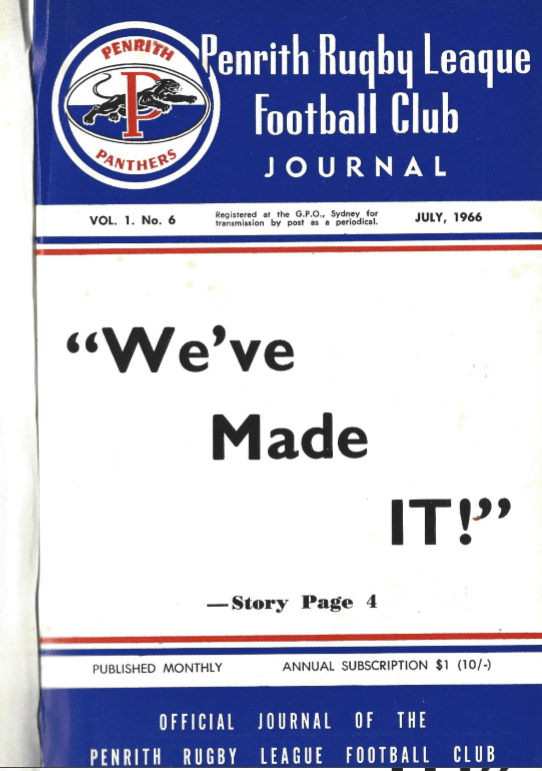
Within the club, the decision was received as a defining moment. The July 1966 edition of the Penrith Rugby League Football Club Journal captured the announcement simply and emphatically on its cover: “We’ve Made It!”
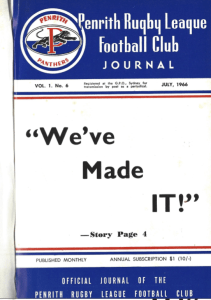
Inside, the accompanying article described the promotion as “the biggest step forward ever taken in any sporting sphere in Penrith” and emphasised that it was the culmination of many years of work by club officials and supporters. It also acknowledged the contribution of civic leaders, including mayor Bill Chapman and town clerk Harold Corr, whose efforts were said to have played a significant role in the final decision.
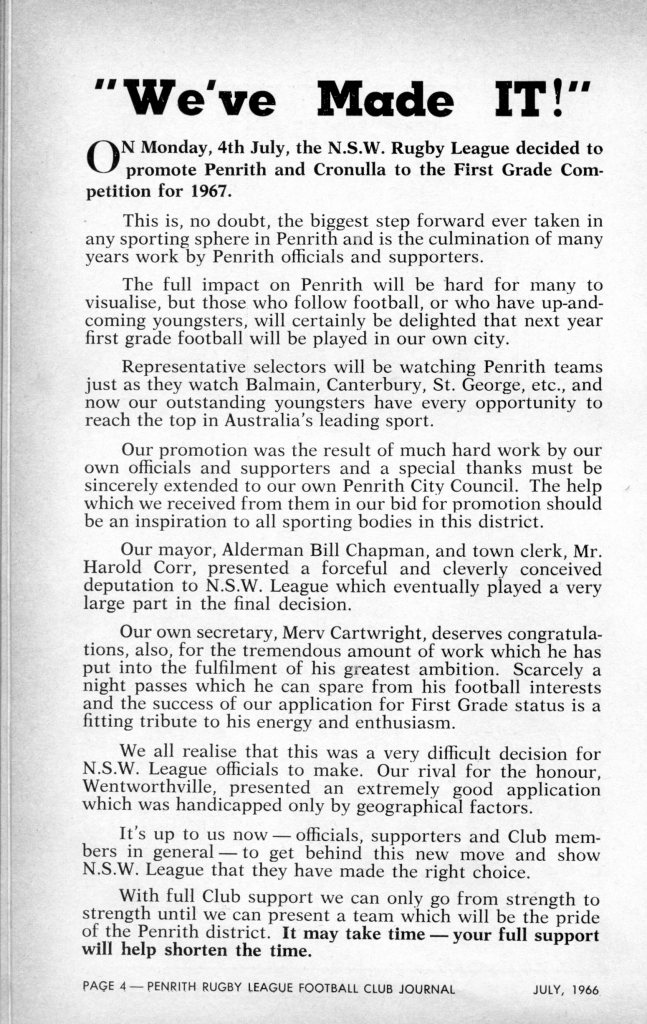
The sense of achievement within the club is also reflected in later recollections. Coach Leo Trevena described the moment in more understated terms, recalling that when he heard the news, his reaction was immediate and practical: “The bell’s ringing; now the fight’s on.”

Different Reactions

Beyond the club, the reaction was more measured. Contemporary coverage in the Penrith Press focused on the implications of the decision — including improvements to facilities, increased junior opportunities and the challenge of competing at a higher level — rather than celebration.
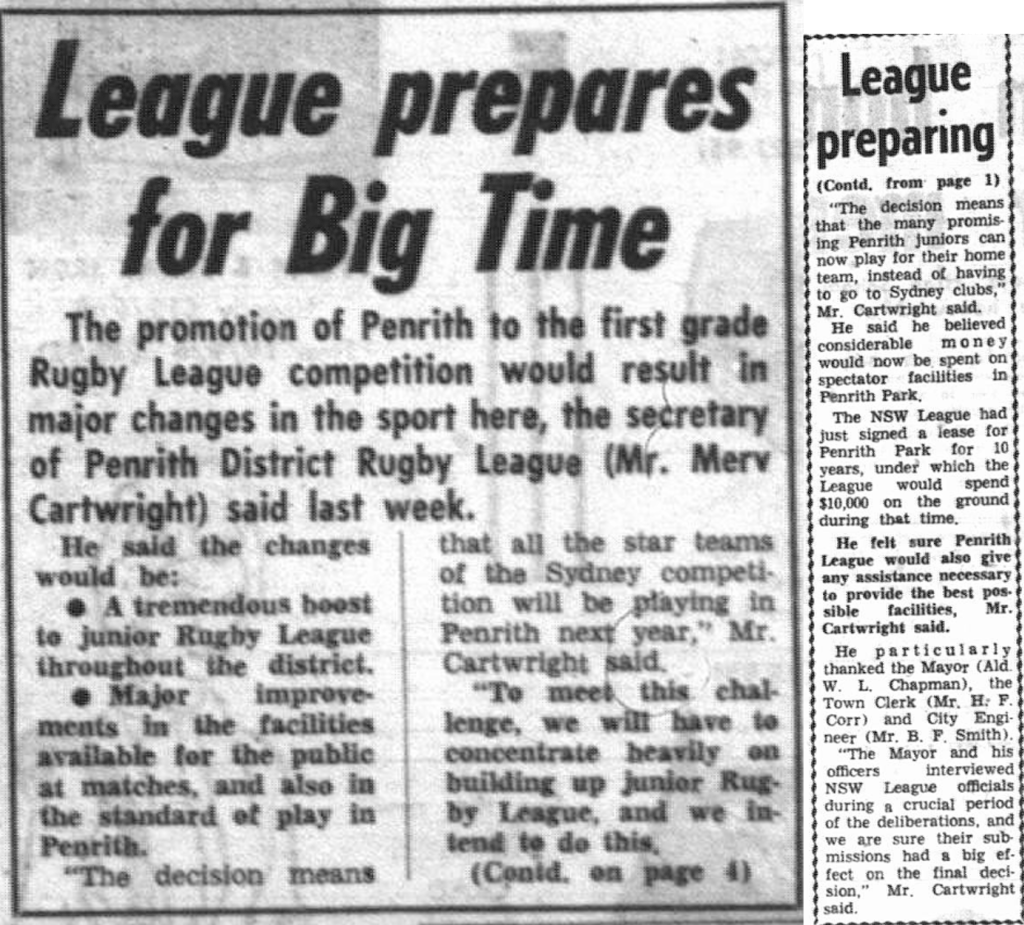
The contrast between the club’s own presentation of the moment and the more restrained tone of the local press is notable.

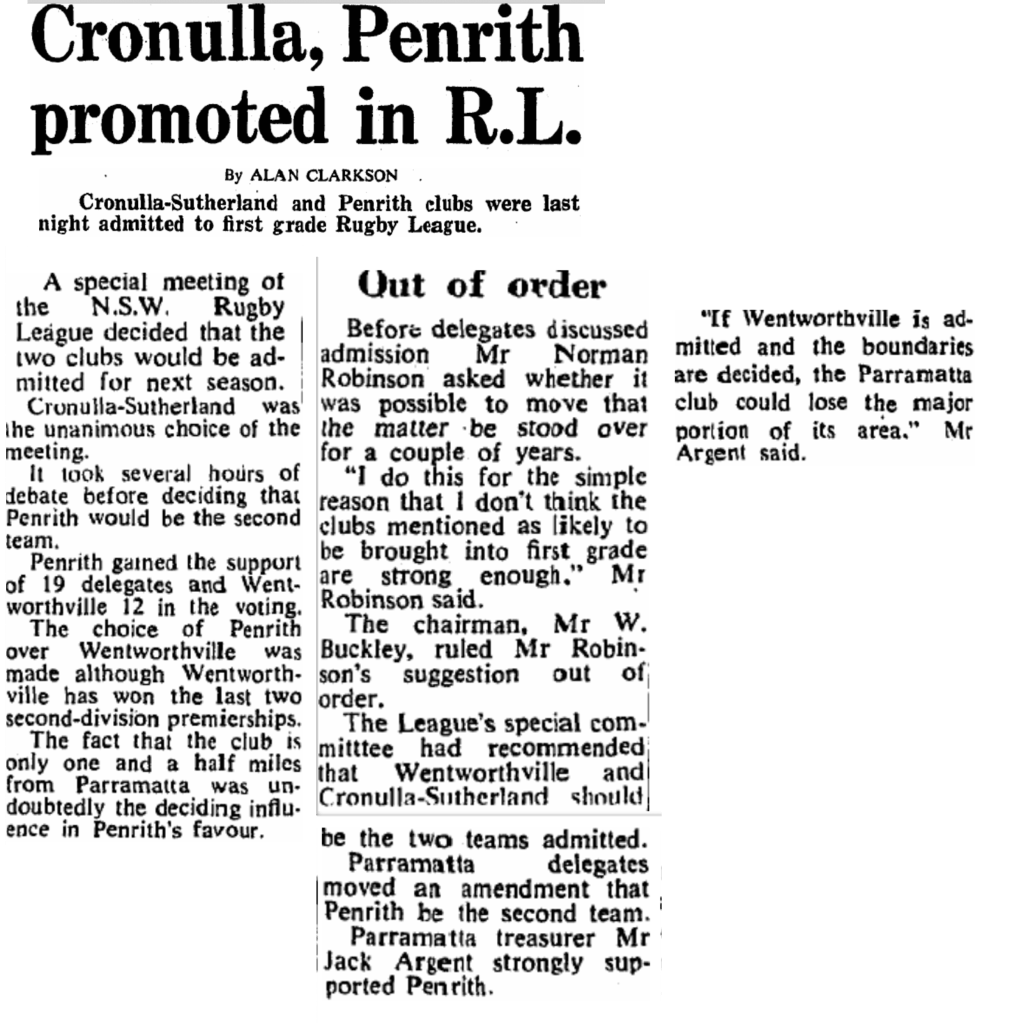
The Sydney Morning Herald also highlighted how narrow the decision had been, including Wentworthville’s unsuccessful attempt to have the matter deferred following the announcement.
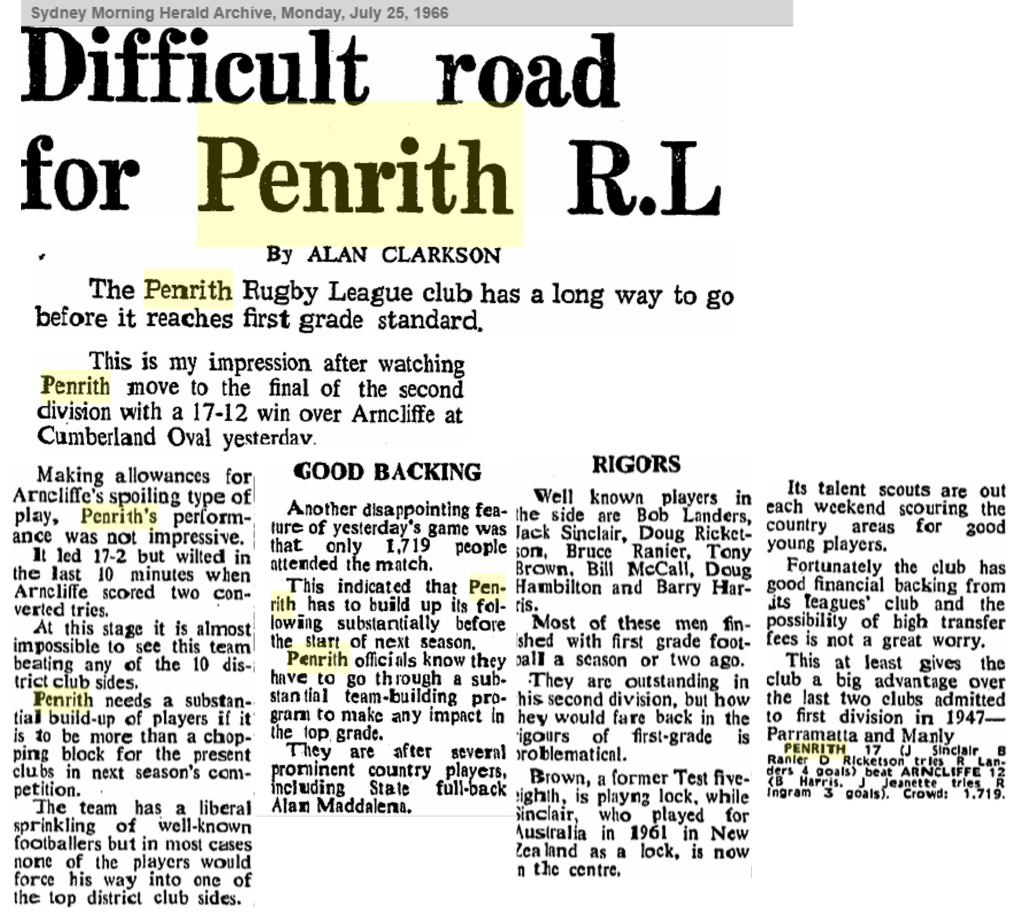
Three weeks later, Sydney Morning Herald journalist Alan Clarkson published a more cautious assessment of Penrith’s prospects, while acknowledging the club’s improving financial position and the support provided by the leagues club.
For Penrith, however, the significance was clear. Entry into First Division marked the transition from ambition to reality — and the beginning of a new phase in the club’s development.


Related Topics


Related Themes

Football Club · Milestones · First Division Admission


To receive new Parts and occasional project updates by email, you may subscribe below.

Readers who hold recollections, documents, or material relevant to this history are welcome to contribute via the Commentary & Contributions page.

Project Updates

Receive updates when new parts are published.
The Bungool Picnic

This is Cowan’s description of what happened when the players were given the news that their pay would be “short”. This was taken directly from the manuscript.

We decided to go ahead with the picnic and pay the players half their contracts in the hope that we would be able to pay more later. When I turned up at the picnic, I found I was the only person from the football committee there. Everyone else, including Cartwright and the club’s president, had suddenly found they were unable to attend. It was up to me to explain to the players.

Most were OK with it, until it came to a player called Billy Tonkin. He was a terrific football player – big, tough, strong – and I’m sitting down. Billy’s next in line, and I say, “Bill, I can only give you half your money.”

Billy growls, “Yeah, Cowan, bullshit! You write my cheque out.”

I say, “Bill, I can only give you half.”

“Write the cheque for the full amount”, says Bill in a very menacing tone, leaning across the table.

The next bloke in the queue is Cec Reddy, who used to play hooker for us. Cec was only slightly built but he was a real pug. He used to box in the ring. Some people used to joke that he should sell advertising on the soles of his shoes.

Cec walks up to Bill and says, “Look, he said he can’t pay you, so leave him alone”. These two proceeded to have a big argument across the picnic area, but in the end, Bill did accept his half pay.

Max’s Notes

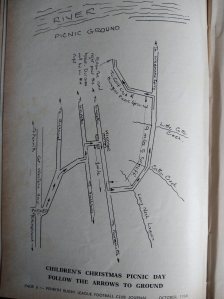
The drive to Bungool at Cattai — and back — felt long. The Club’s monthly journal even published directions for members to follow, a reminder of how different travel was at the time.

When I first read Roger’s account, I assumed it referred to the 1964 or 1965 season — certainly before Penrith entered the major competition in 1967. I can remember, even as a child, him returning home frustrated by events at the football club. This felt like one of those occasions, although there were many.

However, the reference to Billy Tonkin complicates that assumption.

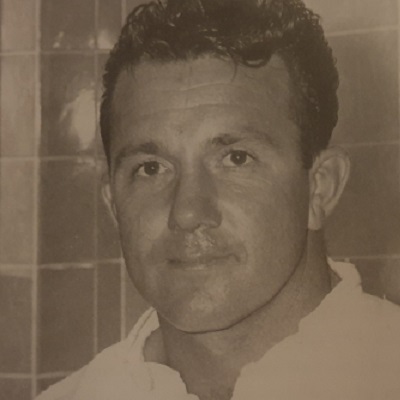
Bill Tonkin (pictured right) was signed to Penrith in 1967. He is Player #11 and played in our opening game against Canterbury-Bankstown. Bill played 18 1st grade games in his two seasons (1967-8), scored 2 tries and kicked a goal for a total of 8 points. He was a lock forward who’d previously played for Balmain, Wests, and Souths.

If the player in Roger’s account was indeed Tonkin, the incident must have occurred in either 1967 or 1968 — suggesting it took place after Penrith’s admission to the competition. Alternatively, and almost certainly, the identity of the player has been misremembered.

Either way, the underlying issue remains clear.

The club had committed to player payments it could not meet. Those responsible for managing the football budget failed to address the situation in advance, and were not present when the consequences had to be explained.

Roger, a rookie then, was left to do so alone.


Related Topics


Related Themes

Growth · Licensed Club


To receive new Parts and occasional project updates by email, you may subscribe below.

Readers who hold recollections, documents, or material relevant to this history are welcome to contribute via the Commentary & Contributions page.

Project Updates

Receive updates when new parts are published.
From Tin Shed to Taj Mahal — Scale and Contrast in 1963

In 1963, Penrith and St George Rugby League Clubs each opened new premises. The contrast between them — in scale, cost, and ambition — highlights the gap between an emerging club and one already established as a powerhouse of the game.

To describe Penrith Rugby League Club as a minnow compared to St George Rugby League Club in the early 1960s is no exaggeration.

In 1963, the St George Dragons had already secured seven consecutive premierships, a run that would extend to eleven.

In 1963, both clubs opened new premises.

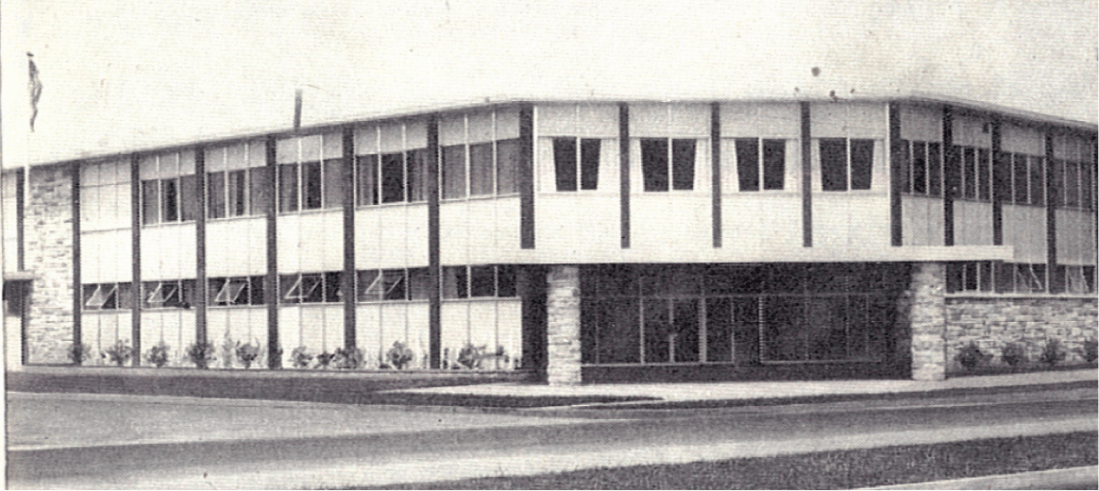
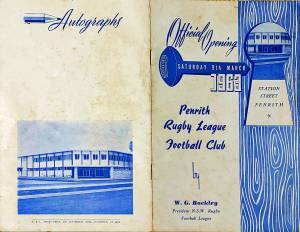
In March, Penrith Leagues Club opened a new building adjacent to the old Boys Club, at a cost of approximately £150,000.

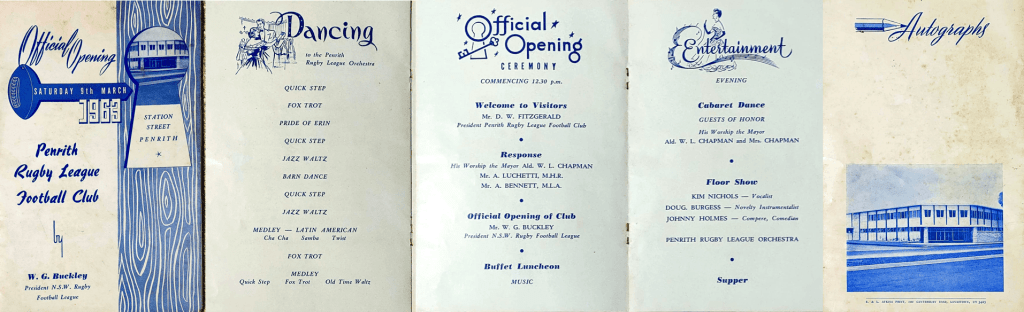
Official Opening Program PRLC 1963

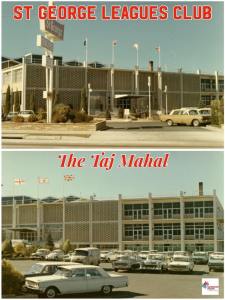
In July, St George Leagues Club opened its new premises at Kogarah, with construction costs approaching £1,000,000.

William “Bill” Buckley (1906–1973), Chairman of the Australian Rugby League, officially opened both clubs. During a tour of the new St George premises, struck by its scale and extensive use of marble, he is said to have remarked: “This reminds me very much of the Taj Mahal.”

The nickname endured.

St George Leagues Club — Photo: Joan Hatton

Both developments marked a move beyond earlier, more modest beginnings — the kinds of facilities often remembered, and sometimes simplified, as the “tin shed” era.

For St George, that transition had already occurred.

For Penrith, it was only just beginning.

The scale of the St George club did more than impress. It set a benchmark — one that emerging clubs like Penrith could not yet match, but would, over time, seek to close.

From the Narrative

This contrast sits alongside the developments described in Part 4 — From Small Beginnings, where Penrith’s early structures begin to take shape against a backdrop of more established clubs.

A Little Extra

Here is the complete 1963 Opening Program for Penrith Rugby League Club — it was a big day, starting with lunch, then evening and supper — and lots of dancing! And plaudits to the Penrith Rugby League Orchestra who must have exhausted by night’s end.

PRLC Official Opening 1963

Related Material


Related Themes

Financial Management · Growth


To receive new Parts and occasional project updates by email, you may subscribe below.

Readers who hold recollections, documents, or material relevant to this history are welcome to contribute via the Commentary & Contributions page.

Project Updates

Receive updates when new parts are published.
The Tin Shed — Myth and Memory

In telling the history of Penrith Rugby League Club, one phrase appears again and again — the “tin shed.”

It is often used to describe the club’s early years: humble, under-resourced, and far removed from the scale of the modern Panthers organisation.

Like many origin stories, the reality is both more specific — and more revealing.

What Was the “Tin Shed”?

As former director Max Connors recalled, the so-called “tin shed” was not a clubhouse in the way the term is now understood. It was, in fact, a kiosk at the showground where the team played.

The tin shed that people talk about was actually a kiosk on the showground where they used to play. It was run by the ladies, and the players used to get three free tickets each, and the supporters could buy three tickets for two shillings.

The structure doubled as a dressing area for players, reflecting the limited facilities available at the time.

Penrith’s “Tin Shed” Mark II

Many would label this building as the “tin shed” of Penrith’s history.

Panthers first clubhouse in Station St, Penrith

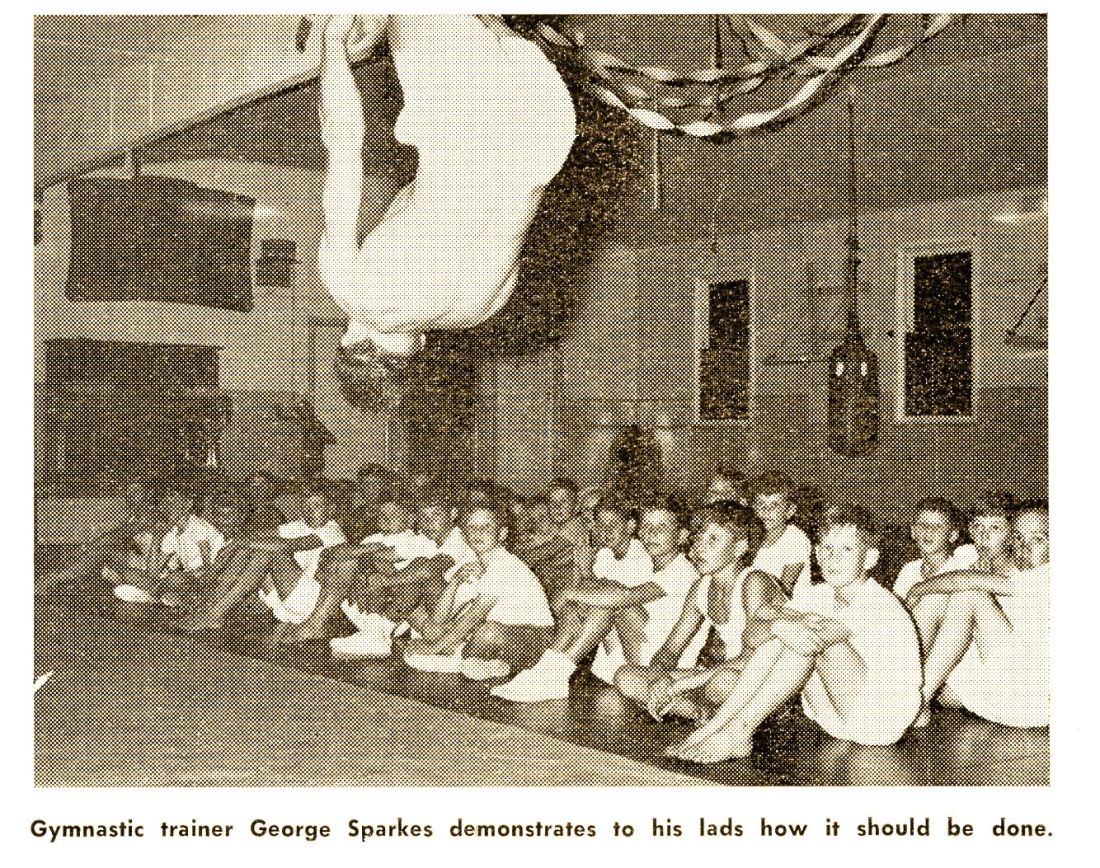
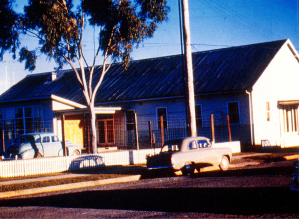
It would be a fair label, for this too is a far cry from the building that, in 1963, opened along side it. But this second “tin shed” was already multi-functional, and efficiently so. Dining room, function room, gymnastics (see feature image), boxing, calisthentics, jiu-jitsu, weights and of course, the club staples of bar and poker machines.

A Familiar Story

The idea of a club beginning in a “tin shed” is not unique to Penrith.

Across New South Wales, the history of registered clubs abounds with stories of “tin shed” origins — always small, improvised buildings, often constructed from basic materials and supported by volunteer labour.

Whether literally accurate or not, the phrase has become a kind of shorthand for humble beginnings and community effort.

In that sense, the “tin shed” is as much a cultural expression as a physical description.

How Myths Take Shape

Over time, the image of the “tin shed” has taken on a broader symbolic meaning — shorthand for:

  • hardship
  • simplicity
  • and the idea of a club built from nothing

This kind of simplification is very common in tales of sporting and community history. The details are simplified, merged, or reshaped into something more easily remembered and retold.

The result is not necessarily inaccurate — but it is selective.

The Penrith Version

At Penrith, the story is slightly more nuanced.

While the original “tin shed” referred to the showground kiosk described by Connors, later early facilities — including the original Station Street club building — were also modest in scale and construction.

In practical terms, they fit very well with the image the phrase now conveys.

The mythology, in that sense, is not entirely misplaced — but it is an interpretation crossing several realities.

Why it Matters

Understanding the reality behind the “tin shed” does not diminish the achievement of those early years.

If anything, it clarifies it.

The club did not begin in abstraction or myth, but in a very real, very practical setting — a showground, a kiosk, and a community effort sustained by volunteers, financiers — lenders and donors — players, and supporters.

That distinction matters, because it grounds the story of Penrith not just in adversity, but in structure, place, and people.

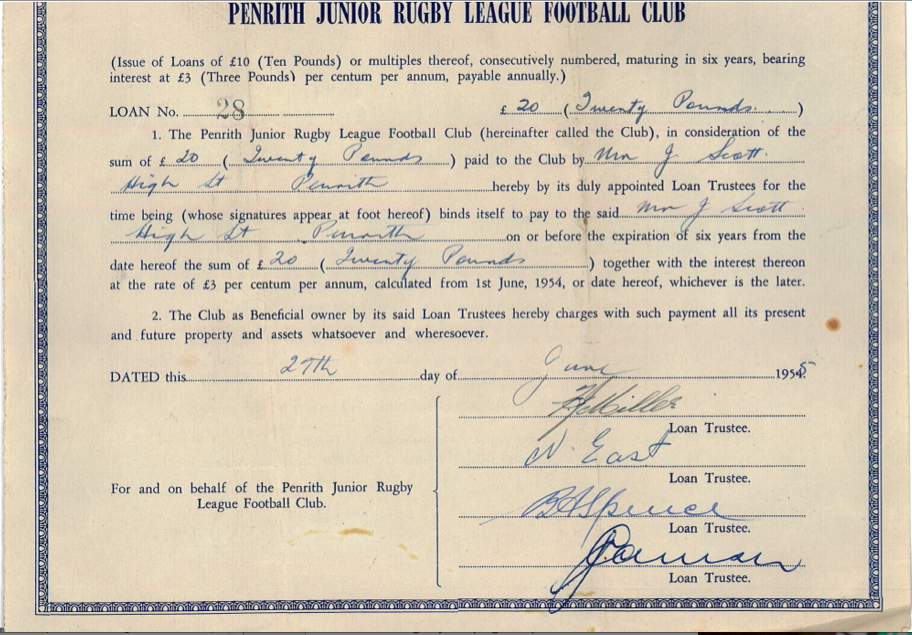
One of the people who helped Penrith Rugby League Club move beyond tin shed was Mr John Scott who provided the Penrith Junior Rugby League with a loan of £20 in 1955. The Scott family have supported the Club from its very beginnings, have seen many changes, great growth, challenges and remain firmly part of the Panthers family today.

In the Narrative

The reference to the “tin shed” appears in Part 4 — From Small Beginnings, where it helps frame the scale of the club’s early operations, and the distance between those beginnings and what would follow.


Related Materials


Related Themes

Culture


To receive new Parts and occasional project updates by email, you may subscribe below.

Readers who hold recollections, documents, or material relevant to this history are welcome to contribute via the Commentary & Contributions page.

Project Updates

Receive updates when new parts are published.
From A Child’s Eyes

One day the boy sat in the car, watching Roger drive. The Chev had a crash gearbox, the gear stick rising from the floor. The boy studied the movement — the hand on the stick, the timing, the sound of gears that didn’t always quite meet.

“I reckon I could drive this car,” he said.

They were on a bush track. Roger glanced across and replied, “Alright. Let’s see you try.”

That small moment in the narrative stirred my memory.

I can still see that gear stick rising from the floor, still hear the gears protesting as Roger guided it through. Sounds belonging to a time long ago, sounds that still resonate.

It was early — very early — when we set out. We left our home in Guildford Rd, Kingswood and travelled east — along the Great Western Highway, then only a single lane each way. past Kingswood. The road felt long then. The world felt larger.

The sun began to rise as we moved along Parramatta Road, the sun — an uncompromising orange glow spread across horizon and cut through the morning, piercing the windscreen. It is a scene I can still see clearly, even now.

We arrived while most of the city was still waking.

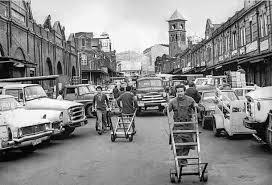
The Sydney Markets were already alive. Men in leather aprons moved quickly through the chaos, pushing wooden trolley with metal wheels, lifting bags of potatoes, hauling wooden crates of fruit. There were voices everywhere — loud, urgent, and often unfamiliar. It was noisy, physical, assured.

I knew where we were. I knew why we were there. I was only 5 years old!

Roger had left teaching. He was trying something else — something less certain. The trip was part of that. We were buying produce for the fruit shop in High Street, Penrith.

It was a long morning — felt like the entire day had passed. But I wasn’t tired. I felt… included. Trusted, perhaps. Part of something that mattered.

I understood what we were doing.

I just didn’t understand what it meant.

It was only much later that I began to see it differently.

At the time, it was a trip to the Markets. An early start. A day that felt bigger than most.

But it was more than that.

It was a man stepping away from something secure and into something uncertain — and doing so without hesitation. Treating it not as a risk, but simply as what needed to be done.

And without knowing it, I was seeing more than the work itself.

I was seeing where he stood in the world.

And, in some quiet way, something about where I stood as well.

To some, it might seem ordinary.

It was anything but.


Related Material


To receive new Parts and occasional project updates by email, you may subscribe below.

Readers who hold recollections, documents, or material relevant to this history are welcome to contribute via the Commentary & Contributions page.

Project Updates

Receive updates when new parts are published.
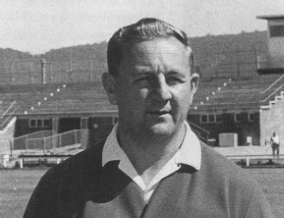
Major Player: Leo Trevena

Leo Trevena

Leo “Trapper” Trevena

Premiership-winning halfback / five-eighth (Wests,1952), Penrith Panthers first coach, Licensed club management team

Leo “Trapper” Trevena was a highly regarded rugby league footballer and coach whose involvement with Penrith spanned both its formative years in the Parramatta District Junior League and its early seasons in the NSWRL competition.

A member of Western Suburbs’ 1952 premiership-winning side, Trevena brought first-grade experience and leadership to Penrith at a time when the club was beginning to define its identity and ambitions.

Role in the Narrative

Trevena’s presence in the Panthers, Passion and Politics narrative extends beyond the early development of the club into the period immediately preceding and following its entry into the NSWRL in 1967.

His recruitment as captain-coach — at a reported £500 for the season — reflected a willingness by the club to invest in experience and leadership well before its entry into the NSWRL competition. His time at Penrith coincided with the emergence of a more assertive and self-directed club culture.

He represents a continuity of leadership across eras — from the club’s emergence within the Parramatta district competition to its establishment as a first-grade entity, and into the early years of the licensed club.

Background

Born: 1929
Died: 2013

Playing Career:

  • Western Suburbs (First Grade) — 1950-53, Premiership winner, 1952
  • Canterbury (First Grade) — 1954
  • Young (Maher Cup) — Captain-Coach, premierships 1955–56

Penrith (Junior & District Era):

  • Captain-Coach, A Grade — 1957–1959
  • Premierships — 1958, 1959

Coaching (Senior Level):

  • Penrith — 2nd Division Premiership, 1966
  • Penrith Panthers — First Grade Coach, 1967
  • Penrith Panthers — First Grade Coach, 1973

Club Administration:

Assistant Manager, Penrith Leagues Club — 1968–1973

Recognition by Panthers
• Life Membership, Penrith Rugby League Club (1981)

Relevance to Events Described

An early and defining episode in Trevena’s time at Penrith occurred in 1957.

After just three matches with the club, he was called upon by Parramatta to return to first grade for a match against St George. Trevena refused, choosing instead to honour his commitment to Penrith. Parramatta responded by banning him from playing in the junior competition, a decision supported by the NSW Rugby League.

The consequence was that Trevena was unable to take the field for the remainder of the season, continuing only in his coaching role. Penrith were subsequently beaten in the final.

The episode highlighted an early tension between district authority and club autonomy, and reflected a developing sense of identity within Penrith — one grounded in loyalty and commitment.

Trevena returned to playing the following season, contributing to consecutive A-grade premierships in 1958 and 1959. His influence, however, extended well beyond this period.

As first-grade coach, he guided Penrith to a Second Division premiership in 1966 — an achievement that immediately preceded the club’s entry into the NSWRL competition. He then took on the role of first-grade coach in Penrith’s inaugural season in 1967, and again took the role in 1973.

In parallel with his coaching responsibilities, Trevena also served as Assistant Manager of the Penrith Leagues Club from 1968 to 1973, contributing to the early development of the licensed club during a critical phase of its growth.

Related Material


Related Themes

Football Club · First Division Admission · Milestones


Additional Material


Editorial Note

This profile is presented as contextual background.
Additional material may be introduced as the narrative progresses.


To receive new Parts and occasional project updates by email, you may subscribe below.

Readers who hold recollections, documents, or material relevant to this history are welcome to contribute via the Commentary & Contributions page.

Project Updates

Receive updates when new parts are published.
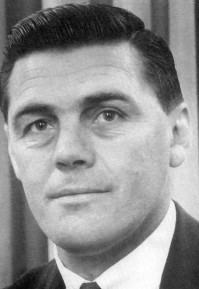
Major Player: Merv Cartwright

Merv Cartwright

Mervyn Earl Cartwright

Founding figure in Penrith rugby league; Secretary, Penrith District Rugby League Football Club (1967–1970)

Mervyn Earl Cartwright was one of the key figures in the early development of rugby league in Penrith. A local player, administrator, and advocate for the game, he played a central role in the campaign that led to the Penrith Panthers’ admission to the NSWRL competition in 1967.

He served as the club’s inaugural secretary and was widely recognised as a driving force behind rugby league’s establishment in the district.

Role in the Narrative

Merv Cartwright appears in the early phases of the Panthers, Passion and Politics narrative as a key figure in the club’s formation and early direction.

His contribution sits primarily within the “growth” stream of the story — the push to establish Penrith as a first-grade rugby league presence. At the same time, his period of influence overlaps with the emergence of tensions between football ambition and financial governance — a theme that would become increasingly significant as the club developed.

Background

Born: 1927
Died: 2011

Cartwright grew up in the Penrith district and was closely connected to local rugby league from an early age.

• Played junior and senior football in the district
• Became club secretary in the 1950s while still a player
• Continued as Secretary of the Penrith Rugby League Football Club from 1967 to 1970
• Returned to Club governance as a Board Member 1992 – 1998

He was one of the signatories to the formation of the Penrith Rugby League Club Ltd in 1967 .

Recognition by Panthers
• Life Membership, Penrith Panthers (1955)
Merv Cartwright Medal is awarded to the best player each season (named 2012)
• Named a Panthers Legend (2026)

Relevance to Events Described

Cartwright was a driving force in the campaign to bring Penrith into first-grade competition. He played a visible role in promoting the club, including maintaining a strong media presence during its early years .

During his time as secretary, the club operated in an environment where expectations between football operations and financial governance were not aligned. By the end of the 1960s, these pressures had intensified. Expenditure on football activities exceeded agreed limits, and tensions developed between football operations and the licensed club board over financial oversight and decision-making.

In 1971, Cartwright resigned from his role as Secretary of the Football Club. The circumstances surrounding his resignation were more complex than this summary suggests, particularly in relation to the Club’s financial position and governance arrangements at the time.

This conflict echoes through later sections of the Panthers, Passion and Politics narrative.

Related Material


Related Themes

Conflict · Football Club · First Division Admission


Editorial Note

This profile is presented as contextual background.
Additional material may be introduced as the narrative progresses.


To receive new Parts and occasional project updates by email, you may subscribe below.

Readers who hold recollections, documents, or material relevant to this history are welcome to contribute via the Commentary & Contributions page.

Project Updates

Receive updates when new parts are published.
The Western Weekender

The Western Weekender is a free weekly newspaper serving the Penrith region of New South Wales. Established in 1991, as a “good news” publication, it has become a consistent local media presence, covering community news, sport, politics, and issues relevant to Western Sydney.

Distributed widely across the Penrith local government area, the Weekender positions itself as a community-focused publication, with an emphasis on local identity and accessibility. Over time, it has built a strong readership base and a recognised voice within the region.

Editorially, the Weekender has played an ongoing role in reporting on developments at Penrith Rugby League Club and within the broader Penrith community. Its coverage has ranged from routine reporting to more involved commentary during periods of controversy or significant change.

The publication has not been without interruption. It ceased operations briefly in 2008 before being revived in 2009 under new ownership, after which it re-established its presence in the local media landscape.

As with any local media outlet, the Weekender reflects both the priorities of its editorial leadership and the interests of its readership. This can influence not only what is reported, but how events are framed and understood within the community.

Throughout this series, references to the Western Weekender should be understood in that context — as a prominent local publication whose reporting formed part of the public narrative surrounding the events described.


Related Topics


To receive new Parts and occasional project updates by email, you may subscribe below.

Readers who hold recollections, documents, or material relevant to this history are welcome to contribute via the Commentary & Contributions page.

Project Updates

Receive updates when new parts are published.
The Temby Inquiry

The Temby Inquiry was a formal investigation, commissioned by the New South Wales Department of Gaming and Racing in 2004, into the governance and operations of Penrith Rugby League Club.

Conducted by former senior prosecutor Ian Temby QC, the Inquiry examined a range of matters relating to the administration of the Club and the conduct of individuals associated with it. Its report, delivered in December 2004, marked the culmination of a period of conflict that forms a central thread of this series.

While the Inquiry sits outside the early timeline of this series, it becomes an increasingly important reference point as the narrative unfolds.


To receive new Parts and occasional project updates by email, you may subscribe below.

Readers who hold recollections, documents, or material relevant to this history are welcome to contribute via the Commentary & Contributions page.

Project Updates

Receive updates when new parts are published.
The Footy Five

The term “Footy Five” was coined by Ron Mulock to describe a group of five directors who, during this period, generally adopted a shared position on a range of issues affecting the Panthers organisation.

Despite the name, the distinction between this group and the remaining directors was not based on differing levels of commitment to rugby league. Directors on both sides of the Board were deeply committed to the future of football in Penrith. Indeed, several of the directors outside the Footy Five had devoted decades to building both the football club and the broader Panthers organisation.

The differences between the two groups became most apparent during the Super League era, the merger debate and the wider governance issues confronting Panthers during the late 1990s. These included questions surrounding the club’s strategic direction, its response to the changing rugby league landscape and the future structure of the Panthers organisation.

The four remaining directors—Leo Armstrong, Barry Walsh, Terry Heidtmann and Keith Rhind—were never collectively identified by a comparable title. Ron Mulock occasionally referred to them as “Roger’s Four Kinsmen”, a phrase drawn from the well-known Australian musical group The Four Kinsmen. The expression implied that these directors simply supported Roger Cowan’s position, but it never achieved the widespread usage of the term Footy Five.

Both expressions formed part of the language surrounding one of the most divisive periods in Panthers’ history. While Footy Five became the enduring shorthand used by directors, members, the media and later historical accounts, neither label should be interpreted as a literal description of the directors’ respective commitment to rugby league or of the complexity of the issues under debate.

As the Footy Five is referenced throughout the narrative, it is useful to identify the individuals within the group:

  • Geoff James: Private Enquiry Agent.
  • John Bateman OAM: Solicitor. Mayor of Penrith (1998-2000)
  • Greg Evans: Owner of the Western Weekender, a local newspaper also prominent in the narrative.
  • Craig Terry: Financial controller at Liquorland.
  • Denis Coffey: Owner of successful engineering company. Former Panthers player.

Although the Footy Five were frequently identified as a group, each member brought different professional experience and motivations to the Board. Their backgrounds included law, engineering, finance, investigation and newspaper publishing. While they often acted together on major issues, the narrative suggests that their reasons for doing so were not necessarily identical.

Each member of the Footy Five played a distinct role in the events described in Panthers, Passion & Politics. Individual profiles provide further background on their professional careers, their involvement with Panthers and their contribution to the governance conflicts that followed.

Each member of the Footy Five played a distinct role in the events described in Panthers, Passion & Politics. Individual profiles provide further background on their professional careers, their involvement with Panthers and their contribution to the governance conflicts that followed.


Related Topics


Related Themes

Conflict · Governance · Board Decisions


To receive new Parts and occasional project updates by email, you may subscribe below.

Readers who hold recollections, documents, or material relevant to this history are welcome to contribute via the Commentary & Contributions page.

Project Updates

Receive updates when new parts are published.