Negotiating with Council — The Station St Road Closures

A removed section from the original Chapter 5: Building the Basics — Business Principles and Property. This examines the challenges faced in negotiating with Council over the Station Street site.

Roger reflected that certain individuals within Council held the view — and perhaps the expectation — that he would eventually be taken down a notch or two. To this day one aspect of this attitude irks Cowan, describing it as one of his worst memories.

While others involved in the negotiations may have viewed the issues differently, Roger believed the Club received little recognition for its contribution to the community. In his view, the charges and conditions imposed during the sale and development process reflected a lack of support for what Panthers was attempting to achieve.

I think the Club was treated very unfairly by Council. Before we could start building on Mulgoa Road, we had to sell the Station Street site. Council made it extraordinarily difficult. One of the conflicts related to two roads on the Station Street property. One of them was no more than a line on a map. It had never been a road. But the only way we were going to be able to sell that property was to negotiate with Council. The price Council sought was $850,000 — around a quarter of the total amount the Club expected to receive for the entire property.

I tried everything to get a better deal. I told them of a similar case where a club had been able to negotiate an agreement with its local council to close a road for the nominal sum of $1, as a sign of support for the club.

Our involvement in our community was far greater than that of the other club. For instance, we had previously agreed to a joint venture with Council to build a Police Citizen’s Boys Club in Penrith. It was the first boys club ever built without the need to raise funds from the public. We were sponsoring most sports in the area. On top of this the Club’s work to get Penrith to the elite level of rugby League had dramatically increased the city’s profile. I thought we had earned the right to support from Council, rather than obstruction. The city was benefiting on a number of levels from the work we had done, and it was giving nothing back. In fact it was profiteering from our planning.

I told them what we were planning to do would be a tremendous boost for Penrith. But all they saw were the problems, rather than the advantages.

The roads incident was not the only problem imposed on us by Council over that property sale. Another episode contributed to a very nasty police investigation a few years later.

One of the key issues underlying these negotiations related to what are known as paper roads. Paper roads are sections of land set aside by councils for roads in the future. According to Pat Sheehy:

Council planners had discovered the paper road in earlier negotiations for the property. It meant that Panthers did not own the whole site, with the result that Council said “OK, if you want to buy that land back from us, this is what we’re going to charge. All this happened before I was on council, but as far as Panthers was concerned it was absolutely exorbitant.

Robinsons 1957 Street Directory showing Frederick St ( a “paper road”) between Station & Wooddriff Sts. The other street in the negotiation was Park St.

Cowan said the problems extended beyond the property sale and continued into the approval process for the new site:

Council imposed a per hectare sewerage fee on the property based on the total area of land we owned. We were planning to build the club on an area of about 8 hectares. Most of the land was flood-prone, so you couldn’t build on it anyway. But we were hit with this huge bill, based on 86 hectares.

We had to negotiate to defer the payment, but this also became an issue. Even though we eventually came to an agreement, there are still people on Council who believe that Panthers ripped off the Council over that sewerage fee. Under the circumstances, that’s quite laughable

These issues illustrate the complexity of the negotiations and the differing perspectives that would continue to shape relations between the Club and Council.


Related Topics


Related Themes

Governance · Growth · Board Decisions · Licensed Club · Conflict


To receive new Parts and occasional project updates by email, you may subscribe below.

Readers who hold recollections, documents, or material relevant to this history are welcome to contribute via the Commentary & Contributions page.

Project Updates

Receive updates when new parts are published.

Entertainment, Experience & Prestige

This article forms part of the serialised republication of Panthers, Passion & Politics – The Roger Cowan Years.

Start · Reader’s Guide · All Parts


With a broader audience now emerging, attention turned to what would bring people in — and keep them coming back.

Another early innovation was an in-house band, fully employed by the club. Rhind believes it was one of the first in the industry — and unheard of for such a small club. At the time, the Board was resisting putting poker machines in the upstairs auditorium area.

Roger persisted, finally convincing them to trial half a dozen machines upstairs for four hours on a Saturday night — between 6 and 10pm. He and a couple of the assistant managers would carry them upstairs and bring them back down again later.

The trial was successful; the figures increased, and the machines went upstairs permanently. 

Rhind says he and Cowan were both in their thirties but most of the Board at the time were older men who sometimes found it a bit more difficult to cope with all the change being promoted by management.

However, they all shared a quality that would help overcome obstacles. They had a strong sense of ownership of the club they had helped build, and they wanted it to be secure for the future.

There were no hidden agendas and no ambitions of personal gain. It was about loyalty to a common cause. It was their club, and they would do whatever was necessary to protect it.

In the early 1970s the club began to put on prawn nights, other special nights, Sunday afternoon concerts and talent quests. Max Connors recalls,

Mum and Dad would come in for whatever was on, and they would always put a few bucks in the pokies. Roger was doing surveys all the time. He told the board that we had to start to give a little back to people to encourage them to come to the club, even though we might lose a little money on the prawn nights.

Bringing in the couples meant that women were starting to come to the club. It was changing the whole social scene. Back then, there were not many places that women could go, especially if they were on their own. They could come in either with a partner, or a girlfriend, and enjoy a regular night out.

The final shift away from the club’s traditional male bastion came with the launch of what became known as the “purple passion pit”, one of the new extensions to the club. Kevin McGrath remembers,

The room was quite stunning, with beautiful décor, purple furniture and fittings and large fish-tanks along one wall. It had poker machines, comfortable lounges and a full bar and it very quickly became the most popular area in the club.

Also, to attract the mixed market, the club began to focus on entertainment. This was an extraordinary time for the Penrith Leagues Club, says Bryn Miller, who was part of the club’s entertainment team in the seventies.

The first auditorium only held 580 people, so by today’s standards, it was not a big room. Don Ellks was the entertainment manager at the time, and he and Cowan formed an association with an agent, John Hansen. The Board approved their recommendation that the club set up its own entertainment agency as a joint venture with Hansen.

Through the new company, Prestige Attractions1, the club set out to bring in major overseas acts — performers who were appearing at leading Sydney nightclubs such as Chequers2, as well as venues like St George Leagues and Souths Juniors — artists such as Roy Orbison, Rolf Harris, Jerry Lee Lewis, the Hollies, and the Mamas and the Papas.

But we would get them on Tuesday nights — traditionally a dead night in the entertainment industry. Most artists didn’t get bookings for Tuesdays, so we could get them at a good rate. We would put on prawn nights, and beef and burgundy nights, and still charge reasonable prices. These shows were every second Tuesday, and the response was phenomenal. People came from all over Sydney.

We needed to find a way to get more people in, and at the time, there was a fountain in the middle of the auditorium. We ripped that out, and the room was able to hold 800.

We started to advertise in Sydney newspapers, which was our first real exposure out of Penrith. Here we were, this little hick country town, and we were really getting known out there.

Miller adds,

Sundays were another big night. It was Australian rock night, with bands such as Skyhooks, Sherbert, the Little River Band and INXS appearing in the auditorium.

But the building of success inside the club was creating pressures that could not be resolved within its existing footprint.

1982 Advertisement for the week’s rock entertainment.

To receive new Parts and occasional project updates by email, you may subscribe below.

Readers who hold recollections, documents, or material relevant to this history are welcome to contribute via the Commentary & Contributions page.

Project Updates

Receive updates when new parts are published.


  1. Prestige Attractions was a joint entertainment venture involving Penrith Leagues Club and entertainment promoter John Hansen during the 1970s.
    ↩︎
  2. Chequers was one of Sydney’s best-known nightclub venues during the 1960s and 1970s, regularly hosting major Australian and international entertainers ↩︎

Part 10 · All Parts · Part 12

Commentary and Contributions

Feeney Electronics – Ahead of its Time

The following material draws upon club publications from the early and mid-1970s, later interviews and recollections from former Panthers staff and executives.

By the mid-1970s, Penrith Rugby League Club was doing something few licensed clubs in Australia would even have contemplated — experimenting with computerised gaming and security systems.

The project emerged from a practical problem. As poker machine revenue increased across the club industry, so too did concerns about theft, scams, inefficient cash handling and poor operational oversight. Panthers had already experienced some of these issues directly. Roger Cowan believed tighter systems and better information could reduce losses and improve efficiency.

What followed was an ambitious venture into electronics and computer technology through a company known as F.C. Electronics Pty Ltd.

Contemporary club material described F.C. Electronics as producing “probably the world’s most sophisticated poker machine security system”. While that language reflected the promotional enthusiasm of the period, there is little doubt the system was unusually advanced for an Australian club environment of the 1970s.

The system attempted to electronically monitor poker machine activity from a central control point.

According to material published by the club, poker machine events were coded and transmitted to television monitors around the club, allowing supervisors to immediately identify jackpots and machine activity. The system also attempted to monitor irregularities including abnormal wheel movement, door openings and jackpot inconsistencies.

The operation relied on technology that, at the time, would have appeared extraordinary to most club employees and patrons. The club’s own promotional material featured computer consoles, printers, monitoring screens and electronic reporting systems — all at a time when many organisations still relied entirely on manual record keeping.

Former Panthers executive Bryn Miller later recalled that the system was “so far ahead of its time” that most clubs did not even possess a computer when Panthers was experimenting with electronic monitoring and reporting.

The project extended beyond poker machine security. F.C. Electronics also produced industrial control equipment and commercial products including lighting dimmers and environmental control systems. Club publications noted that the company’s capabilities had expanded sufficiently for it to seek work beyond the club industry itself.

Yet the venture also carried substantial cost and risk.

Club material acknowledged that F.C. Electronics operated at a financial loss during part of this period, while Roger Cowan later conceded that Panthers may have persisted with the project longer than it should have. Had the technology evolved commercially the way he hoped, the rewards may have been significant. Instead, the project became one of several ambitious experiments that pushed the club into areas rarely explored by licensed clubs of the era.

Even so, many who observed the system believed its core ideas eventually became standard throughout the gaming industry. Automated monitoring, centralised reporting, electronic jackpot recording and machine data analysis are now routine parts of modern club gaming operations.

In that sense, the Feeney Electronics project reflected something larger about the Panthers administration during the Cowan years. The club was rarely content simply to follow established practice. Whether the experiments succeeded or failed, there was often a willingness to try ideas that others considered unrealistic, premature or unnecessarily ambitious.

Feeney Electronics was one of the clearest examples of that philosophy in action.


Related Topics


Related Themes

Financial Management · Governance · Growth · Innovation


Image Credits: All images in this post — including the feature image — are from Panthers Annual Reports. These were kindly provided by The Ausburn Collection.


To receive new Parts and occasional project updates by email, you may subscribe below.

Readers who hold recollections, documents, or material relevant to this history are welcome to contribute via the Commentary & Contributions page.

Project Updates

Receive updates when new parts are published.


The Walls Come Down

This article forms part of the serialised republication of Panthers, Passion & Politics – The Roger Cowan Years.

Start · Reader’s Guide · All Parts


Clubland in the fifties and sixties was overwhelmingly a male domain — more a bastion than a business.

When Roger Cowan arrived, the ‘Long Bar’ extended the length of the building, and it was for men only. There was also the Sports Lounge, with its dartboards and pool tables. It too was restricted to men.

As in most clubs and hotels in those days there was The Ladies Lounge.  This small room was the only place in the entire club where women — or couples — could go.  It had poker machines and couches but didn’t have its own bar. The women were served by stewards from the other bars. In those very early days of the women’s liberation movement, the room had acquired the unflattering nickname, the ‘sow pen’.

Women were only admitted to the club as associate members. Full membership was restricted to men. Keith Rhind, who was a young director at the time, recalls:

One of Roger’s early pushes against the Board was to allow women into the bar, but there was a lot of resistance. One of the directors at the time was Lou Brown. Lou was real old school, a man’s man, and he used to growl, “Women! They’re like white ants. Once you let ‘em in, you’ll never get rid of ‘em”.

Contemporary attitudes within the licensed club industry could still be remarkably conservative. A 1971 Sydney Morning Herald article captured some of the prevailing assumptions of the era:

Read the full article: PDF

Bryn Miller also remembers that time.

Cowan had analysed the figures — the men’s bar took up 80 per cent of the space but only brought in 20 per cent of the revenue.

By 9 o’clock at night, there might be only three people in the men’s bar and the ladies area would be full to overflowing to the point that some couples would just leave and go to the RSL.

This was especially so on Saturday night — traditionally the time for couples to have a night out – or on big trading nights like New Year’s Eve.

The revenue figures were common knowledge, but the men were very possessive of their space, and this certainly carried through to most of the directors.

Roger used to wander around every night, often quite late, keeping an eye on things. One late Thursday night after the trots at the local showground, he and a duty manager were watching a couple of men. One had big pockets inside his coat, the other was keeping watch while he cleaned out the drawers. They caught them and went to their car which was full of calico bags filled with ten and twenty cent pieces.

Kevin McGrath recalls how this played out in practice,

When a football game was on, it was stand aside or be swept up in the rush.

On game days they would pull the shutters down in the men’s bar so that the drinkers would go over the road to the game. After the game was finished, they would pour dozens and dozens of half schooners and have them lined up. There would be a mad rush from the football ground as hundreds of thirsty fans descended on the bar.The schooners were filled and the shutters went up. If you only wanted a middy — or perish the thought, a scotch — you just had to wait.

Cowan later said the changes were not a conscious move to overcome discrimination, but simply, a commercial reality.

We were trying to make ourselves more popular. We had to be all the time working out what was needed and then responding. The demand at the time was for much bigger accommodation for mixed company. We were squeezing them into one tiny corner of the club, where they were uncomfortable. There was no space, people were pushing and shoving each other, and often there would be fights in there.

I always thought that to run a club, or any business, you have to give the people what they want. At that time, it was being run for the convenience of a fairly small group of men who wanted to protect it for themselves.

The real shift came one New Year’s Eve — Cowan had convinced the Board to do a one-off and allow women into the Long Bar.

The Board finally relented, at first creating a small, partitioned area of the bar where women could go. “Roger persisted, and they were eventually persuaded to have a proper mixed bar, and the sales increased dramatically”, says Rhind.

“It took women a while to really want to go in there,” Miller says, “because that whole male bastion thing was all so entrenched. But the barriers were starting to come down.”

As those barriers began to shift, the club was changing not just who it welcomed, but what it offered — and how people experienced it.


To receive new Parts and occasional project updates by email, you may subscribe below.

Readers who hold recollections, documents, or material relevant to this history are welcome to contribute via the Commentary & Contributions page.

Project Updates

Receive updates when new parts are published.


Part 9 · All Parts · Part 11

Commentary and Contributions

Removing the Football Club Secretary and Treasurer

The removal of Merv Cartwright (Secretary) and Ron Partridge (Treasurer) from their respective roles with the Penrith District Rugby League Football Club occurred against the backdrop of a broader and more complex set of issues than is immediately apparent in the main narrative.

While Cartwright became the central public focus of the dispute, the Board’s concerns also extended to the financial administration of the football club more broadly, including the role of Treasurer Ron Partridge.

Contemporaneous Board papers and meeting records from the period indicate a growing concern among Directors regarding both the financial management of the Club’s football operations and the processes by which financial commitments were being made.

At the centre of these concerns was the relationship between the Licensed Club — which generated the revenue — and the District Rugby League Club, which was responsible for football operations. While this arrangement had supported the Club’s early growth, it also created a structural tension: financial responsibility and operational control were not always aligned.

By the late 1960s, the Board had become increasingly uneasy that commitments were being entered into without sufficient oversight, and in some cases without formal authority. This was not framed as a single incident, but as a pattern that had developed over time.

Internal analysis presented to the Board suggested that the Club’s financial position was more fragile than it appeared. Liabilities associated with player payments, bonuses and sign-on fees were, in the Board’s view, not being fully or consistently reflected in financial reporting. When assessed against normal operating income, there was concern that the Club could not meet its existing commitments without significant restraint.

These concerns were reinforced by a pattern of escalating expenditure. Board discussions from the period refer to sharp increases in allocations to football operations, alongside uncertainty as to how those figures had been determined. Directors questioned both the reliability of the budgeting process and the basis upon which commitments had been made.

In response, the Board moved to assert clearer control over financial decision-making. Proposals and subsequent resolutions emphasised that:

  • no contracts or financial commitments were to be entered into without explicit Board approval;
  • committees operating within the football structure were to act within clearly defined limits;
  • and all funds were to be subject to centralised oversight and reporting.

These measures were not presented as routine administrative adjustments, but as necessary steps to address what was seen as a deteriorating financial and governance position.

At the time the NSW Rugby Football League (NSWRFL) was responsible for the debts of all District Clubs — and should Penrith Rugby League Club Ltd (Licensed Club) stop funding the Penrith District Rugby League Football Club (District Club), the Board was confident it would not prevent the District Club from operating. It could, however, trigger intervention by the NSWRFL as administrators of the Penrith District Club.

Within this context, the recommendation to cease funding unless Secretary Merv Cartwright and Treasurer Ron Partridge resigned can be understood not as an isolated or sudden decision, but as the culmination of these concerns. This was not an easy decision for the Board, a fact reflected in the final paragraph of the Board Resolution.


Resource Material*

The following documents can be seen as PDFs:


Related Material


Related Themes

Conflict · Governance · Financial Management


* Resource material courtesy of The Ausburn Collection


To receive new Parts and occasional project updates by email, you may subscribe below.

Readers who hold recollections, documents, or material relevant to this history are welcome to contribute via the Commentary & Contributions page.

Project Updates

Receive updates when new parts are published.

Major Player: Ken “Poker” Ausburn

Merv Cartwright

Ernest Kenneth “Poker” Ausburn

Foundation Member, Chairman and Long-time Penrith Clubman

Ken “Poker” Ausburn was one of the foundational figures of Penrith Rugby League Club and among the generation of local volunteers who helped transform Panthers from a small district football organisation into a major community institution.

A lifelong Penrith resident, Ausburn served the club across many years as a committee member, director and eventually chairman. Remembered for his humour, warmth and strong community spirit, he became one of the best-known personalities associated with Panthers’ formative decades.

Though he died in 1976 before the club’s later expansion into the entertainment giant it would become, Ausburn remained widely respected within Panthers history as one of the men who helped establish the culture and identity of the early club.

Role in the Narrative

Ken Ausburn appears within the early development period of the Panthers, Passion and Politics narrative — the years in which Panthers evolved from modest local beginnings into an increasingly ambitious football and licensed club organisation.

He represents the generation of volunteers and local administrators who laid the foundations upon which later Panthers success would be built.

Ausburn is closely connected to Panthers’ long campaign for admission to the NSW Rugby League first grade competition, and to the club culture that developed during the 1950s, 1960s and early 1970s. His involvement reflects an era when Panthers depended heavily upon local personalities willing to contribute time, energy and leadership to both football and licensed club activities.

His life and reputation also provide insight into the strong community identity that surrounded Panthers during its formative decades.

Background

Born: 9 February, 1921, Penrith
Died: 6 May, 1976, Penrith

Profession: Boilermaker; long-time employee at the St Marys Munitions Factory

Panthers Roles:
• Foundation member
• Director
• Chairman
• Hon. Secretary Penrith Rugby League Golf Club

Community Involvement:
• Supporter of local sporting and youth activities
• Associate with support for Police Boys Club initiatives.
• Long-time Penrith community volunteer

Recognition by Panthers:
• Life Membership, Penrith Panthers (1964)
Poker Ausburn Award – for most improved Panthers player (now discontinued).

In 2017 Penrith City Council named Ausburn Reserve — between Nepean St and Annett St, Emu Plains — to honour the contributions to the Penrith region from the Austbun family and specifically “Poker” and his brother, Bob.

Known As: “Poker” — a nickname reportedly derived from the poker face he adopted while telling stories, joking with friends or “spinning a yarn”.

Relevance to Events Described

Ausburn belonged to the generation that guided Panthers through its difficult formative years.

He witnessed — and helped contribute to — the club’s evolution from football played at very basic local facilities to the construction of larger licensed club premises and ultimately the development ambitions that would reshape Panthers in later decades.

Bruce Turner’s Footprints on the Banks of the Nepean reproduces the cover of Ausburn’s copy of the proposal supporting Penrith’s elevation to first grade competition in 1967. Although the full submission itself does not appear to have survived publicly, the surviving cover reflects the determination among local administrators to secure top-level rugby league representation for the growing Penrith district.

Contemporaries consistently remembered Ausburn not simply as an administrator, but as a personality. Family members and friends recalled his humour, generosity and capacity to engage people socially. Those qualities appear repeatedly in recollections of early Panthers culture.

His life was also marked by resilience. Following a serious motor vehicle accident, Ausburn endured long-term injuries and health complications, yet continued working and remained active in club affairs.

When he died unexpectedly in 1976 at the age of 55, Panthers tributes described him as one of the “small band of men who pushed the club onto its feet in the very beginning.”

Legacy

Ken “Poker” Ausburn is remembered as one of the local figures who helped give early Panthers its personality and community identity.

He represented an era when the club relied heavily upon volunteers, local businessmen, tradesmen and sporting enthusiasts whose commitment extended well beyond formal administrative duties.

Although later Panthers history would become associated with major commercial development, political influence and large-scale expansion, figures like Ausburn reflected the grassroots community culture from which the organisation originally emerged.

His reputation for humour, sincerity and loyalty ensured that his contribution remained warmly remembered long after his death.


Related Material


Related Themes

First Division Admission · Growth · Licensed Club · Governance · Football Club


Editorial Note

This profile is presented as contextual background.
Additional material may be introduced as the narrative progresses.


To receive new Parts and occasional project updates by email, you may subscribe below.

Readers who hold recollections, documents, or material relevant to this history are welcome to contribute via the Commentary & Contributions page.

Project Updates

Receive updates when new parts are published.

Divided Control: The Club and Football

This article forms part of the serialised republication of Panthers, Passion & Politics – The Roger Cowan Years.

Start · Reader’s Guide · All Parts


The licensed club was going from strength to strength despite ongoing problems between its board and the football committee. This conflict was to plague Cowan for fourteen years. He would tell every board member in those years,

This club is never going to be truly successful until we bring it all together – the club and the football. We have to be totally united.

There had always been two bodies. Merv Cartwright was the first secretary of the football club, while Cowan managed the registered club.1

Prior to the commencement of the 1967 season, the board of the licensed club had been asked to approve a budget of £40,000 to cover all rugby league-related expenses for the year. At the end of the season, Cartwright informed the committee that he would need £90,000.

The blow-out of more than 100 per cent was a huge impost on a club that was still struggling to establish itself. At that time it was easily the smallest registered club supporting a first grade team. Cowan was furious. So much hard work had been put into making the club profitable and Cartwright appeared to have little regard for budgets and financial controls. He seemed to have the view that there was a bottomless pit of money. Cowan says there were absolutely no controls over the football spending, with money continually wasted on unnecessary things.

When he took the job on the three-month trial, Cowan was confident that if he worked hard for a few months he would be on top of it all and then could take it easy. He was halfway through a university course as an external student of Armidale University. His plan was to get everything sorted out, and once that was done, “I’ll have plenty of time to study and take some time off”.

It did not quite work out that way. At the beginning of 1967, after 16 months of working 7 days a week, Cowan took his first day off since taking on the job. The Cowan family enjoyed a four-day break, driving to Broken Hill and returning via Mildura. The university course was never touched again.

Football expenditure in 1968 again exceeded the budget, and a couple of other problems had arisen with Cartwright during the year.

By 1969, the registered club Board had had enough. The events surrounding the removal of secretary and treasurer —Merv Cartwright and Ron Partrdige — are examined further in Beyond the Book: Removing the Football Club Secretary and Treasurer.

Eventually they called an extraordinary meeting of members. Realising the controversial nature of the event, they invited the mayor, Bill Chapman, to be chairman for the day. The Board’s recommendation was for the licensed club to cease rugby league funding unless Merv Cartwright resigned.2

Directors involved with the club during that period later described Cartwright in mixed but revealing terms.

Merv was an excellent PR man. He had the ability to influence and manipulate people. He did do a lot to build rugby league in the area and was very involved in the campaign for Penrith to join first division.

But he had lots of problems managing the money. Merv was always overspending, and Roger was trying to build a reliable business. That’s where a lot of the friction started.

The issues underlying that recommendation were more complex than this account suggests, particularly in relation to the Club’s financial position and governance arrangements at the time.

Around 1,000 of the club’s 6,000 members attended, with 80 per cent supporting the recommendation.

Cartwright did resign and moves were made to heal the rift between the two boards.

Sydney Morning Herald — Saturday, 20th March 1971

The District Club committee approached Cowan and asked him to take over as Secretary of the football club, a move that surprised him, given the history. The committee members said that they hoped such a move might help build a more co-operative relationship between the two clubs. 

Cowan decided to give it a try. The move gave him responsibility for both entities but after less than a year, the frustrations of managing both sides of the organisation while reporting to separate Boards with competing interests proved unworkable. So, Cowan began advocating his policy to unite them under one board and one CEO.

On two separate occasions after his removal as secretary, Cartwright ran foul of the board of the licensed club and had his membership suspended. The board was adamant that he would never be allowed back into the club. This issue remained unresolved for many years, and intensified, particularly when his sons started to show outstanding rugby league skills and were selected to play for the Panthers.

The board received regular written appeals to lift his suspension.

Long-time director Barry Hubbard (1973-85)3 told of the meetings in the years after Cartwright left:

Every AGM, Tom O’Connor, who was on the board at that time, would stand up and ask for the reinstatement of Merv Cartwright’s membership. This would get a very cool reception from the chairman, Ken [Poker] Ausburn, and the ensuing debates were the fieriest I experienced in my whole time on the board. Ausburn and O’Connor would scream at each other across the room, and O’Connor would invariably end the argument with the words, “It is not British justice that Merv Cartwright, who has done so much for rugby league in this area, is barred from this club”.

Hubbard says the resolution was always beaten, and Ausburn would rule that the matter was resolved and was not to be raised again for the rest of the year. Apart from O’Connor the entire board was against the reinstatement of Cartwright’s membership.

At times, the disputes became highly confrontational, even farcical. In a heated discussion at one of those AGMs, the deputy chairman, Murray Clarke, who was the most vocal critic of Cartwright, was told never to venture into St Marys. If he did, said the speaker, he would never get out alive. It was Clarke who had previously cited Cartwright to appear before the Board after allegedly abusing him and threatening him in public. 

The removal of Cartwright was to have ramifications for Cowan far into the future. The two had repeatedly clashed. Cartwright and his supporters blamed Cowan, not the board, for the loss of his membership. It was a festering antagonism that wouldn’t go away. In fact, it was one of the many small pieces in an intricate maze of events that would place Roger Cowan before Ian Temby in June 2004.


To receive new Parts and occasional project updates by email, you may subscribe below.

Readers who hold recollections, documents, or material relevant to this history are welcome to contribute via the Commentary & Contributions page.

Project Updates

Receive updates when new parts are published.


  1. At this time, both football and licensed club operated under the single entity of Penrith District Rugby League Football Club (PDRLFC). Separate committees had oversight of the football and licensed club operations. Penrith Rugby League Club Ltd was established in June 1967 to take responsibility for the registered club. ↩︎
  2. Related Board papers from 1968 and 1969 illustrate the growing conflict between the licensed club board and football administration. These papers are included in full in Beyond the Book: Removing the Football Club Secretary and Treasurer. ↩︎
  3. Barry passed away in 2021, aged 90. ↩︎

Part 7 · All Parts · Part 9

Commentary and Contributions

The Panthers Magazine Arrangement

In February 1966, the Penrith Rugby League Football Club published the first edition of its official members’ journal.

The publication, issued monthly, was introduced at a critical point in the club’s development — as it sought admission to the New South Wales Rugby League First Division.

A central feature of the journal was a column titled From the Secretary’s Desk, written by Roger Cowan in his role as Secretary-Manager. In the opening issue, Cowan outlined club activities, membership growth and upcoming events, and referred to the club’s ambition of securing promotion to First Division.

The magazine was largely written and produced by Cowan and served as a means of communicating with members during the club’s First Division campaign.

In June 1968, Phyro Holdings Pty Ltd was registered, with Roger and Phyllis Cowan as directors. The name itself was derived from their first names — Phy from Phyllis and Ro from Roger.

In the years that followed, responsibility for publishing the club’s magazine — The Panthers Magazine — was transferred to Phyro Holdings under an arrangement approved by the club committee. The structure included conditions relating to profit limits, auditing of accounts and the remuneration deetails of Cowan’s role.

The arrangement formalised the transfer of publication responsibilities from the club to Phyro Holdings, under agreed financial and audit conditions.

The magazine arrangement — and the broader financial relationship between the club and Phyro Holdings — was later subject to scrutiny. Questions raised in subsequent decades focused on governance, transparency and the management of related-party transactions.

The Panthers Magazine became much more than a publication for PRLC members – it was a powerful community voice and was distributed to over 200,000 households in the Penrith Junior Rugby League District – Katoomba to Blacktown.

Those issues are examined in more detail in later sections of this project.


Related Topics


Related Themes

Financial Management · Governance · Growth


To receive new Parts and occasional project updates by email, you may subscribe below.

Readers who hold recollections, documents, or material relevant to this history are welcome to contribute via the Commentary & Contributions page.

Project Updates

Receive updates when new parts are published.


The Bungool Picnic

This is Cowan’s description of what happened when the players were given the news that their pay would be “short”. This was taken directly from the manuscript.

We decided to go ahead with the picnic and pay the players half their contracts in the hope that we would be able to pay more later. When I turned up at the picnic, I found I was the only person from the football committee there. Everyone else, including Cartwright and the club’s president, had suddenly found they were unable to attend. It was up to me to explain to the players.

Most were OK with it, until it came to a player called Billy Tonkin. He was a terrific football player – big, tough, strong – and I’m sitting down. Billy’s next in line, and I say, “Bill, I can only give you half your money.”

Billy growls, “Yeah, Cowan, bullshit! You write my cheque out.”

I say, “Bill, I can only give you half.”

“Write the cheque for the full amount”, says Bill in a very menacing tone, leaning across the table.

The next bloke in the queue is Cec Reddy, who used to play hooker for us. Cec was only slightly built but he was a real pug. He used to box in the ring. Some people used to joke that he should sell advertising on the soles of his shoes.

Cec walks up to Bill and says, “Look, he said he can’t pay you, so leave him alone”. These two proceeded to have a big argument across the picnic area, but in the end, Bill did accept his half pay.

Max’s Notes

The drive to Bungool at Cattai — and back — felt long. The Club’s monthly journal even published directions for members to follow, a reminder of how different travel was at the time.

When I first read Roger’s account, I assumed it referred to the 1964 or 1965 season — certainly before Penrith entered the major competition in 1967. I can remember, even as a child, him returning home frustrated by events at the football club. This felt like one of those occasions, although there were many.

However, the reference to Billy Tonkin complicates that assumption.

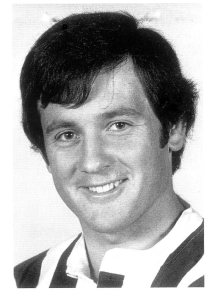
Bill Tonkin (pictured right) was signed to Penrith in 1967. He is Player #11 and played in our opening game against Canterbury-Bankstown. Bill played 18 1st grade games in his two seasons (1967-8), scored 2 tries and kicked a goal for a total of 8 points. He was a lock forward who’d previously played for Balmain, Wests, and Souths.

If the player in Roger’s account was indeed Tonkin, the incident must have occurred in either 1967 or 1968 — suggesting it took place after Penrith’s admission to the competition. Alternatively, and almost certainly, the identity of the player has been misremembered.

Either way, the underlying issue remains clear.

The club had committed to player payments it could not meet. Those responsible for managing the football budget failed to address the situation in advance, and were not present when the consequences had to be explained.

Roger, a rookie then, was left to do so alone.


Related Topics


Related Themes

Growth · Governance · Licensed Club


To receive new Parts and occasional project updates by email, you may subscribe below.

Readers who hold recollections, documents, or material relevant to this history are welcome to contribute via the Commentary & Contributions page.

Project Updates

Receive updates when new parts are published.

Roger Cowan

This article forms part of the serialised republication of Panthers, Passion & Politics – The Roger Cowan Years.

Start · Reader’s Guide · All Parts


Note for readers:
This Part presents a narrative portrayal of Roger Cowan as part of the unfolding story. A structured biographical overview is available on the Roger Cowan profile page.

Roger Cowan was born in 1935. His father, Norm, was one of seven children who grew up on a farm in Victoria. Norm married Mary Jamieson from West Wyalong, who was also raised on a farm. Mary had two sisters and five brothers. Both parents had left school early and had experienced the ravages of the Great Depression.

Norm was a proud man. Cowan says his Dad often recounted the humiliation of the day that he lined up to apply for a job to dig trenches with pick and shovel, and had to show his hands to the people recruiting the workers. If they were calloused sufficiently, it proved he was used to hard work. That someone had treated his father with such indignity stayed with Cowan. Even as a young boy, he knew it was a disgraceful thing to do. Most of the important values of an adult are developed in the earliest years. He made up his mind he would never act like that.

One of the main influences on the young Cowan was the dedication of both parents to make sure he was given better educational opportunities than they had. They coached and encouraged him to read and learn beyond what was being taught at school. Both were intelligent people who had succeeded in their studies as far as they were allowed to go. Norman Cowan could have been a professional working out of an office and earning a good wage had he been given the opportunities.

The Jamieson boys were horse breakers. They had a reputation for liking a bit of a brawl now and then, even within the family if nothing better was available. In an indirect way that would also influence the values developing in Cowan.

His mother had very strong values and she passed these on to her children at every opportunity. On the one hand she had a revulsion for fighting and violence. She was close to her brothers and was distressed by their willingness to resolve things with their fists. On the other hand, she was against any show of weakness. No matter what challenges might arise, they had to be met with determination and strength.

Cowan remembers one example of his mother’s attitude towards developing a tough approach. The Cowan family – Mary, Norm, Roger and his sister Clare – were living in the village of Hampton near the Jenolan Caves. On a cold winter day, his mother asked him to ride his bike to the shop to pick up some butter. He was nine years old.

As he rounded the bend near the school, an icy wind blew him off his bike. Sleet mixed with wind seemed to cut into his bare face, legs and hands. He picked up the bike and battled his way to the shop, walking it when he was unable to control it against the wind. He arrived home cold, sore, and distressed. He was in tears when his mother met him at the door.

But Mary was not about to encourage that sort of weakness. She told him she was surprised he wasn’t tougher than that. Instead of sympathy, it was a scolding and a reminder that he would have to face worse adversity than that in his life, and he had better get used to it.

Mary was a nagging but enthusiastic teacher, and her impact was considerable. Cowan remembers the principles that mattered to her – never start a fight, but never back away from adversity. Never deliberately hurt another person unless in defence. Be strong no matter what. And learn everything you can.

Norm’s constant struggle with asthma was another one of the influences that shaped Roger Cowan’s life. Norm was a labourer and there were no sickness benefits back then. Hearing their Dad sitting in a chair all night struggling for breath was distressing for Roger and his sister.

When he was sick, the loss of wages became an unbeatable handicap. He fared better in some climates than others, and his condition sometimes worsened if the family stayed too long in one place.

The move from Bathurst was detrimental to his education, but there were other effects that were not so obvious at the time.

The school at Bathurst was of a high standard, and there was plenty of competition to push the brighter kids to extend themselves. Cowan and another boy had competed for top position in the class all through second grade and were still locked in friendly competition in third class. When he heard of the plan to move him to a one teacher school in the bush, Roger’s teacher expressed his concern that a bright future would be jeopardized. Mary and Norm were concerned but had no choice.

Roger was nine years old and was just beginning fourth class when his mother became aware that the teacher sometimes asked him to take younger children out on the school verandah and help them learn to read. His younger sister Clare remembers that it was Roger who taught her to read when she was at the Hampton school.

Mary complained to the teacher that she was sending Roger to school to be educated, and not to educate others. The teacher agreed, but said he was a boy that needed to be challenged. Teacher and mother decided that he would do fourth class and fifth class in the same year. The effect of that decision was that he entered high school just after his eleventh birthday and completed his final year of school at fifteen.

It made a big difference, he says. He feels that with that the extra year, he would have been more mature and would probably have handled it better. Despite being quite a lot younger than most of his final year classmates, he was elected vice captain of the school.

He also captained the school’s first grade rugby league team and finished dux.

Cowan has some good memories of Hampton. It enabled him and his father to develop a closer relationship, he says.

Norm was a hard worker when he was free of asthma and was a contract timber cutter at Jenolan State Pine Forest. He was also a strong advocate of having a go. At one time, the family traveled out to the forest where Norm was working. In those days, timber cutting was very much a physical activity. Chain saws were still a long way off. Trees were felled by axe, and sawn into lengths using a bow saw. A horse pulled the logs onto tracks and men lifted them onto the back of trucks for transport to the sawmill.

By the time he was ten, he was using the bow saw to prepare the trees that his father felled for the sawmill. Often they would camp in a hut near the forest. Most days, they would have the first tree falling by 7am and return to the hut in time to cook an evening meal and sharpen the tools.

The family was renting a house eight miles from the forest. Norm would load up his pushbike with his tools and carry enough provisions for a week in a hessian bag roped over his back. He would ride to the forest early Monday morning and return Friday night.

After a year or so, he was offered a 1927 Chevrolet that was sitting on blocks in a local farmer’s shed. The old car was affordable, and they bought it.

One day the boy sat in the car studiously watching his father drive. The Chev had a crash gearbox and a gear stick from the floor. He said to his father, ‘I reckon I could drive this car.’ They were on a bush track and Norm’s response was ‘OK. Let’s see you try’.

Sitting on a cushion so that he could see over the steering wheel, the eleven-year-old put the car into gear and released the clutch. It took off like a kangaroo, the gears crashed, and his father’s patient lessons started. In a few weeks he was driving regularly, collecting loads of wood in the bush, driving when he went to work with Norm and grabbing every opportunity to get behind the wheel.

A personal reflection around this moment — From a Child’s Eyesis available in the Beyond the Book section.

Those who know Roger Cowan would find it difficult to equate the confident, articulate man of later years with the extremely reticent and shy boy he once was. The move from Bathurst had allowed his natural shyness to become more pronounced. In the larger school, he would have been competing with many other pupils of his own age and taking part in development exercises under experienced teachers. Hampton had less than thirty pupils. Their ages spread from the five-year-olds in kindergarten to a few who were fourteen and studying high school by correspondence. In that situation he became even more introverted and shy. To this day he is uncomfortable in the spotlight. Being the centre of attention embarrasses him.

At the age of ten, he was encouraged by his teacher to enter a competition conducted by the NSW Police. On the day of the award presentation the schoolroom filled with all the parents and the pupils of the school. A number of police sitting at the front seemed to have ribbons and medals all over them. The head policeman gave a speech of congratulations and made the award. The teacher asked the young Roger to stand and respond. He stood. He was right in the spotlight now. The whole world seemed to be looking at him expectantly. He froze solid. Not one word would come out of his mouth.

The next time would be much worse. At the end-of-year farewell at high school Roger, as vice-captain of the school, was on the program to make a speech. The room was full of fourth and fifth year students and teachers. As he stood, again, he froze. Not a word. He still shudders when he remembers the embarrassment of that moment.

When he started high school, Roger’s parents moved to a small house near the forest. It was unlined and erected from pine cut at the local sawmill. Water came from a creek about fifty metres from the house. They carried it in large kerosene tins converted into buckets. Young Roger would bang the tins together in case there were snakes in the creek bed. He didn’t know at the time was that the snakes would have been aware only of the vibrations of his footsteps and not the banging of the tins.

In that first year of high school, he boarded in Lithgow during the week. On Sunday afternoon, he would either hitchhike to Lithgow or catch one of the buses that took tourists to the Jenolan Caves. Most weekends and holidays he worked with his father. If it wasn’t timber cutting, it was share farming in potatoes or peas.

It was not an ideal situation for education. At the end of the first year, Mary decided it would be better if she moved to Lithgow. The family had no money and there were no houses available for rent anyway. They moved into a room in a house where they shared the kitchen and bathroom. Some weekends they returned to Hampton for share farming or timber cutting, other times they all lived in the one room in Lithgow.

Towards the end of third year at high school, Cowan’s family had the chance to rent a housing commission home on the outskirts of Lithgow. It had two bedrooms and was very small, but it was a palace compared to sharing other people’s homes. Clare had the second bedroom. At the back of the house was a small alcove just large enough to squeeze in a single bed. It was under the roof but otherwise exposed to the elements, and at Lithgow that meant snow, sleet and rain if the wind was blowing the wrong way. But Cowan remembers it as ‘the best little snuggle hole in the world’. It had privacy, fresh air and plenty of warm blankets to burrow under if the conditions got too harsh.

There was never any spare money but there was never any whinging about it either, as far as the kids knew. Only once was there a very big disappointment. During his second year at high school, Roger spent many weekends helping his father clear about ten acres so that they could plant a crop of potatoes. The owner of the land would get a share of the crop and would also end up with an improved paddock.

All the clearing was done with axe, saw, fire and a draught horse. It was a slow job, taking several weeks. After that there was the monotonous task of walking around behind a tractor for ten hours a day, dropping a seed potato at every step and throwing blood and bone into the furrow turned over by the plough pulled by the tractor. The two of them, father and son, could keep the tractor moving continuously.

The harvest was magnificent. Bags and bags of potatoes were sent to market and it looked like their luck had turned at last. Mary started to see a chance to get a larger home – maybe they could even buy one. All they needed was another good crop the following year. Some of the money was reinvested into seed, fertilizer, and a contractor with a tractor. Again, they watched the field covered with rows and rows of healthy green plants. When the small potato nodules started to appear, Norm expectantly dug in beside some of the plants to see how they were developing. Another good crop was on the way.

One day it all ccollapsed. The crop became infected with blight and not one potato got to the market. That was the last hurrah for share farming. Norm moved into Lithgow where he could work in the mine and be with his family seven days a week.

Cowan says that many of his attributes were handed down from father. The ability to work long days without complaining, driven only by the need to get a job done, was one. He worked through most school holidays. He can only remember going on a family holiday once. When he was 14 they rented a holiday cottage at The Entrance for two weeks.

At the end of fourth year, just a few days after his fifteenth birthday1, he applied to the local brickworks for a job. The money was good. He convinced the manager he was 18. The first job was in the loft shoveling sand into a pipe that fed a brick-making machine directly below. The pipe could not be allowed to run out of sand. It was boring repetitious work and quite physical. A lot of men quit after one day. Roger Cowan was promoted after a while to wheeling bricks – even harder work, but more money. He stayed until school started again and he went into fifth year.

He only remembers hearing one argument between his parents. It was a clash of ideas about what would be best for his future. He was eleven years old and had worked with his father every day of the school holidays. Mary was accusing Norm of turning the boy into a labourer who would rather be doing physical work than study. Norm responded that it would do him good and help him appreciate what hard work was like. It was another defining moment, an incentive to study even harder.

After school, Bathurst Teachers College was ‘a life of luxury’. The government allowance for student teachers was certainly adequate for his needs. He could not understand why some of his friends needed to draw from their parents on top of the allowance.

Students spent time each year at local schools practicing their teaching skills and learning to put theory into practice. Standing in front of a class, under the observation of an experienced teacher and thus becoming the centre of attention, was an ordeal at first. Such challenges just had to be overcome.

By the time Cowan started at Panthers, few people would have realised that there was still a problem. He joined a local Toastmasters Club, and that experience would make the problem even more difficult for outsiders to see. But the preference to avoid the spotlight remained with him throughout his life.

Childhood experiences, and the things that our parents do, and instill in us, shape the people that we become. That seems relevant to many events described in this book.

In the Cowan home, financial matters were never discussed. Such things were between the parents and kept private. There was never any feeling in the Cowan kids that they were deprived in any way, although they were aware that their friends had homes and other material things that they didn’t. Those things were never discussed. If they needed something they would ask. If it was unaffordable at the time the answer would be no and that was the end of it.

The person who took on the management of Penrith Rugby League Club in 1965 had a belief that if something had to be done you just got on and did it. Planting potatoes for 10 hours when others were enjoying their weekends just had to be done, and it felt good to achieve completion. Working 12-hour days every day for more than a year to get Panthers on track was just another thing that had to be done, and that felt good too.

Cowan suspects that one aspect of his mother’s values has had a negative twist. She taught him that the first step in every dispute was to try to talk your way out of it. The last resort is to take a fighting stance. Once forced into that, you do your utmost.

This teaching has created several difficult moments in his life. He describes it as reaching a threshold in a conflict. When he reaches the point where he believes that all further talk is useless, there is a sudden change of posture. Caution goes out the window and from that point, obstinacy takes over from logic or self-preservation.

An injury when he was eighteen meant Cowan missed the first few weeks of training in his compulsory National Service training. At his first parade, his rifle slipped to the ground and he picked it up. The drill corporal told him to kiss it. Cowan thought he was joking and laughed. The corporal insisted and Cowan again tried to pass it off as a joke. A second corporal came around and stood behind him. Now both of them were demanding that the order be obeyed.

To Cowan it was a silly request and worse still, it was making him the centre of attention in an environment where he knew nobody. He had tried to reason his way out of it but now the curtain came down. It felt like a red blanket suddenly dropped around him. The time for reason and logic had passed. Now there was only anger and the grim determination to fight no matter what the cost. He told them angrily that they had better understand that there was no way he was going to kiss that rifle. He added that he did not care what they thought they could do about it or how many of them tried to force him. He says he ended up washing a lot of dishes, and he never got back onto good terms with those corporals.

When he stormed out of a Panthers Board meeting one night, the feeling was the same. Pent up anger had built to breaking point during unsuccessful efforts to talk through issues logically. It could well have been one of his most costly and damaging explosions but, he says, whenever that red blanket drops, caution is the victim.

The man who would later take over the management of Panthers possessed characteristics that would help him succeed — and others that would, in time, bring him into conflict.

One side of his personality was a workaholic who was not bound by conventional thinking and who welcomed ‘getting out of the square’. He believed that everybody is equal given equal opportunity, and that all should be treated with respect and dignity; also that the feelings and welfare of people are important elements of every decision.

On the other side was a tendency to delay, sometimes for too long, decisions that would hurt others. Then there was the ‘red blanket’ waiting far beneath the surface and making its risky appearance at inopportune times. Crucially, there was the desire for privacy in his personal and financial affairs, a strong degree of introversion, and a determination to push for what he believed was the right thing to do, even if it meant trying to convince others again and again and again.

Some of these tendencies would make life very difficult in time.

His perspective that everyone is potentially equal — depending on circumstances and opportunity rather than birthright – made Cowan extremely protective of confidentiality of salaries, especially his own. Being paid so much more than others who were helping him achieve success for the club seemed unfair, and he preferred that the difference was not part of public information. Adding weight to those feelings was his own experience growing up in circumstances some might describe as poverty. It is a description he strongly denies.

There is no way I grew up in poverty. We had no money, no house and an old car most of the time, but I had a fantastic family. We helped each other. My sister and I never went without the necessities although we probably did not appreciate the sacrifices made by our parents to provide them. I was a strong and healthy kid and very willing to work at any task to earn money in the holidays and on weekends. I had lots of friends who could not care how much money we had or what sort of car we drove. I grew up in riches, not poverty.

In January 1954, Cowan married Phyllis Snape. Phyllis was a teacher who also attended Bathurst Teachers College. Cowan’s first appointment in 1954 was to Blacktown Boys Primary. They built a small house in Cambridge Park in 1958 and moved to the Penrith area.

In 1962, Cowan commenced teaching at Nepean High School.2


A personal reflection connected to this chapter — From a Child’s Eyesis available in the Beyond the Book section.


To receive new Parts and occasional project updates by email, you may subscribe below.

Readers who hold recollections, documents, or material relevant to this history are welcome to contribute via the Commentary & Contributions page.

Project Updates

Receive updates when new parts are published.


  1. Roger Cowan’s birthday is 9 November. He spent most of his fourth year at high school aged fourteen but turned fifteen late in the school year. He completed his Leaving Certificate examinations the following year while still fifteen.
    ↩︎
  2. Nepean High School did not formally open until 1963, initially operating from classrooms at Penrith High School. Its permanent campus at Emu Plains opened in 1964, at which point Cowan resumed classroom teaching. Between 1958 and 1964, he had been engaged in a series of small business ventures, including a fruit shop in High Street, Penrith, and an ice-cream run servicing the Richmond area.
    ↩︎

Part 4 · All Parts · Part 6

Commentary and Contributions